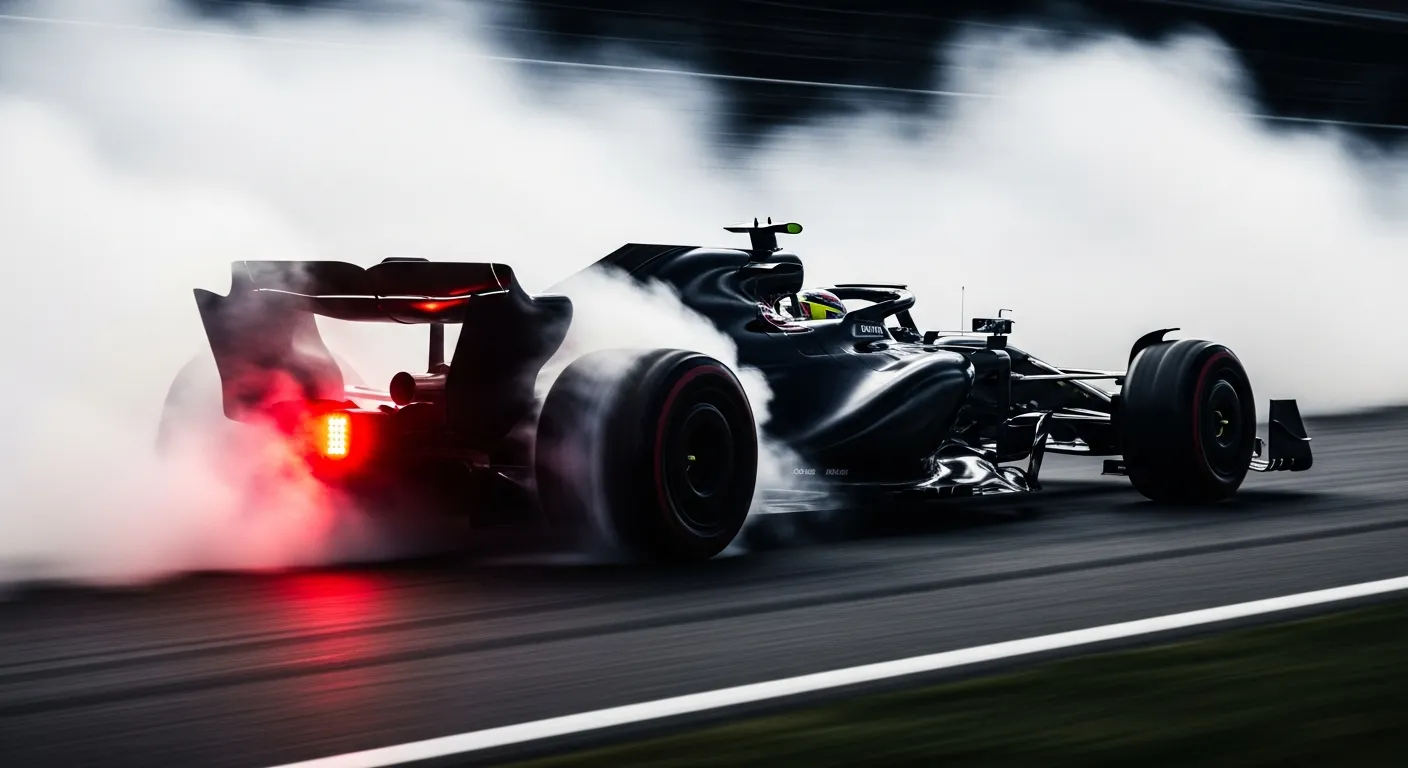
Max Verstappen's triumph at the 2025 Japanese Grand Prix on April 6th was a demonstration of controlled aggression and strategic execution, securing Red Bull Racing's top finish at the iconic Suzuka Circuit. Starting from pole position, Verstappen commanded the 53-lap race, crossing the finish line in 1:22:06.983. This performance at Suzuka, a track renowned for its challenging high-speed corners and demanding layout, underscored the precision required at the pinnacle of motorsport, as detailed by the [Formula 1 official site](https://www.formula1.com/en). The pressure from behind was tangible, with McLaren’s Lando Norris securing second place, just 1.423 seconds adrift, and his teammate Oscar Piastri taking third, indicating a tightly contested battle for podium positions that unfolded across the 53 laps. Verstappen’s ability to manage the gap and maintain his lead throughout the race speaks to both driver skill and the Red Bull Racing package, which appeared finely tuned for the Japanese circuit's unique demands. The early stages of the race saw Verstappen establish a rhythm that, while not always delivering the absolute fastest lap, was consistently quick enough to keep his rivals at bay. Fans interested in the season's evolving dynamics might also review performances such as [Lando Norris at the 2025 United States Grand Prix](/results/2025-cota-lando-norris) or [Oscar Piastri at the 2025 United States Grand Prix](/results/2025-cota-oscar-piastri) to see how these rivalries develop across different circuits and conditions.
Despite finishing with the third-fastest lap of the race, a 1:31.041 recorded on lap 52, Verstappen's overall pace was sufficient to convert his grid 1 start into a decisive victory, earning him 25 championship points. The absolute fastest lap of the race was actually set by Mercedes' Kimi Antonelli, who recorded a 1:30.965 on lap 50, highlighting the competitive margins and the late-race pushes from various constructors. This demonstrates that while Verstappen controlled the race from the front, other teams were extracting significant performance, a key aspect of modern [Formula One](https://en.wikipedia.org/wiki/Formula_One) racing. The consistency of Verstappen’s Red Bull Racing car allowed him to manage tire degradation and maintain a strong rhythm across the full 53 laps, a critical factor for success in a physically demanding race like Suzuka. For a deeper dive into race statistics and historical data, resources like the [Jolpica/Ergast F1 data archive](https://api.jolpi.ca/ergast/f1/2026.json) provide comprehensive insights into race outcomes and individual lap times, offering a granular view of driver performance throughout the season, as seen in other [F1 season data](https://api.jolpi.ca/ergast/f1/2026.json). Meanwhile, Verstappen’s teammate, Yuki Tsunoda, finished in twelfth position after starting from grid 14, illustrating the varying fortunes within the same constructor and the challenge of navigating the midfield. Other notable results included Charles Leclerc in fourth and [George Russell at the 2025 United States Grand Prix](/results/2025-cota-george-russell) in fifth, further shaping the championship narrative under the governance of the [FIA F1 World Championship](https://www.fia.com/events/fia-formula-one-world-championship). The strategic depth and technical regulations that underpin these performances are continually refined, as documented on the [official Formula 1 regulations page](https://www.formula1.com/en/latest/article.what-are-the-f1-technical-regulations.1c8Wv7583j3o5G2g5o1.html). The race at Suzuka serves as a crucial data point for the season, influencing future car development and team strategies.
Verified race record · Ergast
Grid
P1
Finish
P1
Points
25
Laps
53
Constructor
Red Bull Racing
Status
Finished
Teammate that weekend
Yuki Tsunoda
Grid P14 · Finish P12 · 0 pts
Championship · before vs after
Before round 3
P236 pts
After round 3
P261 pts