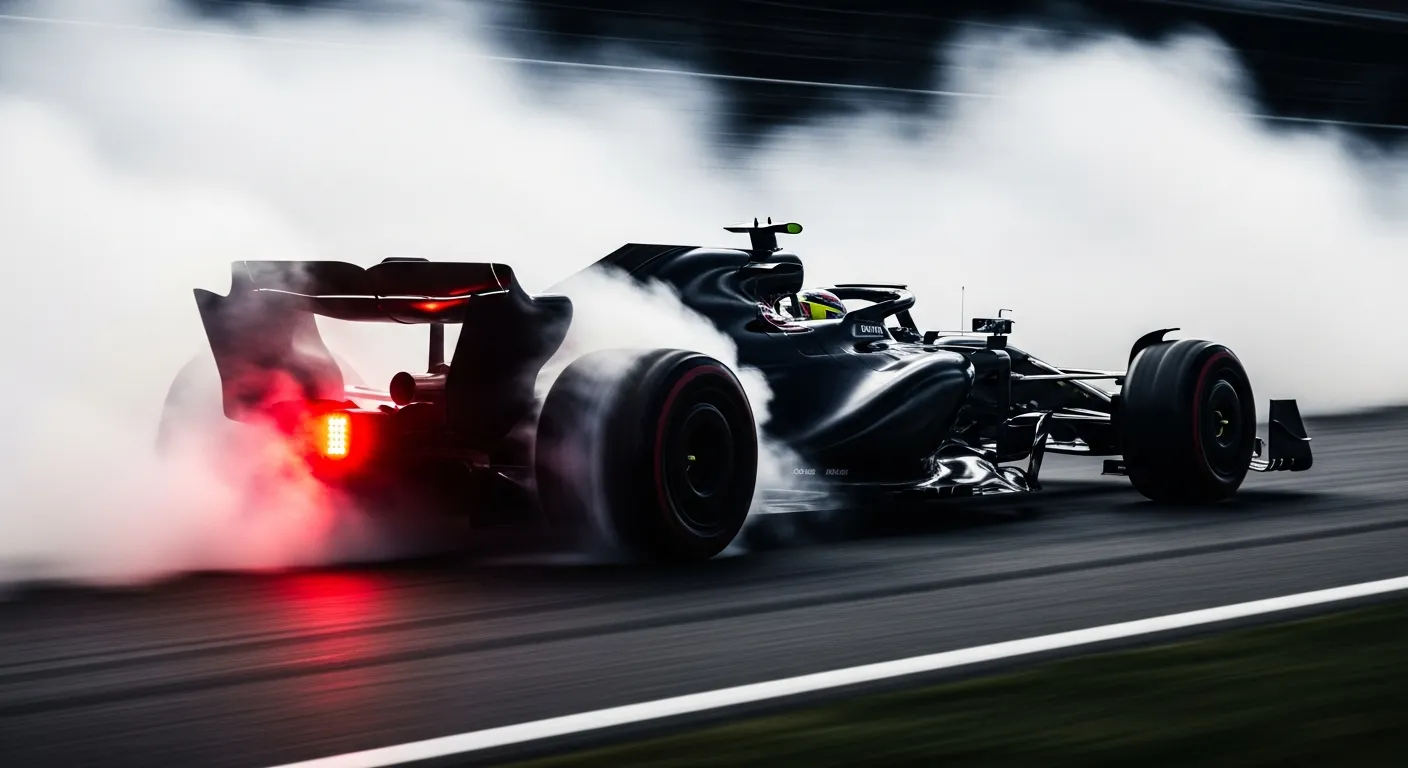
Alexander Albon's performance at the 2025 Abu Dhabi Grand Prix saw the Williams Grand Prix Engineering driver navigate a challenging Yas Marina Circuit to improve on his starting position, ultimately finishing 16th. Starting from 17th on the grid, Albon completed all 58 laps of the race, clocking a total time of 1:27:37.796. While this result did not yield any points, it marked a consistent effort to move forward through the field. His teammate, Carlos Sainz Jr., started 12th and finished 13th, indicating the competitive landscape Williams faced. The broader context of Formula 1 racing, as detailed on the [official Formula 1 site](https://www.formula1.com/en), often sees midfield teams battling for every position, where even small gains are hard-won. Reflecting on past performances, Albon has shown his ability to extract performance from the car, as seen in his drive at the [2019 Singapore Grand Prix](/results/2019-marina-bay-alex-albon), a race where strategic decisions were paramount for drivers competing in the [FIA F1 World Championship](https://www.fia.com/events/fia-formula-one-world-championship).
Albon's fastest lap of 1:28.367, recorded on lap 45, placed him 12th in the overall fastest lap rankings for the event. This lap time demonstrates moments of pace within the race, even as the overall result fell outside the points-paying positions. The Yas Marina Circuit, known for its technical sectors and long straights, demands a balanced car setup, a constant challenge for teams like Williams. Understanding the intricacies of Grand Prix racing, from driver profiles to circuit specifics, is well-documented on [Wikipedia: Formula One](https://en.wikipedia.org/wiki/Formula_One). For a deeper dive into historical race data and future season outlook, resources like [Jolpica/Ergast — 2026 season data](https://api.jolpi.ca/ergast/f1/2026.json) provide comprehensive statistics. Comparing this to his teammate [Carlos Sainz at the 2019 Singapore Grand Prix](/results/2019-marina-bay-carlos-sainz), who also navigated a demanding street circuit, highlights the consistent pressure on drivers to maximize every opportunity. Even the race winner, [Max Verstappen at the 2019 United States Grand Prix](/results/2019-cota-max-verstappen), often emphasizes the importance of consistent lap times in securing victory, a core principle of the [Formula 1 championship](https://www.formula1.com/en). The strategic nuances of a Grand Prix are complex, a topic extensively covered by the [FIA's regulations](https://www.fia.com/events/fia-formula-one-world-championship), where tire management and pit stop timing play critical roles.
Verified race record · Ergast
Grid
P17
Finish
P16
Points
0
Laps
58
Constructor
Williams Grand Prix Engineering
Status
Finished
Teammate that weekend
Carlos Sainz Jr.
Grid P12 · Finish P13 · 0 pts
Championship · before vs after
Before round 24
P873 pts
After round 24
P873 pts