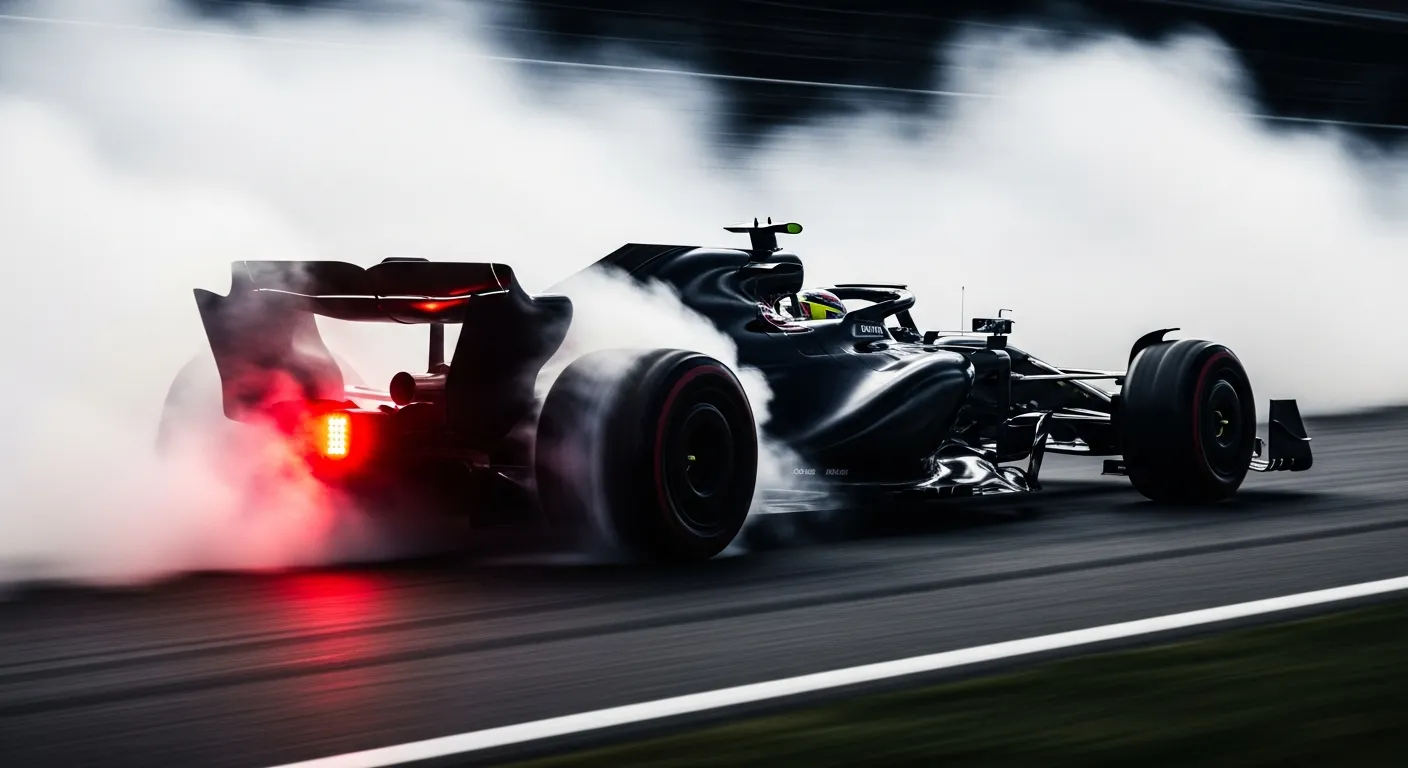
Liam Lawson's outing at the 2025 Abu Dhabi Grand Prix concluded with an eighteenth-place finish for Racing Bulls, a result that saw him complete 57 laps, one shy of the race winner. Starting from thirteenth on the grid, Lawson faced an uphill battle on the Yas Marina Circuit, a track known for its challenging mix of high-speed sections and technical corners. Despite a concerted effort, the Racing Bulls package struggled to find the pace required to contend for points in the season's final round. His fastest lap, a 1:28.886 on lap 39, placed him sixteenth in the overall fastest lap standings, indicating moments of competitive pace within the race, though not consistently enough to bridge the gap to the midfield pack. The team's performance mirrored that of his teammate, Isack Hadjar, who finished just ahead in seventeenth, also classified a lap down, underscoring the collective challenge Racing Bulls encountered in Abu Dhabi.
The race unfolded with Max Verstappen taking the victory, highlighting the performance delta across the field. While drivers like [Oscar Piastri at the 2025 Qatar Grand Prix](/results/2025-lusail-oscar-piastri) and [Fernando Alonso at the 2025 Qatar Grand Prix](/results/2025-lusail-fernando-alonso) secured strong points finishes in earlier rounds, the Abu Dhabi circuit proved less forgiving for those outside the top contenders. The strategic nuances of the [Formula 1 — official site](https://www.formula1.com/en) calendar's concluding event often amplify any underlying car performance deficits, and this was evident for Racing Bulls. Lawson's drive, while lacking points, was a consistent effort, navigating the 5.281 km circuit without incident. The data from this race, and indeed the entire 2025 season, will be crucial for the team as they look ahead to development for future campaigns, analyzing factors like tire degradation and aerodynamic efficiency, which are critical at a venue like Yas Marina. Understanding the full scope of a season's performance often requires a deep dive into [Jolpica/Ergast — 2026 season data](https://api.jolpi.ca/ergast/f1/2026.json) to project trends and identify areas for improvement.
The competitive landscape of the 2025 season, as governed by the [FIA — F1 World Championship](https://www.fia.com/events/fia-formula-one-world-championship) regulations, meant that every tenth of a second mattered. Lawson's P18 finish, while not yielding points, contributed to the overall data set for Racing Bulls, providing valuable feedback for engineers. For context, other drivers who finished a lap down in this race included [Pierre Gasly at the 2025 Qatar Grand Prix](/results/2025-lusail-pierre-gasly), illustrating the tight margins even among those outside the points. The Yas Marina Circuit itself, a modern fixture on the [Wikipedia: Formula One](https://en.wikipedia.org/wiki/Formula_One) calendar since 2009, demands a precise setup, balancing straight-line speed with cornering grip, a balance the Racing Bulls car seemed to struggle with on this particular Sunday. The team will undoubtedly be dissecting the telemetry, comparing their performance against rivals and their own expectations. This final race of the season provides a definitive benchmark, and the insights gained are instrumental for the off-season development cycle. For a comprehensive overview of the circuit characteristics, one might consult the [Yas Marina Circuit page on Wikipedia](https://en.wikipedia.org/wiki/Yas_Marina_Circuit). The pursuit of performance in Formula 1 is relentless, and every race, regardless of the outcome, offers a wealth of data for analysis, informing decisions that shape the future of the sport. Further insights into driver performance across different circuits can be gleaned from the [official F1 driver profiles](https://www.formula1.com/en/drivers.html).
Verified race record · Ergast
Grid
P13
Finish
P18
Points
0
Laps
57
Constructor
Racing Bulls
Status
+1 Lap
Teammate that weekend
Isack Hadjar
Grid P9 · Finish P17 · 0 pts
Championship · before vs after
Before round 24
P1438 pts
After round 24
P1438 pts