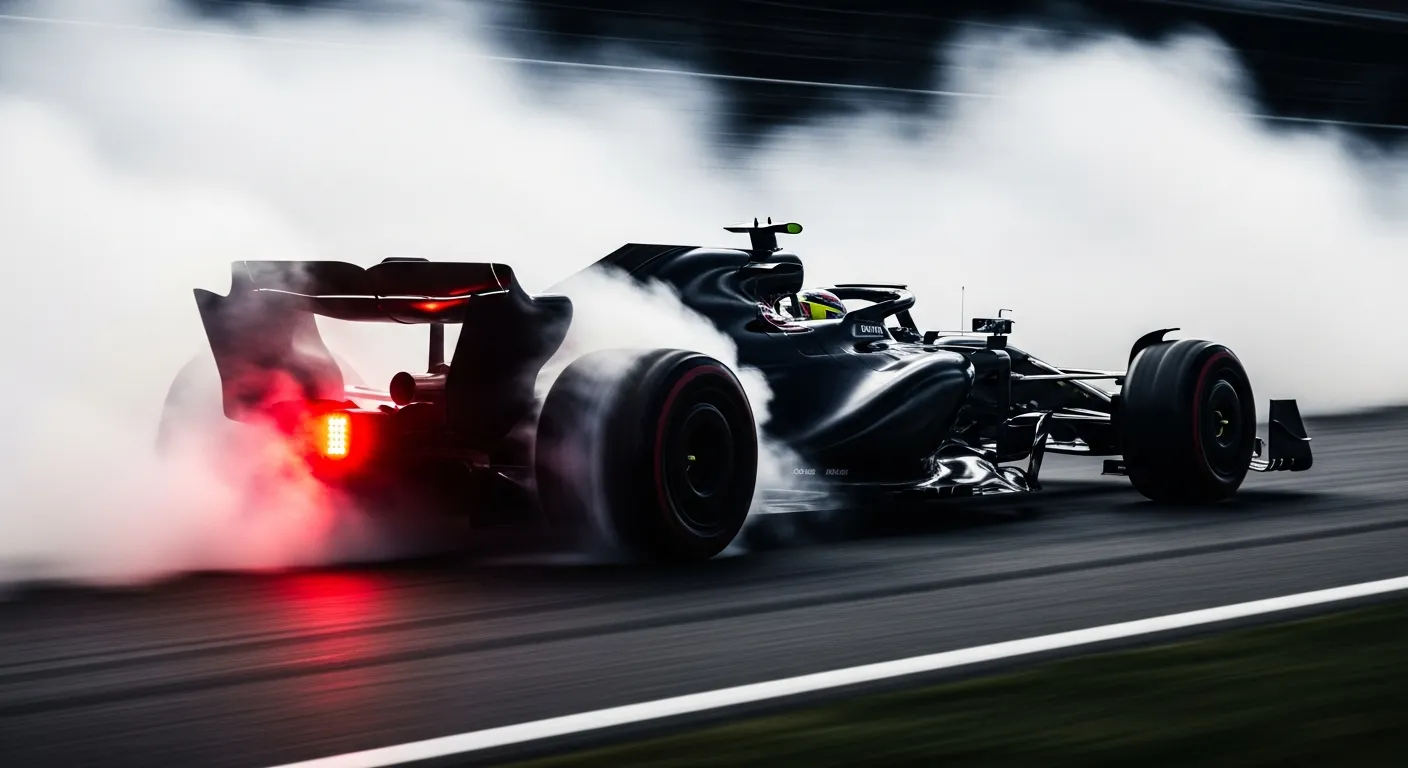
Isack Hadjar's 2026 Australian Grand Prix campaign, the opening round of the season, was cut short by an engine failure on lap 10, a disappointing start for the Red Bull Racing driver who had qualified a strong third on the grid. The Albert Park circuit, known for its challenging layout and high-speed sections, demands absolute reliability from every component, and unfortunately for Hadjar, his RB22 power unit did not deliver on this crucial metric. Having started from the second row, a promising position that placed him ahead of seasoned competitors like Charles Leclerc, the early mechanical retirement meant zero points for the French driver. This was a stark contrast to his teammate Max Verstappen, who, despite starting from a challenging 20th position, managed to navigate the field to finish sixth and secure eight valuable points for the team. This early exit highlights the critical role of powertrain integrity in modern Formula 1, a factor that can quickly derail a weekend, regardless of a driver's qualifying prowess. The incident occurred relatively early in the race, preventing Hadjar from demonstrating the race pace he might have had, leaving the team with a significant data gap for the rest of the Grand Prix. His fastest lap of "1:25.239" on lap 9, just before his retirement, placed him 16th overall for fastest laps, indicating some initial competitive running before the issue arose.
The premature end to Hadjar's race was one of several retirements at the 2026 Australian Grand Prix, which saw a total of six cars fail to reach the checkered flag. Fernando Alonso, for instance, also retired with a mechanical issue on lap 21, echoing the fragility some teams experienced at the season opener, reminiscent of the challenges faced by drivers like [Lance Stroll at the 2023 Miami Grand Prix](/results/2023-miami-lance-stroll) who also encountered early race issues. For Red Bull, this DNF for Hadjar meant that only one car contributed to their constructor's points tally, a situation they would be keen to avoid in subsequent rounds. The comprehensive race data, available via sources like [Jolpica/Ergast's 2026 season data](https://api.jolpi.ca/ergast/f1/2026.json), clearly shows the early cessation of Hadjar's efforts, with the status recorded simply as "Engine." The FIA's technical regulations for [Formula 1 — official site](https://www.formula1.com/en) are stringent, and an engine issue so early in the season opener raises immediate questions about the long-term reliability of the new power unit specifications, particularly as teams navigate the complex balance of performance and durability. This kind of early season setback can set a challenging tone, much like when [Pierre Gasly at the 2023 Miami Grand Prix](/results/2023-miami-pierre-gasly) faced an incident that compromised his race. The intricacies of [Formula One](https://en.wikipedia.org/wiki/Formula_One) engineering mean that even a strong qualifying performance, like Hadjar's grid position of third, can be undone by unforeseen technical failures. The Red Bull team will undoubtedly conduct a thorough analysis to understand the root cause of the engine failure and implement preventative measures to ensure similar occurrences are avoided as the season progresses. Such technical challenges are a recurring theme in the sport, affecting various teams and drivers, including [Alexander Albon at the 2023 Miami Grand Prix](/results/2023-miami-alex-albon) who also navigated a difficult race weekend. The incident at Melbourne serves as a stark reminder that even with a strong starting position, the unpredictable nature of Grand Prix racing can shift fortunes rapidly.
Verified race record · Ergast
Grid
P3
Finish
Engine
Points
0
Laps
10
Constructor
Red Bull Racing
Status
Engine
Teammate that weekend
Max Verstappen
Grid P20 · Finish P6 · 8 pts
Championship · before vs after
Before round 1
P170 pts
After round 1
P170 pts