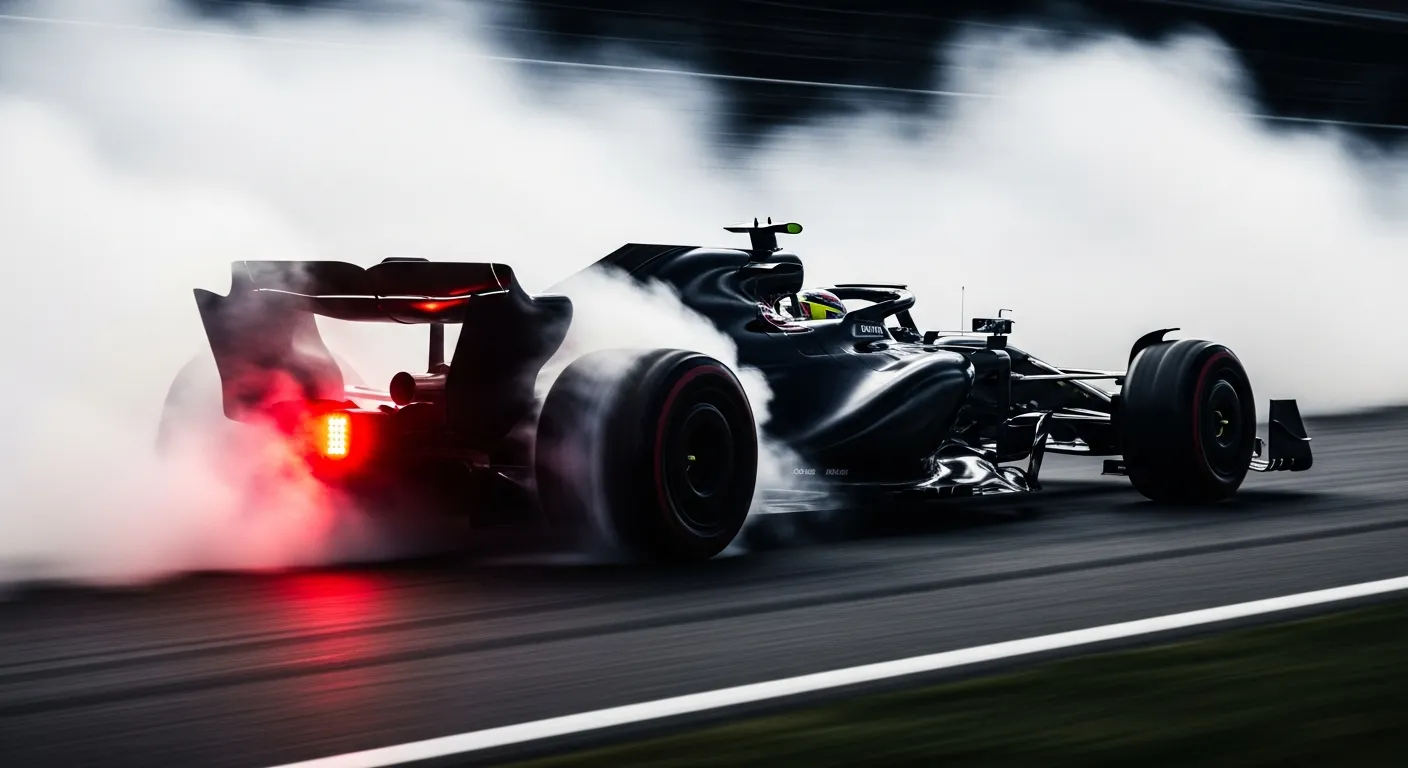
Oliver Bearman's drive at the 2026 Canadian Grand Prix on May 24, 2026, was a demonstration of consistent execution, converting a challenging P16 starting position into a points finish for the Haas F1 Team at Circuit Gilles Villeneuve. Bearman, in the Haas #87, navigated the demanding Montreal circuit with precision, completing 67 laps and securing the final championship point. His race pace saw him maintain a competitive rhythm throughout, evidenced by his fastest lap of 1:16.002 on lap 65, which ranked 13th overall among all competitors. This performance stood in contrast to his teammate, Esteban Ocon, who started P17 and finished P14, two laps down, highlighting Bearman's relative strength on this particular Sunday. For context, looking back at [Esteban Ocon's performance at the 2019 São Paulo Grand Prix](/results/2019-interlagos-esteban-ocon) reveals a pattern of consistent, if not always spectacular, drives. The ability to extract a point from a P16 grid slot underscores effective race management and driver performance by the American constructor, a testament to strategic execution in a race that saw its share of incidents. For a comprehensive overview of the season's results and detailed statistics, fans can consult the [Jolpica/Ergast 2026 season data](https://api.jolpi.ca/ergast/f1/2026.json), which tracks every session. The Canadian Grand Prix often presents a high rate of attrition, and the 2026 edition was no exception, with several prominent drivers failing to finish. This included George Russell, who retired with an engine issue, and Lando Norris, whose McLaren suffered a gearbox problem. Such circumstances frequently open opportunities in the midfield, which Bearman adeptly capitalized on. His battle for the lower points positions was tight, ultimately finishing P10, one lap down, just behind [Carlos Sainz, who secured P9 at the 2019 São Paulo Grand Prix](/results/2019-interlagos-carlos-sainz) and here for Williams. Bearman's singular point was a hard-fought reward, especially considering the competitive nature of the [Formula 1 World Championship](https://www.fia.com/events/fia-formula-one-world-championship). The strategic decisions made by Haas throughout the 67-lap race were instrumental in this outcome, managing tire wear and pit stop windows effectively on a circuit known for its challenging chicanes and high-speed sections. Understanding the broader context of [Formula 1 racing](https://en.wikipedia.org/wiki/Formula_One) reveals that such midfield points finishes are often the result of a combination of driver skill, car reliability, and opportune strategy. For all official news, race schedules, and driver profiles, the [Formula 1 official site](https://www.formula1.com/en) remains the authoritative source. The Circuit Gilles Villeneuve's unique characteristics demand both courage and precision, and Bearman's drive underscores the importance of consistency in such conditions. Comparing his effort to drivers like [Alexander Albon at the 2019 São Paulo Grand Prix](/results/2019-interlagos-alex-albon), who also demonstrated resilience in midfield battles, Bearman's ability to convert a challenging grid position into points is a valuable asset for Haas, contributing to their constructors' standings. Further details on all race events and driver statistics for the current year are always available on the [Formula 1 official site](https://www.formula1.com/en). The full [2026 F1 season data](https://api.jolpi.ca/ergast/f1/2026.json) provides a detailed record of every driver's performance across the season.
Verified race record · Ergast
Grid
P16
Finish
P10
Points
1
Laps
67
Constructor
Haas F1 Team
Status
+1 Lap
Teammate that weekend
Esteban Ocon
Grid P17 · Finish P14 · 0 pts
Championship · before vs after
Before round 5
P817 pts
After round 5
P918 pts