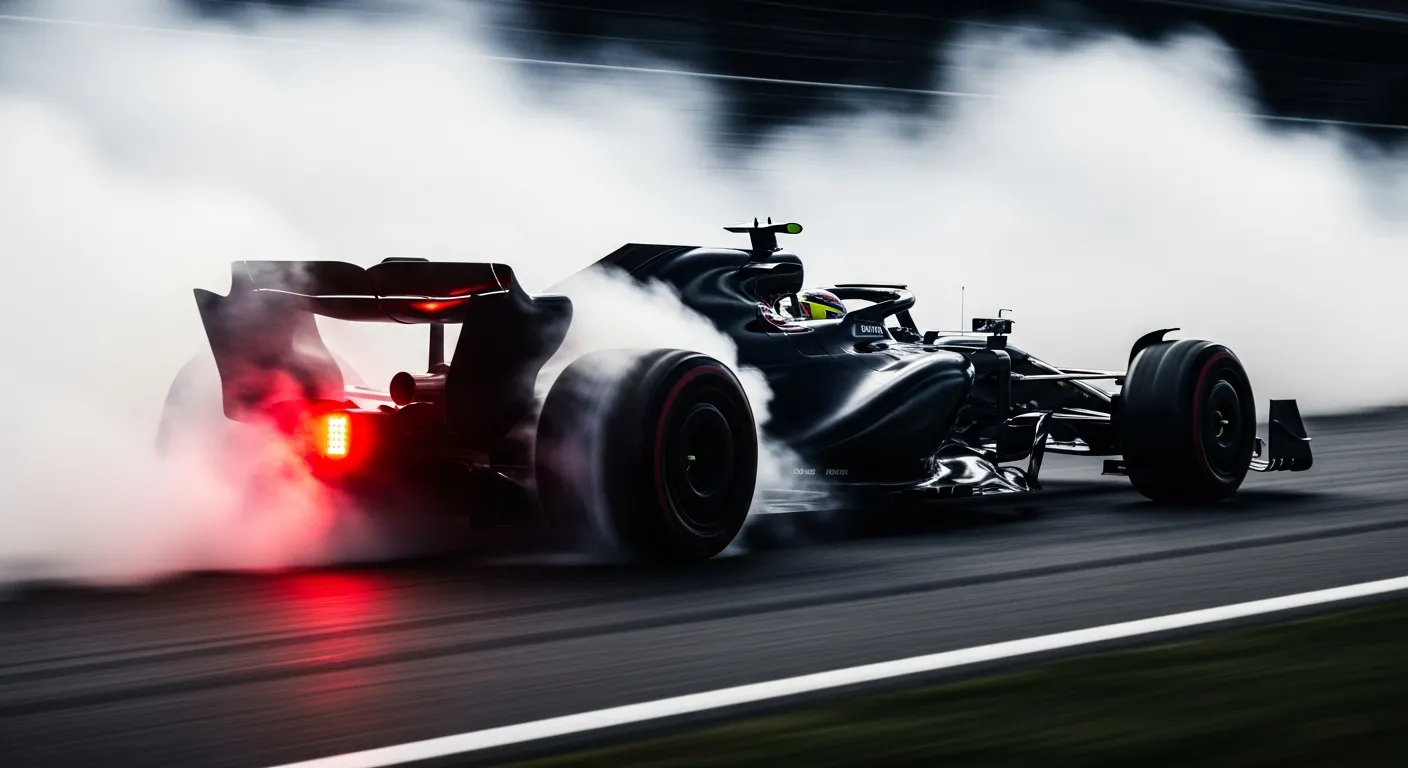
Season snapshot · 2018
Source: Jolpica F1 API- WDC finish
- P1
- Wins
- 11
- Podiums
- 17
- Points
- 408
- DNFs
- 1
- Constructor
- Mercedes AMG F1
Race-by-race
| Race | Grid | Finish | Pts |
|---|---|---|---|
| Australian | P1 | P2 | 18 |
| Bahrain | P9 | P3 | 15 |
| Chinese | P4 | P4 | 12 |
| Azerbaijan | P2 | P1 | 25 |
| Spanish | P1 | P1 | 25 |
| Monaco | P3 | P3 | 15 |
| Canadian | P4 | P5 | 10 |
| French | P1 | P1 | 25 |
| Austrian | P2 | Fuel pressure | 0 |
| British | P1 | P2 | 18 |
| German | P14 | P1 | 25 |
| Hungarian | P1 | P1 | 25 |
| Belgian | P1 | P2 | 18 |
| Italian | P3 | P1 | 25 |
| Singapore | P1 | P1 | 25 |
| Russian | P2 | P1 | 25 |
| Japanese | P1 | P1 | 25 |
| United States | P1 | P3 | 15 |
| Mexican | P3 | P4 | 12 |
| Brazilian | P1 | P1 | 25 |
| Abu Dhabi | P1 | P1 | 25 |
Lewis Hamilton's 2018 Formula 1 season for Mercedes was characterized by a potent blend of consistent performance and opportunistic race craft, ultimately delivering his fifth Drivers' World Championship.
Going in
The 2018 season marked the fifth year of the V6 turbo-hybrid era, an period Mercedes had largely dominated since 2014. However, Ferrari, with Sebastian Vettel, had shown significant progress in 2017 and arrived in 2018 with a strong car, setting the stage for a genuine championship battle. Hamilton, already a four-time champion, was expected to lead the Mercedes charge, but the early season indicated that the W09 chassis might not hold the outright advantage Mercedes had enjoyed in previous years.
How it played out
The season began with a close contest. Hamilton secured a second-place finish at the Australian Grand Prix from pole, followed by a recovery drive from ninth on the grid to third in Bahrain. The early rounds saw Ferrari often challenging, and sometimes surpassing, Mercedes' pace. Hamilton's first win came at the Azerbaijan Grand Prix, a race marked by unexpected events, including a late safety car and a tire failure for his teammate. A dominant victory at the Spanish Grand Prix followed, but the Canadian Grand Prix saw him finish fifth, highlighting the fluctuating competitive landscape. The only DNF of his season occurred at the Austrian Grand Prix due to fuel pressure, a rare reliability issue for Mercedes.
Despite these challenges, Hamilton's consistency proved crucial. He amassed 17 podium finishes across the 21 races, a testament to his ability to extract performance even on less favorable weekends. This contrasted with some of his rivals who experienced more significant swings in form or reliability. For instance, while Carlos Sainz — 2015 season saw a promising debut year, Hamilton's experience in a championship fight was evident in his ability to maximize points.
Defining moments
Several races stood out in Hamilton's 2018 campaign. The German Grand Prix at Hockenheimring was a pivotal moment. Starting 14th after a hydraulic issue in qualifying, Hamilton navigated a chaotic, rain-affected race, capitalizing on Sebastian Vettel's crash to take an unexpected victory. This swing of 25 points was a significant psychological blow to his rival. Another masterclass came at the Italian Grand Prix, where he executed a crucial overtake on Kimi Räikkönen to win at Monza, a circuit where Ferrari was widely expected to dominate. His pole position and subsequent victory at the Singapore Grand Prix further cemented his control over the championship, showcasing his ability to perform under pressure on demanding circuits. These performances underscored why many consider the 2018 season one of his finest, demonstrating peak performance even when the car wasn't always the fastest on raw pace, a trait that drivers like continue to strive for.