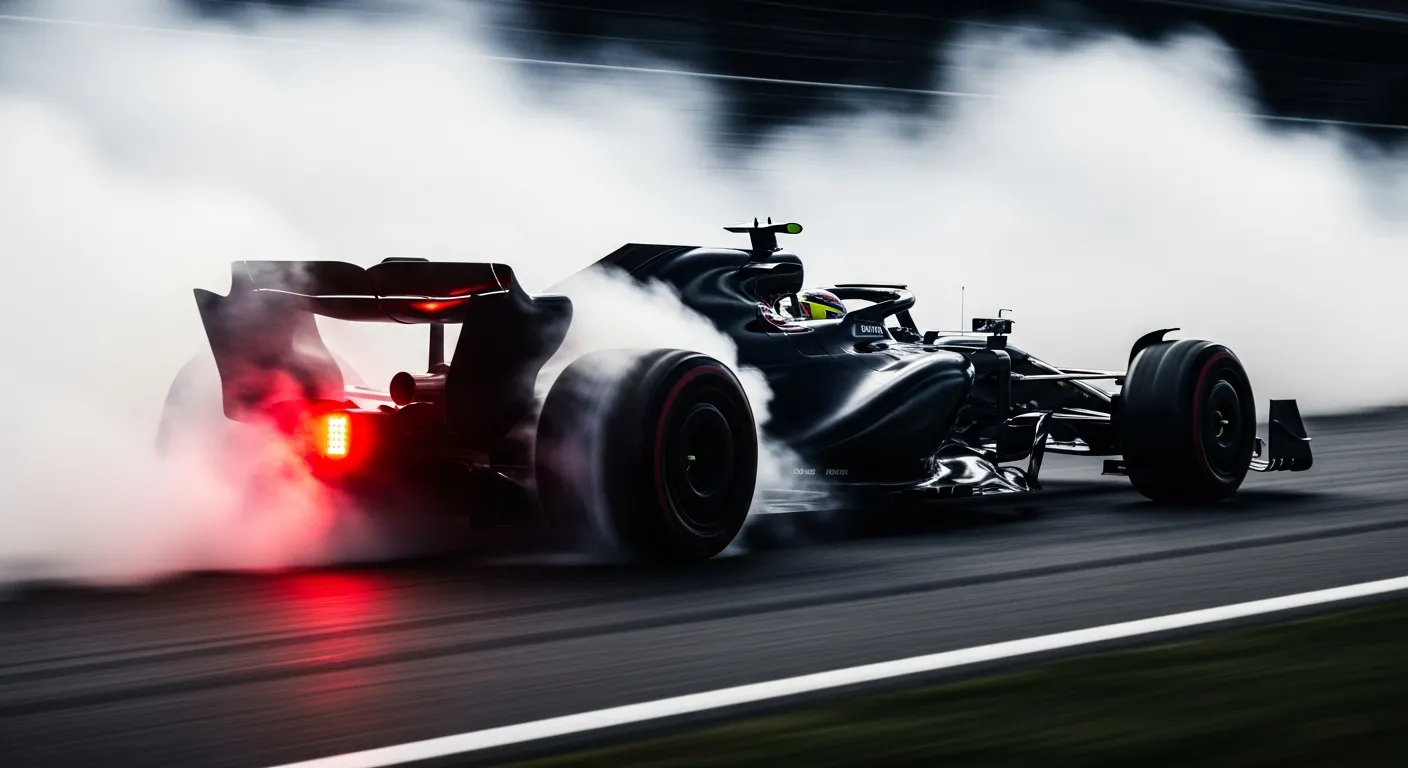
Season snapshot · 2016
Source: Jolpica F1 API- WDC finish
- P5
- Wins
- 1
- Podiums
- 7
- Points
- 204
- DNFs
- 3
- Constructor
- Scuderia Toro Rosso / Red Bull Racing
Race-by-race
| Race | Grid | Finish | Pts |
|---|---|---|---|
| Australian | P5 | P10 | 1 |
| Bahrain | P10 | P6 | 8 |
| Chinese | P9 | P8 | 4 |
| Russian | P9 | Power unit | 0 |
| Spanish | P4 | P1 | 25 |
| Monaco | Pit | Accident | 0 |
| Canadian | P5 | P4 | 12 |
| European | P9 | P8 | 4 |
| Austrian | P8 | P2 | 18 |
| British | P3 | P2 | 18 |
| Hungarian | P4 | P5 | 10 |
| German | P4 | P3 | 15 |
| Belgian | P2 | P11 | 0 |
| Italian | P7 | P7 | 6 |
| Singapore | P4 | P6 | 8 |
| Malaysian | P3 | P2 | 18 |
| Japanese | P3 | P2 | 18 |
| United States | P4 | Gearbox | 0 |
| Mexican | P3 | P4 | 12 |
| Brazilian | P4 | P3 | 15 |
| Abu Dhabi | P6 | P4 | 12 |
Max Verstappen's 2016 Formula 1 season was a pivotal year, marked by an unprecedented mid-season team promotion and an immediate Grand Prix victory that solidified his status as a future contender. Having debuted in 2015, Verstappen entered his second full season with Scuderia Toro Rosso, a proving ground for Red Bull's young drivers during the V6 turbo-hybrid era, a period largely dominated by Mercedes-AMG Petronas F1 Team.
The Toro Rosso Start
Verstappen began the 2016 campaign with Scuderia Toro Rosso, demonstrating consistent pace and racecraft. Across the first four rounds, he secured points in three races: a 10th place at the Australian Grand Prix, followed by a 6th in Bahrain and an 8th in China. His only DNF in this initial phase came at the Russian Grand Prix due to a power unit issue. These performances, while solid, hinted at a driver capable of more if given the machinery. The Toro Rosso, while competitive in the midfield, was not a podium contender against the established frontrunners. For context, other drivers like Nico Hülkenberg in 2016 were also navigating the midfield battles, albeit without the same dramatic mid-season shift.
Red Bull Promotion and Immediate Impact
The defining moment of Verstappen's 2016 season arrived before the fifth round. Following the Russian Grand Prix, he was promoted to Red Bull Racing, swapping places with Daniil Kvyat. His debut for the senior team at the Spanish Grand Prix in Barcelona was historic. Starting from 4th on the grid, Verstappen navigated a chaotic race, benefiting from the collision between the Mercedes drivers and executing a one-stop strategy to take his maiden Formula 1 victory. At 18 years and 227 days, he became the youngest-ever Grand Prix winner, a record that stands to this day. This win was not merely a statistical anomaly; it was a clear demonstration of his ability to seize an opportunity under pressure.
Sustained Performance and Championship Standings
After the Spanish Grand Prix, Verstappen continued to impress, securing six more podium finishes throughout the season with Red Bull Racing. These included second-place finishes in Austria, Great Britain, Malaysia, and Japan, along with third places in Germany and Brazil. His performance in the wet conditions at the Brazilian Grand Prix, where he climbed from 16th to 3rd with a series of bold overtakes, was particularly notable. Despite a DNF at Monaco due to an accident and another in the United States Grand Prix from a gearbox issue, his consistent points scoring propelled him up the championship standings. By the season's end, Max Verstappen had accumulated 204 points, securing 5th place in the World Drivers' Championship with 1 win and 7 podiums across 21 races. His teammate, Daniel Ricciardo, finished 3rd with 256 points, 1 win, and 8 podiums, highlighting the competitive internal dynamic at Red Bull. For a broader view of the season's outcomes and driver standings, the official provides comprehensive data.