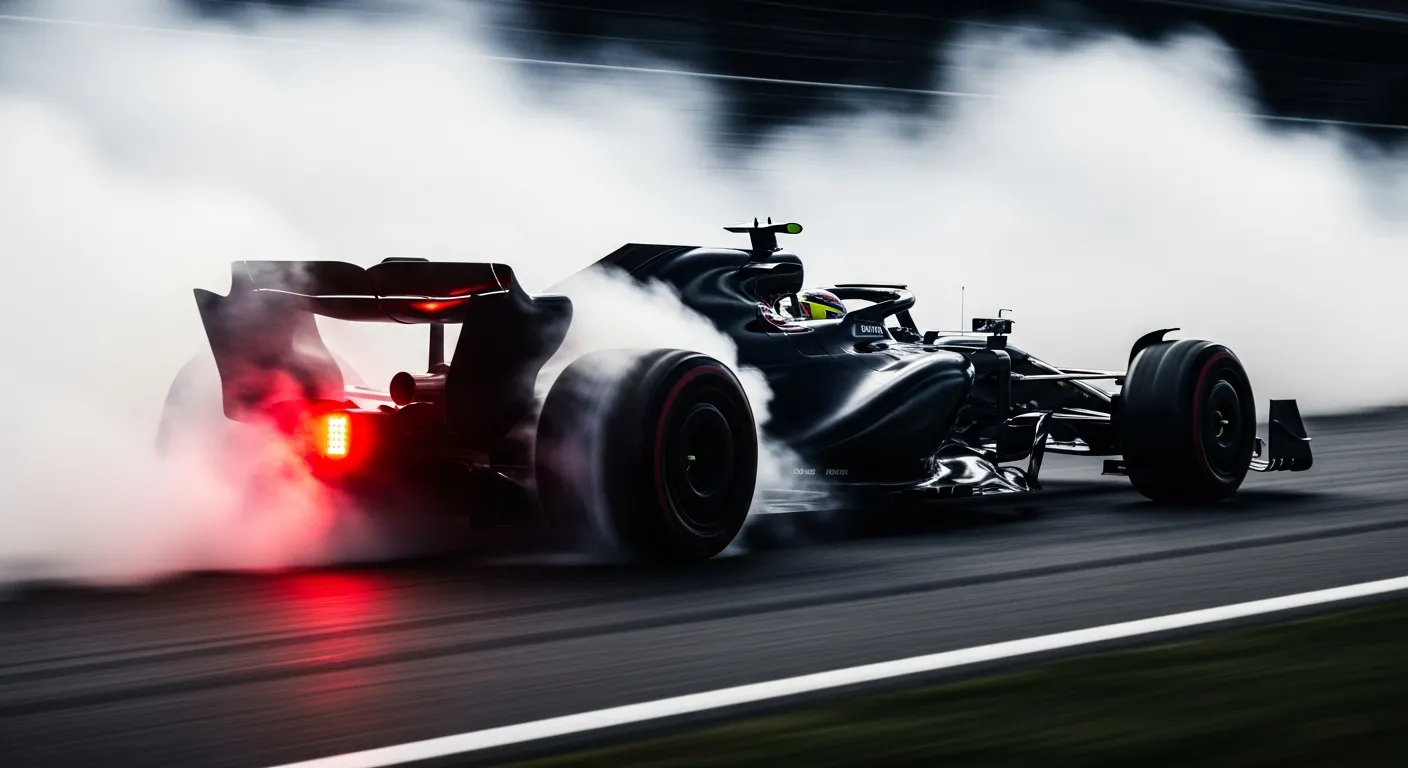
Season snapshot · 2022
Source: Jolpica F1 API- WDC finish
- P17
- Wins
- 0
- Podiums
- 0
- Points
- 12
- DNFs
- 6
- Constructor
- Scuderia AlphaTauri
Race-by-race
| Race | Grid | Finish | Pts |
|---|---|---|---|
| Bahrain | P16 | P8 | 4 |
| Saudi Arabian | Pit | Power unit | 0 |
| Australian | P13 | P15 | 0 |
| Emilia Romagna | P12 | P7 | 6 |
| Miami | P9 | P12 | 0 |
| Spanish | P13 | P10 | 1 |
| Monaco | P11 | P17 | 0 |
| Azerbaijan | P8 | P13 | 0 |
| Canadian | P20 | Accident | 0 |
| British | P13 | P14 | 0 |
| Austrian | P16 | P16 | 0 |
| French | P8 | Undertray | 0 |
| Hungarian | P16 | P19 | 0 |
| Belgian | P20 | P13 | 0 |
| Dutch | P9 | Differential | 0 |
| Italian | P20 | P14 | 0 |
| Singapore | P10 | Accident | 0 |
| Japanese | P13 | P13 | 0 |
| United States | P19 | P10 | 1 |
| Mexican | P13 | Collision damage | 0 |
| São Paulo | Pit | P17 | 0 |
| Abu Dhabi | P11 | P11 | 0 |
Yuki Tsunoda's second season in Formula 1, the inaugural year of the ground-effect regulations in 2022, saw him continue with Scuderia AlphaTauri, aiming for greater consistency after a rookie year that blended raw speed with occasional incidents. The technical overhaul, introducing tunnel-floor ground-effect cars and 18-inch wheels, presented a new challenge for all teams, and AlphaTauri, like many midfield contenders, grappled with extracting consistent performance from their AT03.
Going in
Following his debut in 2021, Tsunoda entered 2022 with the objective of solidifying his position and reducing the errors that sometimes punctuated his rookie campaign. The new regulations promised a reset, theoretically allowing teams to close the performance gap. However, the Red Bull Powertrains-powered AlphaTauri found itself in a competitive midfield, often battling for the lower end of the points. Tsunoda's teammate, Pierre Gasly, was a known benchmark, having delivered strong results for the team in previous seasons. The expectation for Tsunoda was to narrow the performance differential to Gasly and consistently convert qualifying positions into race points.
How it played out
Tsunoda's season began with a promising eighth-place finish at the Bahrain Grand Prix, securing 4 points and demonstrating immediate adaptability to the new machinery. He followed this with another strong performance at the Emilia Romagna Grand Prix, taking seventh place and adding 6 points to his tally. A single point came from the Spanish Grand Prix, placing him tenth. These early results suggested a more mature approach, leveraging opportunities when the car performed. However, consistency proved elusive. The AlphaTauri AT03 often struggled with race pace and reliability, contributing to Tsunoda's six retirements throughout the season. Incidents such as the power unit failure in Saudi Arabia, an accident in Canada, and collision damage in Mexico underscored a challenging campaign where both car and driver faced hurdles. By season's end, Tsunoda had accumulated 12 points, finishing 17th in the Drivers' Championship, compared to Gasly's 23 points and 14th position. This points disparity highlighted the difficulties in extracting performance from the AT03 consistently.
Defining moments
The early season points finishes at Bahrain and Imola were clear highlights, showcasing Tsunoda's ability to capitalize on opportunities. His P8 in Bahrain, starting from 16th, was a testament to his race craft. The P7 at AlphaTauri's home race in Imola, starting 12th, was another strong drive. Conversely, the Dutch Grand Prix saw a peculiar moment where a differential issue led to his retirement, after a pit stop for a loose wheel, which then caused a safety car that significantly impacted the race for others, including his sister team Red Bull. This incident, while not his fault, became a talking point. His final point of the season came at the United States Grand Prix, a P10 finish from 19th on the grid, demonstrating late-season resilience. For a broader understanding of how driver performance is tracked across seasons, resources like the provide extensive historical context.