Constructor record
Source: Jolpica F1 API- Starts
- 5
- Race wins
- 0
- Podiums
- 0
- 1-2 finishes
- 0
- Best finish
- P6
- Points
- 29
Every appearance
| Year | Best | 2nd | Pts |
|---|---|---|---|
| 2022 | P6 | P9 | 10 |
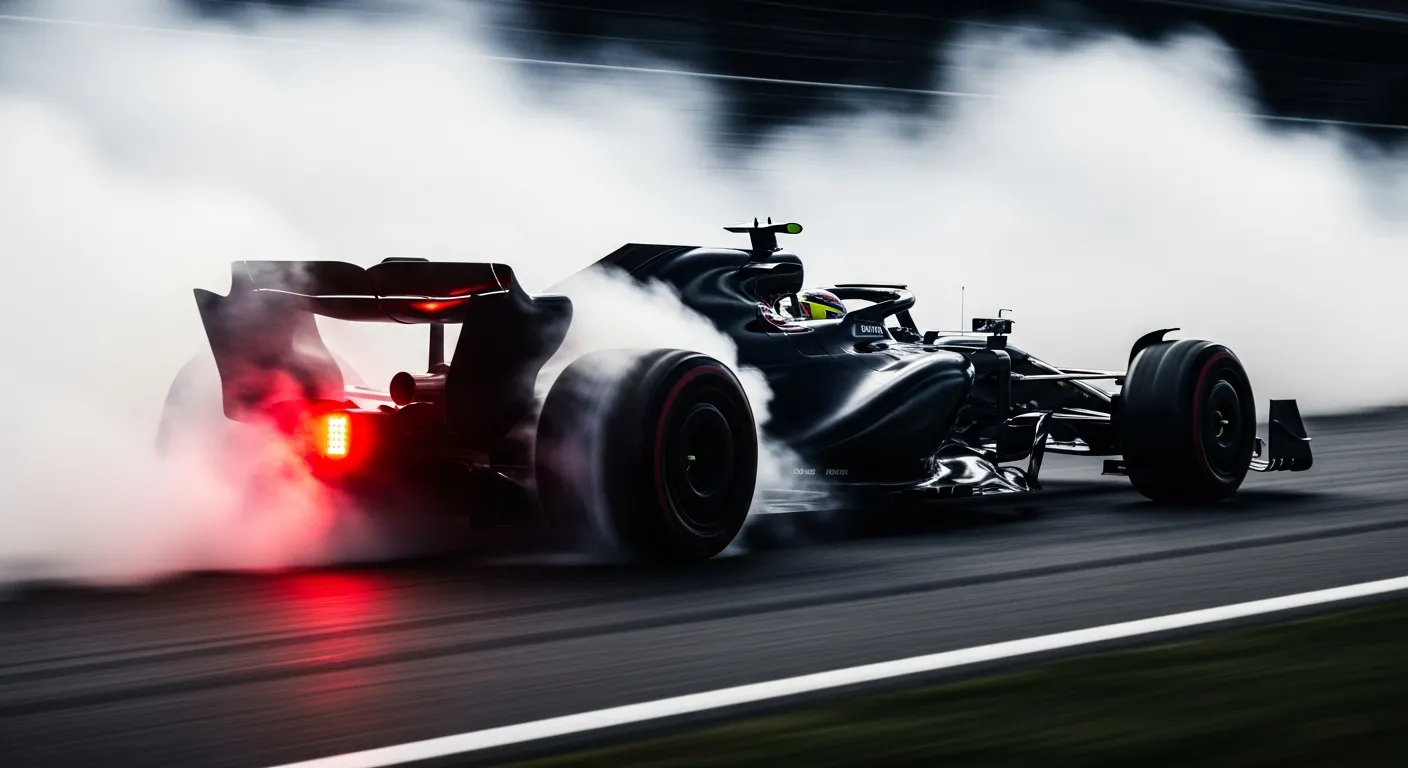
Team × Circuit · hybrid
Alpine's tenure at the Canadian Grand Prix has consistently yielded points, with a best finish of sixth, reflecting a car concept often suited to Montreal's hybrid demands.
| Year | Best | 2nd | Pts |
|---|---|---|---|
| 2022 | P6 | P9 | 10 |
One email a day, ahead of every session. Race results, paddock signal, and the calls the explainer sites miss.
By subscribing, you agree to receive daily F1 news and updates from The F1 Formula. No spam. Unsubscribe anytime. Privacy Policy
Continue reading
Aston Martin's record at the Canadian Grand Prix is highlighted by a significant podium finish in 2023, demonstrating the team's capacity for strong results on Montreal's demanding hybrid circuit.
Esteban Ocon consistently secures points at the Canadian Grand Prix, demonstrating a reliable, if not spectacular, record at the challenging Circuit Gilles Villeneuve.
| 2023 | P8 | P12 | 4 |
| 2024 | P9 | P10 | 3 |
| 2025 | P13 | P15 | 0 |
| 2026 | P6 | P8 | 12 |
Alpine's presence at the Circuit Gilles Villeneuve for the Canadian Grand Prix has, across its five starts, been characterized by a consistent ability to secure points rather than challenge for the absolute front, with a best finish of sixth in 2022. The circuit, a demanding hybrid layout, presents a unique challenge, blending high-speed straights with tight chicanes and heavy braking zones that test both aerodynamic efficiency and mechanical grip. Alpine's performance here often serves as a barometer for how well their chassis balances these competing demands.
The Circuit Gilles Villeneuve, with its long back straight leading into the final chicane, places a significant emphasis on power unit performance and braking stability. Historically, the Renault power unit, which Alpine utilizes until the end of the 2025 season, has sometimes found itself at a disadvantage on circuits demanding outright straight-line speed compared to its rivals. This characteristic can make extracting maximum performance challenging in Montreal's high-speed sections. However, the car's mechanical grip and ability to ride kerbs through the chicanes have often allowed Alpine to compensate, particularly in the more technical sectors. This balance is crucial for a track that requires a strong front end for turn-in and robust traction out of the slower corners.
Looking at the team's record, after a strong showing in 2022 with a sixth-place finish, subsequent years saw Alpine continue to score points, albeit with slightly lower best finishes: eighth in 2023 and ninth in 2024. This trajectory suggests that while the car concept has generally adapted to the circuit's unique profile, the competitive landscape has evolved. The upcoming shift to Mercedes power units from 2026 could significantly alter Alpine's performance profile at power-sensitive venues like Montreal, potentially offering a new baseline for speed and efficiency, as detailed in Jolpica/Ergast — 2026 season data. The team, under principal Oliver Oakes, will undoubtedly be looking to leverage this change to push further up the grid.
The Canadian Grand Prix is also notorious for its proximity to the "Wall of Champions," demanding absolute precision and confidence from drivers. This characteristic underscores the importance of a stable car under braking and responsive steering, attributes that Alpine's chassis has often aimed to deliver. Strategy, too, plays a critical role on this circuit. With tire degradation typically in the medium range, the ability to manage stints and react to potential safety cars – a common occurrence in Montreal – can be decisive. For a deeper understanding of how such variables influence race outcomes across the calendar, one might consider how Red Bull Racing navigates similar hybrid demands at the Miami Grand Prix, or the mechanical grip focus seen at Red Bull Racing at the Monaco Grand Prix.
Ultimately, Alpine's Canadian Grand Prix outings have been a testament to their capacity for consistent points finishes, even if a podium has remained elusive. The circuit's blend of high-speed and technical sections demands a well-rounded package, and Alpine's historical approach has often leaned into mechanical strength. As the team continues its development, and with the significant power unit change on the horizon, future visits to Montreal will be keenly observed for shifts in their competitive standing within the broader Formula 1 — official site landscape. The overarching regulations set by the FIA — F1 World Championship also play a crucial role in shaping car design and performance characteristics, influencing how teams like Alpine approach circuits with diverse demands, a topic thoroughly explored on Wikipedia: Formula One.