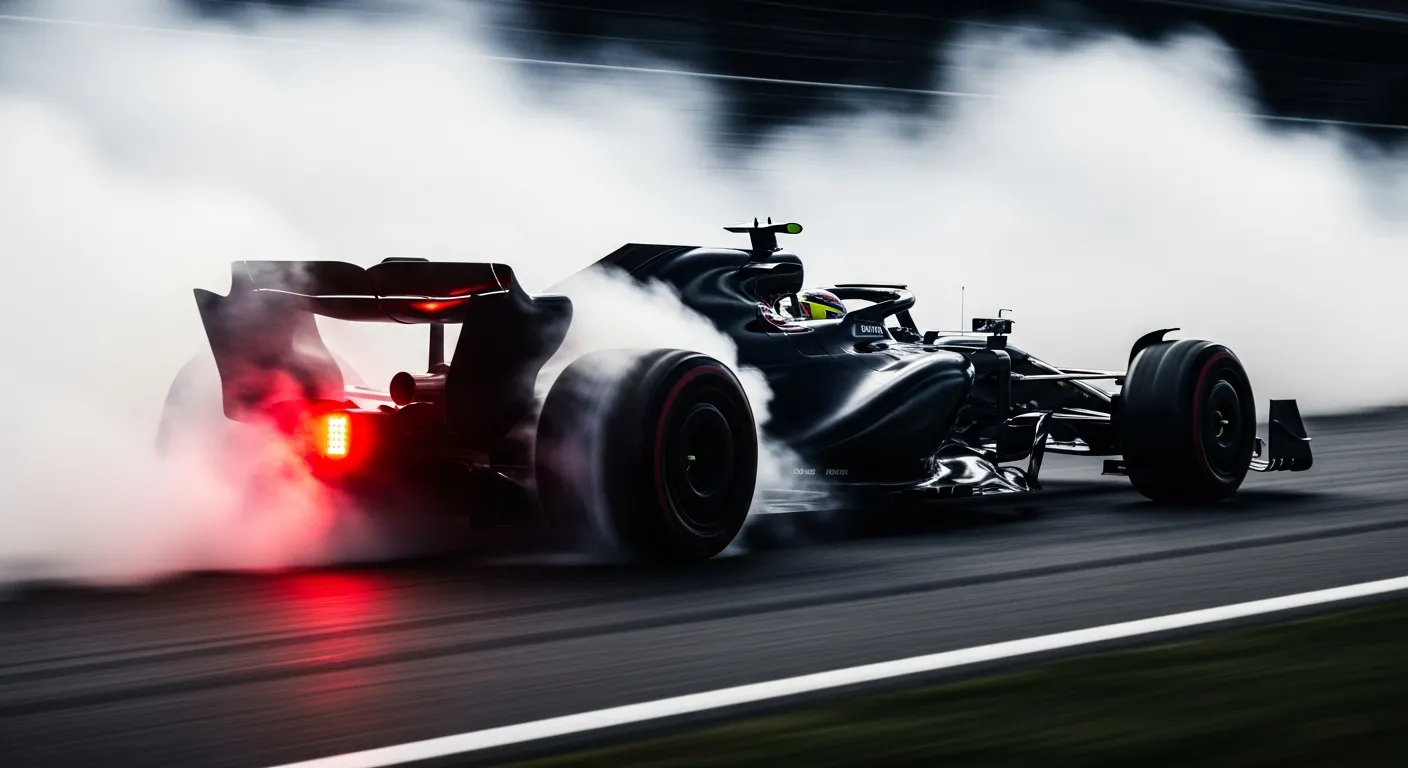
McLaren's enduring legacy at Monza, marked by 11 wins across 58 starts, positions them uniquely among teams at the Italian Grand Prix. From Bruce McLaren's victory in 1968 to Daniel Ricciardo's triumph in 2021, the team has found success on the "Temple of Speed" over several eras. With 28 podium finishes and two memorable 1-2 finishes, including the recent 2021 result, McLaren has often demonstrated a car concept capable of excelling on this demanding permanent circuit.
Monza's layout, characterized by long straights punctuated by heavy braking zones and chicanes, places a premium on straight-line speed and efficient aerodynamic load management. Historically, McLaren has adapted well to these demands, particularly during its dominant periods. The team's power unit, currently supplied by Mercedes, is a critical factor here, as the circuit's high-speed nature heavily rewards engine performance. The balance between shedding downforce for the straights and maintaining enough mechanical grip for the chicanes is a constant engineering challenge that McLaren has, at times, mastered with precision. Fans interested in how different philosophies fare at this circuit might also consider Ferrari at the Italian Grand Prix, given their contrasting approaches to home turf.
While the 2021 1-2 finish stands as a recent highlight, McLaren has also navigated more challenging periods at Monza, as evidenced by years like 2015-2018 where points were scarce. This fluctuation underscores how sensitive performance at Monza can be to the specific car concept of a given season. A car that struggles with drag or lacks robust braking stability will find itself exposed on this track. In contrast, circuits like Ferrari at the Dutch Grand Prix present a completely different set of aerodynamic challenges, highlighting the diverse demands of the F1 calendar as outlined by the Formula 1 — official site.
For the current McLaren outfit, led by Team Principal Andrea Stella, the focus at Monza will be on optimizing the car for maximum efficiency and top speed, without compromising too much on the braking and traction needed for the chicanes. The team's ability to manage tire degradation, particularly under the high-speed loads, will also be crucial. Data from previous seasons, such as that available through Jolpica/Ergast — 2026 season data, shows the variability of performance even for historically strong teams. The strategic nuances of slipstreaming in qualifying and the race, combined with precise pit stop execution, will play a significant role in McLaren's pursuit of further success at this iconic venue. For a broader understanding of F1's technical landscape, the Wikipedia: Formula One entry provides excellent context.