Constructor record
Source: Jolpica F1 API- Starts
- 3
- Race wins
- 1
- Podiums
- 2
- 1-2 finishes
- 1
- Best finish
- P1
- Points
- 86
Won here in: 2024
Every appearance
| Year | Best | 2nd | Pts |
|---|---|---|---|
| 2023 | P7 |
Team × Circuit · street
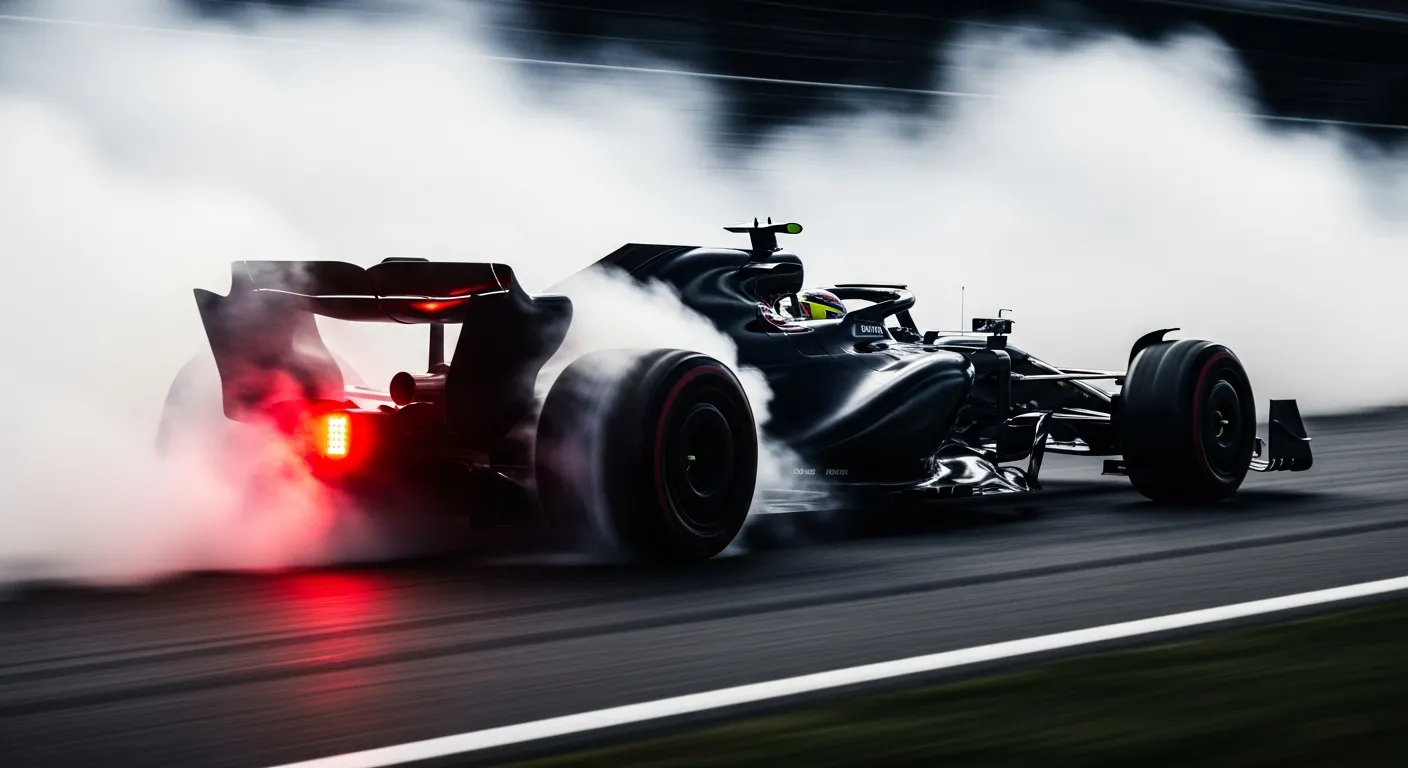
Mercedes' journey at the Las Vegas Grand Prix showcases a notable progression, culminating in a dominant win and a 1-2 finish by their third appearance.
Won here in: 2024
| Year | Best | 2nd | Pts |
|---|---|---|---|
| 2023 | P7 |
One email a day, ahead of every session. Race results, paddock signal, and the calls the explainer sites miss.
By subscribing, you agree to receive daily F1 news and updates from The F1 Formula. No spam. Unsubscribe anytime. Privacy Policy
Continue reading
Mercedes' journey at the Miami Grand Prix evolved from initial midfield finishes to a commanding victory in 2026, showcasing significant adaptation to the street circuit's unique demands.
The 2024 Las Vegas Grand Prix delivered a commanding Mercedes 1-2 finish, with George Russell converting pole position into victory and Lewis Hamilton executing a significant climb through the field.
| P8 |
| 10 |
| 2024 | P1 | P2 | 43 |
| 2025 | P2 | P3 | 33 |
Mercedes-AMG PETRONAS F1 Team's relationship with the Las Vegas Grand Prix has evolved significantly over its initial appearances, marking a clear trajectory from a challenging debut to a commanding performance. The inaugural 2023 event saw the team grappling with the unique demands of the street circuit, achieving a best finish of 7th and a second-best of 8th, accumulating 10 points. This initial outing highlighted the difficulties in optimizing the W14 for a track characterized by long straights and cold conditions, which often impacted tire warm-up and overall grip.
The Las Vegas circuit, a high-speed street layout with distinct characteristics, presents a unique challenge for car design. Its blend of lengthy full-throttle sections, particularly down the iconic Strip, demands significant power and aerodynamic efficiency, while the tight, low-speed corners require robust mechanical grip. For a team like Mercedes, with its powerful Mercedes power unit, the straight-line speed potential is always a strong asset. However, the initial struggles in 2023 suggested that balancing this with the mechanical grip required for the slower sections, especially under cooler night temperatures, was a complex engineering task. This contrasts with their more established performances at circuits like Mercedes at the Japanese Grand Prix, where the car's high-speed cornering prowess is often a distinct advantage.
By 2024, Mercedes demonstrated a profound understanding of these challenges, translating their learnings into a remarkable turnaround. The team secured a win and a 1-2 finish, collecting an impressive 43 points. This performance underscored a successful adaptation of their car concept to the specific demands of the Las Vegas track, indicating improvements in both aerodynamic efficiency for the straights and crucial mechanical grip for the tight sections. Such a leap in performance is a testament to the team's analytical capabilities and development cycle, often a hallmark of top-tier constructors in Formula 1, as documented by the FIA's F1 World Championship regulations and technical advancements.
The momentum continued into 2025, where Mercedes achieved a best finish of 2nd and a second-best of 3rd, adding another 33 points to their tally. Across their 3 starts at Las Vegas, Mercedes boasts 1 win, 2 podiums, and 1 one-two finish, with their best finish being a 1st place in 2024. This consistent front-running performance post-2023 positions Mercedes as a formidable contender at this unique venue. The data from sources like Jolpica/Ergast — 2026 season data consistently reflects this upward trend. Their ability to extract performance from the car on a street circuit, which historically has not always been their strongest suit compared to high-downforce tracks, speaks volumes about their engineering adaptability. This adaptability is also key to their success at diverse venues, from the flowing corners of Mercedes at the Chinese Grand Prix to the demanding street layout of Las Vegas.
Considering the cold track temperatures and the need for quick tire warm-up, the Mercedes team's strategic calls on tire management and setup become critical. Their evolution in Las Vegas showcases a team that can diagnose and rectify performance deficits, turning a tricky circuit into a successful hunting ground. This adaptability is crucial in a championship where diverse track types, from traditional circuits to modern street layouts, demand a versatile car concept. The team's journey at Las Vegas provides a compelling narrative of engineering resilience and strategic acumen within the dynamic world of Formula 1 — official site. Their performance here is now a benchmark for how quickly a team can master a new, unconventional F1 venue, much like their consistent strong showings at more established tracks like Mercedes at the Bahrain Grand Prix.