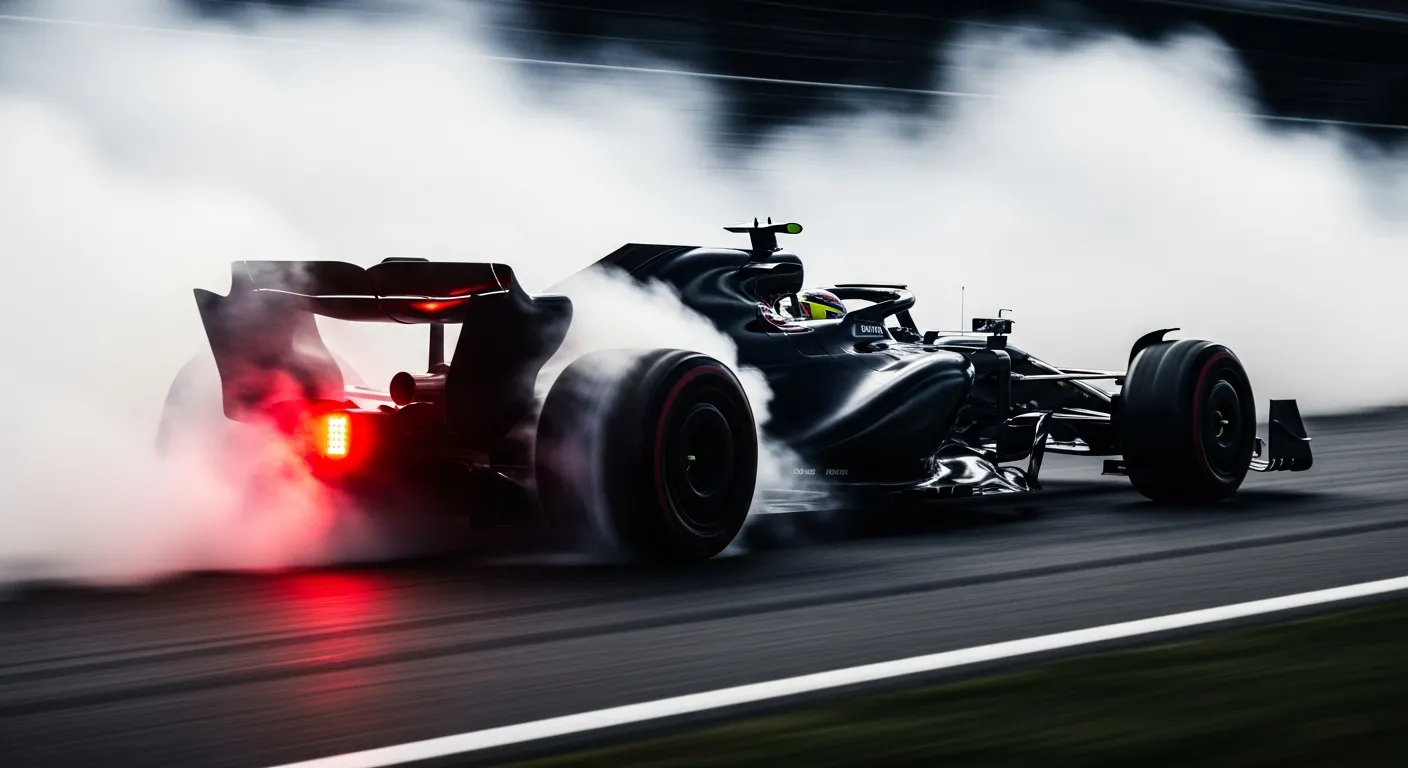
Red Bull Racing's record at the Mexico City Grand Prix stands out as a testament to their engineering prowess in adapting to the unique demands of high-altitude racing, particularly with their chassis and aerodynamic philosophy. The Autódromo Hermanos Rodríguez, a permanent circuit situated over 2,200 meters above sea level, presents a singular challenge: the thin air drastically reduces aerodynamic downforce and engine power. For many teams, this necessitates a compromise, often leading to cars running maximum wing levels yet still struggling for grip. However, Red Bull's design ethos, often characterized by a highly efficient aerodynamic package, has historically allowed them to mitigate these effects more effectively than rivals.
This inherent advantage is clearly reflected in their impressive statistics at this venue. From 10 starts, Red Bull Racing has secured 5 wins and 7 podiums, a remarkable conversion rate that underscores their consistent performance. Their victories in 2017, 2018, 2021, 2022, and 2023 highlight a sustained period of dominance. The ability of their car to generate effective downforce even in reduced air density, coupled with strong mechanical grip through the technical stadium section, has been a cornerstone of their success. This contrasts with some other permanent circuits where pure power might be more decisive, such as the high-speed sections observed at Haas at the Belgian Grand Prix, where aero efficiency takes a different form.
The performance of the Red Bull Powertrains-Ford unit is also critical here. While all engines suffer a power deficit in the thin air, the integration and calibration of Red Bull's power unit with their chassis seem to manage this compromise effectively, ensuring competitive straight-line speed without sacrificing too much in the corners. This balance is key on a circuit that features both a lengthy main straight and intricate, slower sections. The team's capacity to optimize their setup for these unique conditions, often involving specific rake angles and suspension tuning, is a hallmark of their approach. For a broader understanding of how power units are managed across different tracks, the Formula 1 — official site offers comprehensive technical insights.
While their 2024 and 2025 appearances saw a slight dip in best finish (6th and 3rd respectively), they still managed to secure a podium in 2025, demonstrating continued competitiveness. This track often rewards a car that is stable under braking and agile through quick changes of direction, areas where Red Bull's chassis typically excels. Understanding the historical context of F1's technical evolution, as detailed on Wikipedia: Formula One, further illustrates how teams like Red Bull adapt to specific circuit challenges. Their consistent ability to extract performance in Mexico City makes them perennial contenders, often setting the benchmark for how to tackle one of the calendar's most distinctive races. For detailed race-by-race data, resources like Jolpica/Ergast — 2026 season data provide granular insights into past performances. This focus on aerodynamic efficiency and chassis stability is also crucial at circuits like Haas at the Spanish Grand Prix, another permanent track where aero development is paramount.