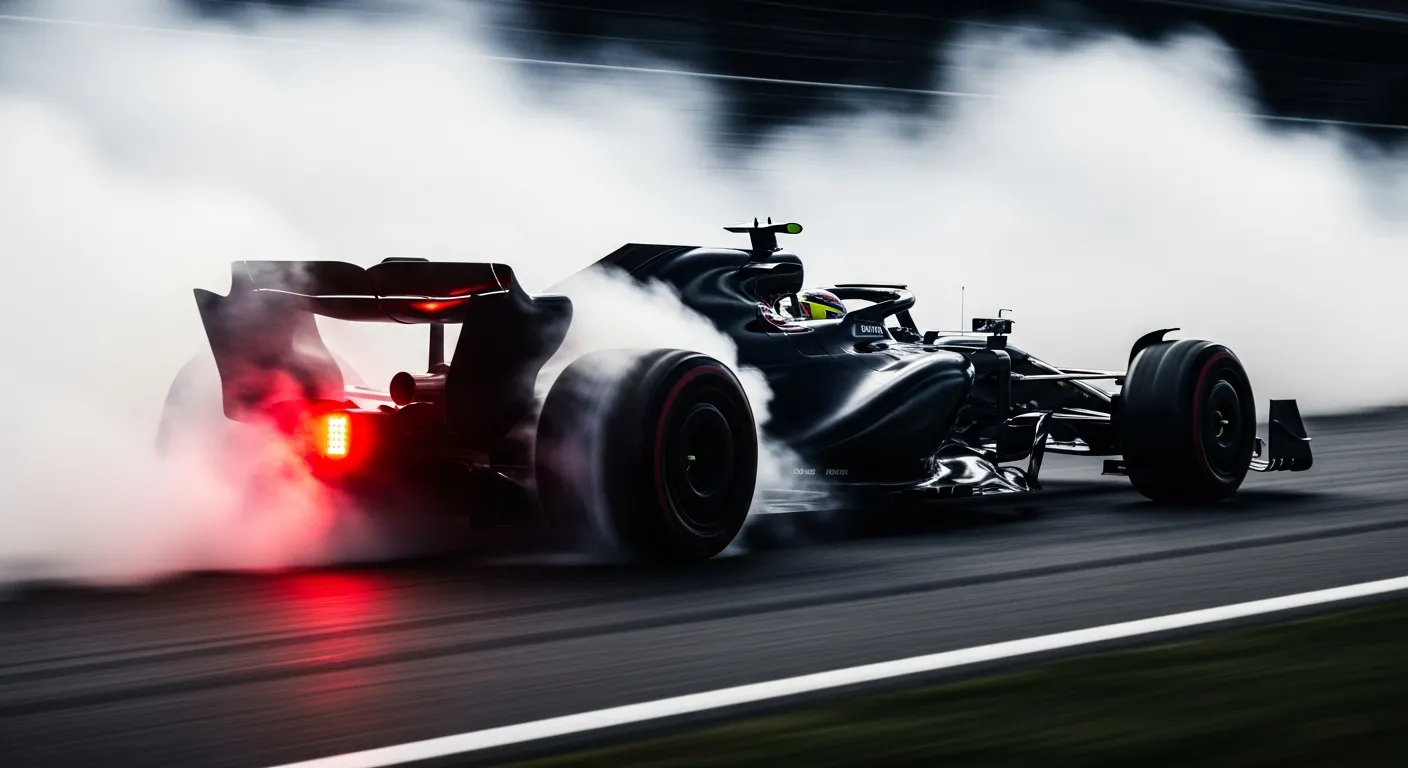
Red Bull Racing's narrative at the British Grand Prix is one of significant growth and adaptation, charting a course from the fringes of the points to consistent contention and ultimately, multiple victories. In their formative years at Silverstone, from 2005 to 2008, the team struggled to make an impact, failing to score any points, with their best finish a tenth place in 2008. These early appearances underscored the challenge of establishing a competitive package on a circuit renowned for its demanding high-speed characteristics.
The turning point arrived dramatically in 2009, when Red Bull secured their first win and an impressive 1-2 finish at Silverstone. This result marked the beginning of a highly successful era for the team, demonstrating the potent combination of Adrian Newey's aerodynamic philosophy and strong driver pairings. This period saw further victories in 2010 and 2012, alongside consistent podium finishes in 2011, 2013, 2014, and 2016. The permanent nature of the Silverstone circuit, with its blend of fast sweeps and technical sections, has historically played to the strengths of Red Bull's chassis design, which often prioritizes aerodynamic efficiency and high-speed cornering stability.
While the mid-2010s saw Red Bull frequently on the podium, outright victories at Silverstone became more elusive as rival teams, particularly Mercedes, found a performance edge. However, the team's resilience and ongoing development efforts, particularly with their Red Bull Powertrains-Ford power unit, have allowed them to reclaim their winning form. The 2020 70th Anniversary Grand Prix, also held at Silverstone, saw them take another victory, followed by a dominant win in 2023. These recent successes highlight the comprehensive package Red Bull now fields, capable of extracting maximum performance from a circuit that demands both aerodynamic prowess and robust power delivery.
The British Grand Prix remains a crucial fixture for Red Bull, being their home race. The circuit's demands for a balanced car, capable of handling high-speed changes of direction and long power applications, continue to be a litmus test for their design philosophy. While their 2021 outing resulted in a challenging race with a best position of 16th, their overall record of 22 starts, 5 wins, and 12 podiums underscores their formidable presence at Silverstone. Fans interested in how different circuits challenge teams might also compare Silverstone's high-speed demands to the street circuit characteristics of Aston Martin at the Singapore Grand Prix, or the varied layout of Aston Martin at the United States Grand Prix. For a deeper dive into historical F1 data, resources like Jolpica/Ergast — 2026 season data provide extensive records. The evolution of Formula 1 regulations, as detailed by the FIA — F1 World Championship, also consistently influences how teams approach circuits like Silverstone, impacting car design and race strategies.