Constructor record
Source: Jolpica F1 API- Starts
- 5
- Race wins
- 3
- Podiums
- 5
- 1-2 finishes
- 0
- Best finish
- P1
- Points
- 148
Won here in: 2021, 2022, 2023
Every appearance
| Year | Best | 2nd | Pts |
|---|---|---|---|
| 2021 |
Team × Circuit · permanent
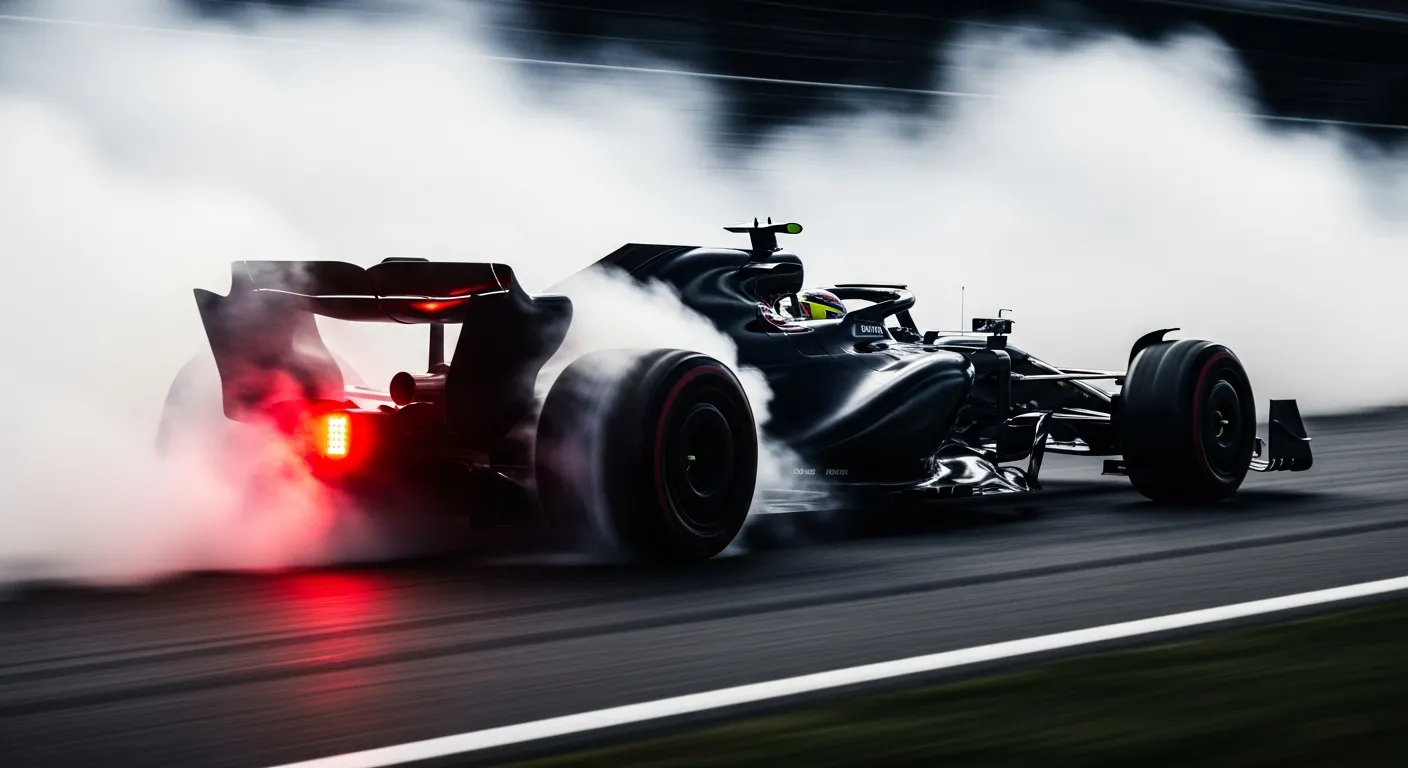
Red Bull Racing has a formidable record at Zandvoort, securing three wins and five podiums in five starts, showcasing their chassis's exceptional adaptation to the circuit's high-downforce demands.
Won here in: 2021, 2022, 2023
| Year | Best | 2nd | Pts |
|---|---|---|---|
| 2021 |
One email a day, ahead of every session. Race results, paddock signal, and the calls the explainer sites miss.
By subscribing, you agree to receive daily F1 news and updates from The F1 Formula. No spam. Unsubscribe anytime. Privacy Policy
Continue reading
Max Verstappen's record at the Dutch Grand Prix at Zandvoort is defined by an initial three-year winning streak and a consistent podium presence at his home circuit.
Red Bull Racing has established a formidable record at the Belgian Grand Prix, particularly in the hybrid era, consistently leveraging their car's aerodynamic efficiency and power unit strength on the demanding Spa-Francorchamps circuit.
| P1 |
| P8 |
| 29 |
| 2022 | P1 | P5 | 36 |
| 2023 | P1 | P4 | 37 |
| 2024 | P2 | P6 | 26 |
| 2025 | P2 | P9 | 20 |
Red Bull Racing's historical dominance at the Dutch Grand Prix, marked by three consecutive wins from 2021 to 2023, underscores a profound synergy between their aerodynamic philosophy and the unique, high-downforce demands of the Zandvoort circuit. In their five starts at this permanent circuit, Oracle Red Bull Racing has secured an impressive three wins and five podiums, a testament to their chassis's inherent strengths on undulating, flowing layouts. The circuit's tight, technical sections, coupled with its distinctive banked corners like the Arie Luyendykbocht, place a premium on a car's ability to generate consistent downforce through varied corner speeds and maintain exceptional mechanical grip.
The Red Bull Powertrains-Ford unit, while not necessarily the outright most powerful on the grid, consistently delivers superb driveability and torque characteristics. This is particularly crucial at Zandvoort, where precise power delivery is needed to navigate the demanding sequence of corners and maximize acceleration out of the slower sections. The team's design philosophy, often emphasizing a strong front end and excellent change of direction, finds a natural home on a track that punishes any hint of understeer or sluggish responsiveness. This is a recurring theme for teams that excel on circuits demanding high aerodynamic efficiency and driver precision, much like the challenges presented at the Aston Martin at the Singapore Grand Prix, another high-downforce affair.
However, the narrative of unchallenged dominance at Zandvoort appears to be evolving. While Red Bull secured first place finishes from 2021 through 2023, recent data indicates a shift, with best finishes of second in both 2024 and 2025. This suggests that the competitive landscape is tightening, or that Zandvoort's specific demands might be exposing subtle shifts in car performance across the grid. The circuit's relatively short straights mean that outright engine power is less of a differentiating factor compared to tracks like Monza, placing a greater emphasis on the chassis and tire management. For a broader understanding of how these technical regulations shape performance, the FIA — F1 World Championship provides detailed insights into the sport's governance.
The Zandvoort circuit's character, with its relentless series of corners and minimal breathing room, demands a car that is inherently balanced and predictable. This aligns well with Red Bull's historical strength in developing stable platforms that allow their drivers to push to the limit. We've seen similar requirements for adaptable aerodynamic packages at circuits like the Aston Martin at the Mexico City Grand Prix, where thin air necessitates maximum aero efficiency. The ability to manage tire degradation through Zandvoort's high-energy corners, particularly the fast sweeps, will also be a critical factor, and Red Bull's strategists, led by Christian Horner, are typically adept at optimizing race stints. Fans can keep up with the latest developments and race results on the Formula 1 — official site.
The absence of any 1-2 finishes for Red Bull at Zandvoort, despite their multiple wins, highlights that while one car has often been supreme, the second driver has faced stiffer competition. This pattern can be observed at other technical circuits, such as the Aston Martin at the Azerbaijan Grand Prix, where individual driver performance and car setup can create larger gaps within a team. As the grid continues to converge, maintaining that edge at a track like Zandvoort will be a key indicator of Red Bull's overall championship contention.