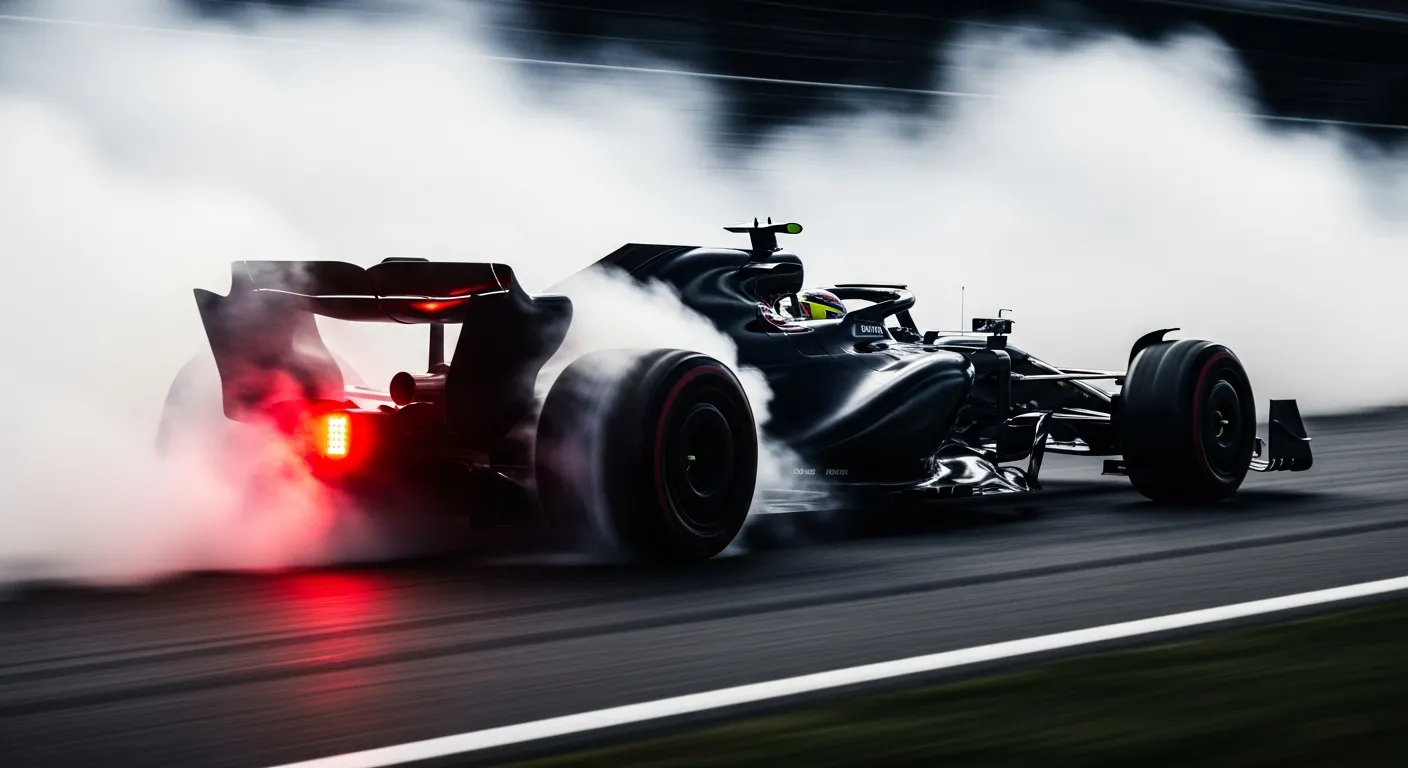
Williams Racing's tenure at the Singapore Grand Prix, a uniquely demanding street circuit, has been a study in contrasts, marked by a singular podium finish amidst a record that otherwise highlights the challenges this venue presents for their car concepts. The team has made 16 starts at Marina Bay, securing a best finish of 2nd place in 2008, which remains their sole podium at this event. Despite this early success, Williams has yet to achieve a win or a 1-2 finish here, accumulating 43 points across all appearances. This record suggests that while flashes of competitive performance have occurred, consistent top-tier results have been elusive on a track that places a premium on mechanical grip and high-downforce efficiency.
The distinct characteristics of the Marina Bay Street Circuit, with its tight corners, numerous braking zones, and unforgiving barriers, often expose any underlying weaknesses in a car's low-speed performance and chassis balance. Historically, Williams' car designs, particularly in certain eras, have sometimes favored lower-drag configurations, which are less suited to the maximum downforce requirements of a street circuit. While the Mercedes power unit provides a strong foundation, raw engine power is less of a differentiating factor here compared to circuits like Spa-Francorchamps, where engine performance is paramount, as explored in our analysis of Red Bull Racing at the Belgian Grand Prix. Instead, the intricate dance of mechanical grip, suspension compliance over kerbs, and efficient cooling in Singapore's humid conditions become critical.
The 2008 podium, achieved by Nico Rosberg, stands out as a testament to strategic execution and driver skill in a chaotic race, rather than an inherent dominance of the car's package at Marina Bay. In subsequent years, particularly during periods of rebuilding for the team, Williams often found itself outside the points, struggling to adapt its chassis to the specific demands of the circuit. For instance, between 2011 and 2013, and then again from 2016 to 2023, the team frequently finished outside the top ten, with several races yielding no points at all. This pattern underscores the challenge of optimizing a car for both the high-speed sections and the technical, twisty confines of a street circuit, a challenge that is consistently a focus for teams across the grid, as documented on the Formula 1 — official site.
Looking ahead, the team's ability to extract performance on high-downforce, technical layouts like Singapore will be a key indicator of their overall progress. Modern F1 car design is an intricate balance, and circuits like Marina Bay, or even the more traditional high-downforce challenge of the Red Bull Racing at the Hungarian Grand Prix, serve as crucial benchmarks. James Vowles, as team principal, has consistently emphasized a methodical approach to development, focusing on addressing fundamental car characteristics. Understanding how a team's car concept performs on diverse tracks is essential, as detailed by the FIA — F1 World Championship regulations. The data from previous seasons, available through resources like Jolpica/Ergast — 2026 season data, provides a historical lens through which to view these ongoing development efforts.
The Singapore Grand Prix demands a car that is not only aerodynamically efficient but also boasts excellent mechanical grip and robust braking performance. This contrasts with circuits where aerodynamic efficiency might be the primary focus, such as the Red Bull Racing at the Spanish Grand Prix which, while technical, offers different challenges. For Williams, success at Marina Bay hinges on a chassis that can generate sufficient downforce without excessive drag, coupled with a suspension setup that can manage the bumpy street surface effectively. The team's ongoing development under the guidance of James Vowles aims to build a more versatile car, capable of performing across a broader spectrum of circuit types, making their future Singapore outings particularly insightful.