Skip to main contentSkip to main content
NewsAnalysisTech LabGuidesDriversGlossaryAbout
The F1 FormulaThe F1 Formula

The F1 Formula

Your daily source for Formula 1 news, race results, and insights.

NewsAnalysisTech LabGuidesDriversGlossaryAbout

Stay in the loop

Get the latest F1 news and race insights delivered to your inbox.

By subscribing, you agree to receive daily F1 news and updates from The F1 Formula. No spam. Unsubscribe anytime. Privacy Policy

© 2026 Total Ventures LLC. All rights reserved.

Privacy PolicyTerms of ServiceCookie Policy
Aerodynamics

Tech Lab · Aerodynamics

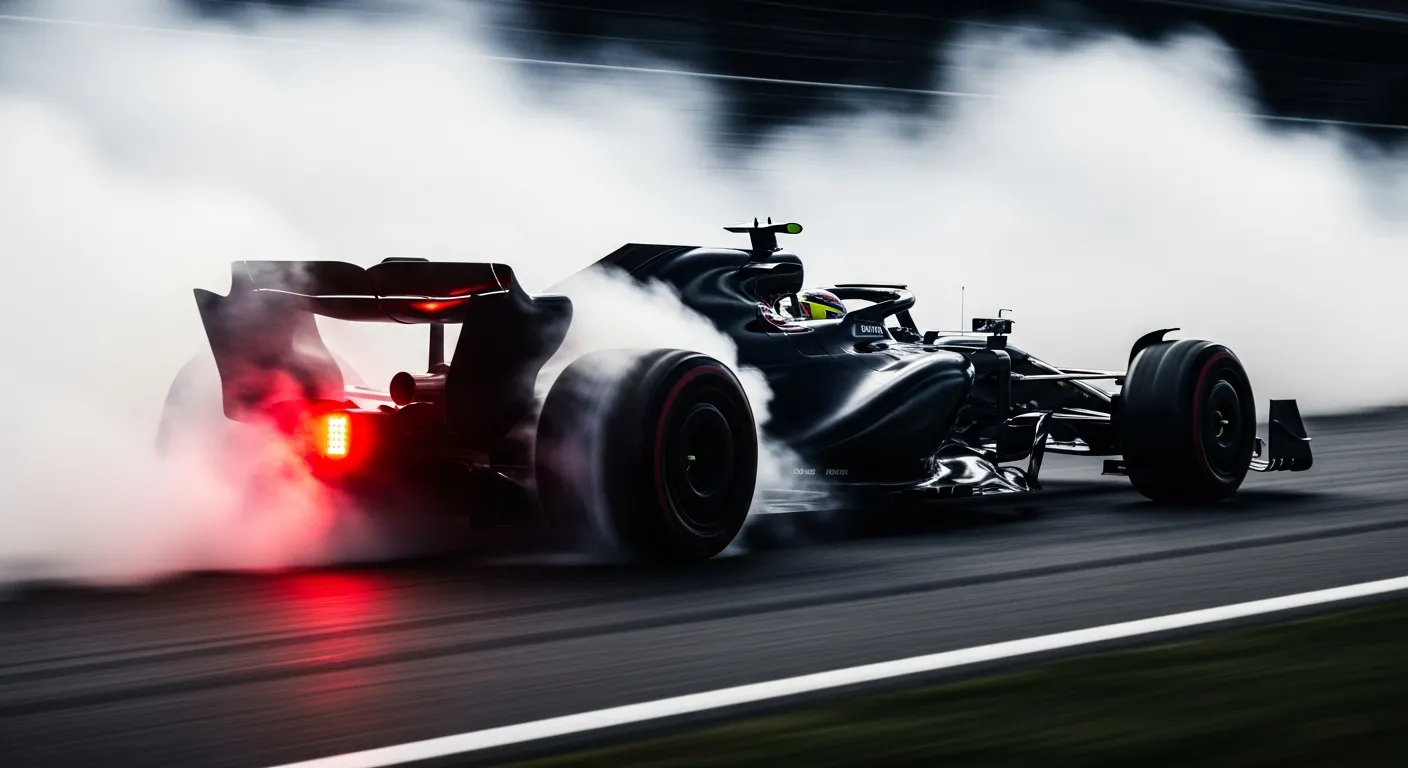
Rear Wing

The primary downforce generator at the rear. Works with the DRS system to balance straight-line speed against cornering grip, and anchors the balance between front and rear aerodynamic load.

  • Aerodynamics
  • Since 1968

By the numbers

Category

Aerodynamics

Active from

1968

The rear wing is the most visible — and most adjustable — aerodynamic component on an F1 car. Unlike the front wing, which must manage complex interactions with tyres and floor, the rear wing operates in cleaner air and converts that advantage into significant downforce.

Two Main Elements

A modern rear wing uses two main elements: a lower mainplane and an upper flap. The flap is the element that opens during DRS operation — its leading edge pivots up on a hydraulic actuator, creating a slot gap that allows high-pressure air to slip through and kill separation-induced drag.

The Beam Wing

Below the main rear wing sits a smaller "beam wing" at the car's waist height. Often overlooked, it manages the transition between floor diffuser and the main wing's aerodynamic system — critically important for making ground effect work efficiently.

Balance Management

Teams arrive at each circuit with several rear wing configurations: high-downforce (Monaco, Hungary), medium (most circuits), and low-drag (Monza). The gap between front and rear downforce levels determines the car's handling balance — a rear-biased setup is oversteer-prone; front-biased is understeer.

2026 Active Aero

DRS is eliminated for 2026 in favor of a fully active rear wing. The flap angle is controlled by the driver (and restricted by FIA rules during overtaking zones) for any position on track, not just designated zones.

Daily Brief

F1 tech, explained before the next race.

Engineering analysis every week.

Tomorrow’s F1, in your inbox.

One email a day, ahead of every session. Race results, paddock signal, and the calls the explainer sites miss.

By subscribing, you agree to receive daily F1 news and updates from The F1 Formula. No spam. Unsubscribe anytime. Privacy Policy

Technical Specifications

Width
950mm
Height from reference plane
800–900mm
Max. chord length
250mm
DRS slot gap
65mm

When open

Elements
2

Main plane + upper flap (plus beam wing below)

Regulation History

  1. 2011

    DRS (Drag Reduction System) introduced. Rear wing upper flap can open in detection zones.

  2. 2022

    Wing profile revised for ground-effect car. Beam wing geometry standardized.

  3. 2026

    DRS eliminated. Full active aerodynamics — driver-controlled flap angle throughout lap.

Interactive Diagram

DRS Closed — Standard Configuration

REFMAIN PLANEUPPER FLAPDOWNFORCEDRAGENDPLATEpivot

Click the indicators above to explore diagram states

Continue reading

Related coverage

  • Tech Lab · Aerodynamics

    DRS Explained

    How a 65mm slot in the rear wing adds 10-14 km/h of top speed — and why F1 is replacing it with something far more sophisticated in 2026.

    Read
  • Tech Lab · Aerodynamics

    Ground Effect

    How sculpted tunnels under the car use the Venturi principle to generate more downforce than wings — while leaving a cleaner wake that makes overtaking possible.

    Read
  • Tech Lab · Aerodynamics

    Active Aerodynamics: F1's 2026 Revolution

    How 2026's moveable front and rear wings replace DRS with something fundamentally different — driver-controlled aerodynamic balance throughout every lap, not just on designated straights.

    Read