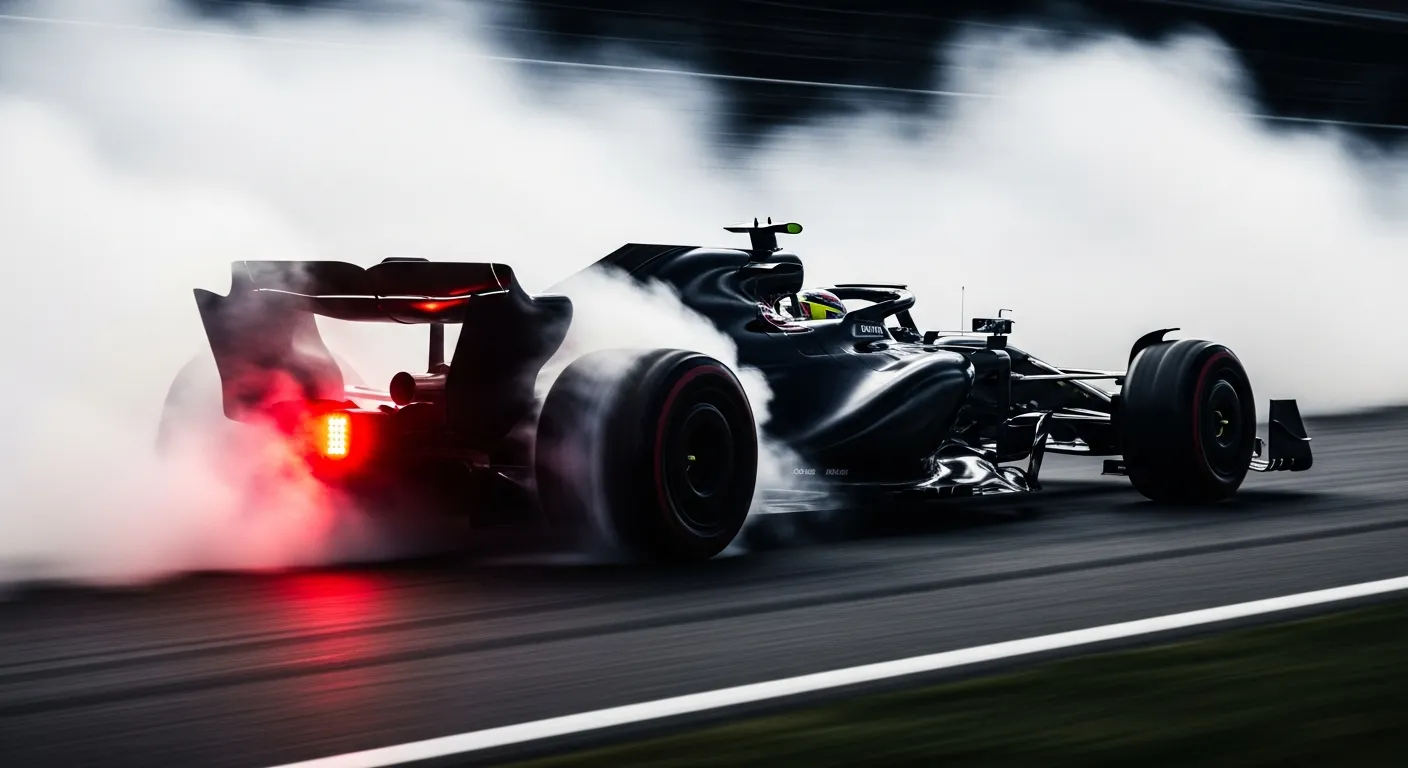
The Drivers’ Championship is the pinnacle of individual achievement in Formula 1, recognizing the single driver who outperforms all others by accumulating the highest points total over an entire season. This coveted title is distinct from the Constructors' Championship, which celebrates the collective effort of a team.
How Points Are Awarded
Throughout a Formula 1 season, drivers earn points based on their finishing position in each Grand Prix and, more recently, in Sprint races. The current system awards 25 points for a win, 18 for second, 15 for third, and so on, down to one point for tenth place. An additional point is often awarded for setting the fastest lap, provided the driver finishes in the top ten. These points are meticulously tracked by the FIA, Formula 1's governing body, which oversees all sporting and technical regulations.
Securing the Title
A driver secures the Drivers’ Championship when their accumulated points total becomes mathematically unassailable by any other competitor, regardless of the remaining races. This can happen early in the season if one driver maintains overwhelming dominance, or it can go down to the wire, with the title decided in the final Grand Prix. The tension in these scenarios is palpable, often leading to moments that become etched in F1 history. For instance, the 2021 season saw Max Verstappen and Lewis Hamilton battle intensely until the very last lap of the final race, a testament to how fiercely contested this championship can be.
Drivers' vs. Constructors' Championship
It's a common misconception that a driver must belong to the Constructors' Championship-winning team to claim the individual title. While often correlated, this isn't strictly true. A driver can, in theory, win the Drivers' Championship even if their team doesn't secure the Constructors' title, though this is rare given the importance of a competitive car. The performance of a car, including its Pirelli tires and overall setup, is crucial, but a driver's skill, consistency, and ability to avoid penalties from the Stewards are equally vital. A rookie driver, for example, faces a steep learning curve not just in car handling but also in managing race strategy and championship aspirations.
Historical Significance
The concept of an individual driver's championship has been central to Formula 1 since its inception in 1950. It’s the metric by which legends are truly measured, with names like Schumacher, Hamilton, and Fangio recognized for their multiple titles. Understanding the Drivers' Championship is fundamental to grasping the individual narratives that unfold each season, showcasing personal triumphs and rivalries within the broader team competition. For a deeper dive into motorsport terminology, the drivers championship — Wikipedia glossary entry provides further context.
Common questions
- How many points do you get for winning a race?
- A Grand Prix winner typically earns 25 points. Points are awarded down to tenth place, with an extra point for the fastest lap if the driver finishes in the top ten.
- Can a driver win the championship without winning many races?
- Yes, it's possible. Consistency in finishing on the podium or in the points, combined with other drivers having DNFs or inconsistent results, can lead to a championship win.
- What's the difference between the Drivers' and Constructors' Championship?
- The Drivers' Championship is for individual drivers, while the Constructors' Championship is awarded to the team based on the combined points of its two drivers.