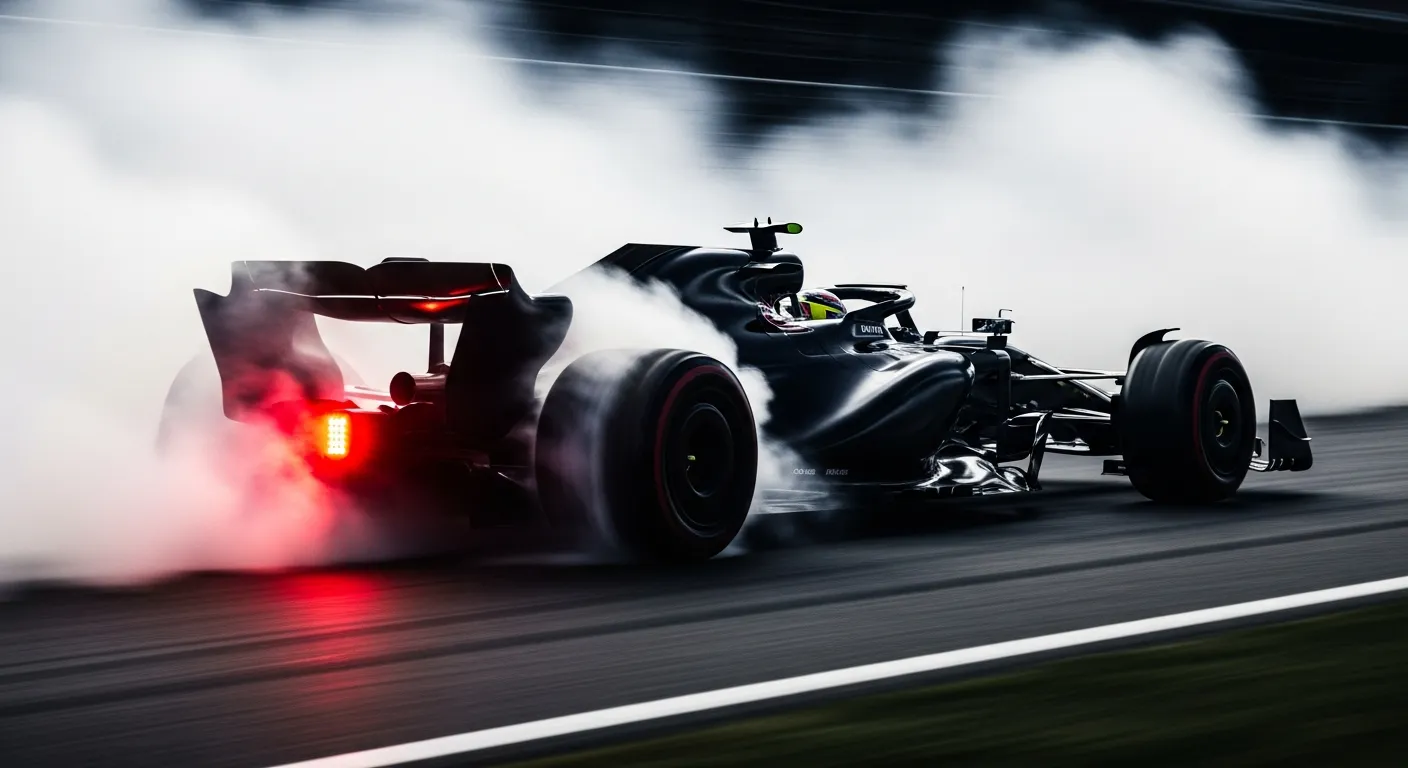
The 2023 Qatar Grand Prix at the Lusail International Circuit was fundamentally shaped by the FIA's unprecedented mandatory three-stop tire strategy, transforming a typical ground-effect era race into a strategic endurance challenge under extreme conditions. This decision, prompted by concerns over tire degradation on the circuit's kerbs, dictated every team's approach, making tire management and pit stop execution paramount.
Qualifying
Qualifying for the main event saw Max Verstappen secure pole position, demonstrating the Red Bull RB19's raw pace. The session was not without its drama, particularly for McLaren, who showed impressive speed with Oscar Piastri and Lando Norris initially placing high, though Norris faced track limits infringements that impacted his final grid slot. This strong showing from McLaren, following Piastri's win in the Sprint Race, signaled their potential to challenge at the front, setting the stage for a compelling Sunday race. The intense competition for grid positions underscored the fine margins in modern Formula 1, where every tenth of a second and every millimeter of track adherence counts, as detailed on the Formula 1 — official site.
Race
The Grand Prix began with immediate drama, as a collision between the Mercedes drivers, George Russell and Lewis Hamilton, at Turn 1 on the opening lap led to a Safety Car deployment. Hamilton's race ended prematurely, while Russell recovered to continue, albeit with damage. This incident reshuffled the early running and presented an immediate strategic dilemma for teams, forcing them to adapt their plans within the mandated pit windows. Verstappen, however, maintained a commanding lead, managing the race from the front with characteristic precision. The unique strategic demands meant that while overtakes on track were important, the real battle often unfolded in the pit lane, with teams executing rapid tire changes every 18 laps.
Strategic Story
The core narrative of the 2023 Qatar Grand Prix revolved around the FIA's directive for a maximum of 18 laps per tire set, effectively mandating a three-stop strategy for all competitors. This ruling, implemented for driver safety following observations of excessive tire wear and potential delamination risks on the Lusail circuit's aggressive kerbs, fundamentally altered the race dynamic. Teams had to meticulously plan their pit windows, ensuring drivers did not exceed the prescribed lap count on any single set of tires. This constant cycling through the pit lane placed immense pressure on pit crews, where even a fraction of a second lost could mean losing track position. The race became a high-speed chess match, with teams constantly calculating their optimal stop points and managing traffic. This level of strategic intensity is a stark contrast to races like the 2025 Austrian Grand Prix, which often features shorter lap times and different tire wear characteristics, or the high-speed demands of the 2025 Belgian Grand Prix where tire degradation is also a factor but typically managed with fewer stops. Understanding these regulatory impacts is crucial for any fan following the FIA — F1 World Championship.
Championship Impact
While Max Verstappen had already secured his third consecutive Drivers' World Championship in the preceding Sprint Race, the Grand Prix itself provided valuable points for the Constructors' Championship and individual driver standings. Red Bull further cemented their dominant season, while McLaren's strong performance, securing a double podium, significantly boosted their position in the Constructors' battle. The race underscored the competitive landscape of the ground-effect era, where even after a championship is decided, every point remains vital for team hierarchies and future development. For a broader historical context of Formula One and its various eras, Wikipedia: Formula One offers extensive insights. Analyzing the race data, such as that available from Jolpica/Ergast — 2026 season data, reveals the intricate lap-by-lap strategic decisions made under these unique conditions. The implications of such strategic races can resonate, much like the tactical battles seen at the 2025 British Grand Prix, influencing team confidence and development trajectories for the remainder of the season, as reported by leading Autosport's F1 analysis.
Full classified results
Every driver's verified grid-to-flag result from the 2023 Qatar Grand Prix — grid, finish, points, teammate H2H, and championship swing.
- P1Max VerstappenRed Bull26 pts
- P2Oscar PiastriMcLaren18 pts
- P3Lando NorrisMcLaren15 pts
- P4George RussellMercedes12 pts
- P5Charles LeclercFerrari10 pts
- P6Fernando AlonsoAston Martin8 pts
- P7Esteban OconAlpine F1 Team6 pts
- P8Valtteri BottasAlfa Romeo4 pts
- P10Sergio PérezRed Bull1 pts
- P11Lance StrollAston Martin0 pts
- P12Pierre GaslyAlpine F1 Team0 pts
- P13Alexander AlbonWilliams0 pts
- P15Yuki TsunodaAlphaTauri0 pts
- P16Nico HülkenbergHaas F1 Team0 pts
- P17Liam LawsonAlphaTauri0 pts
- —Lewis HamiltonMercedesRetired
- —Carlos SainzFerrariDid not start