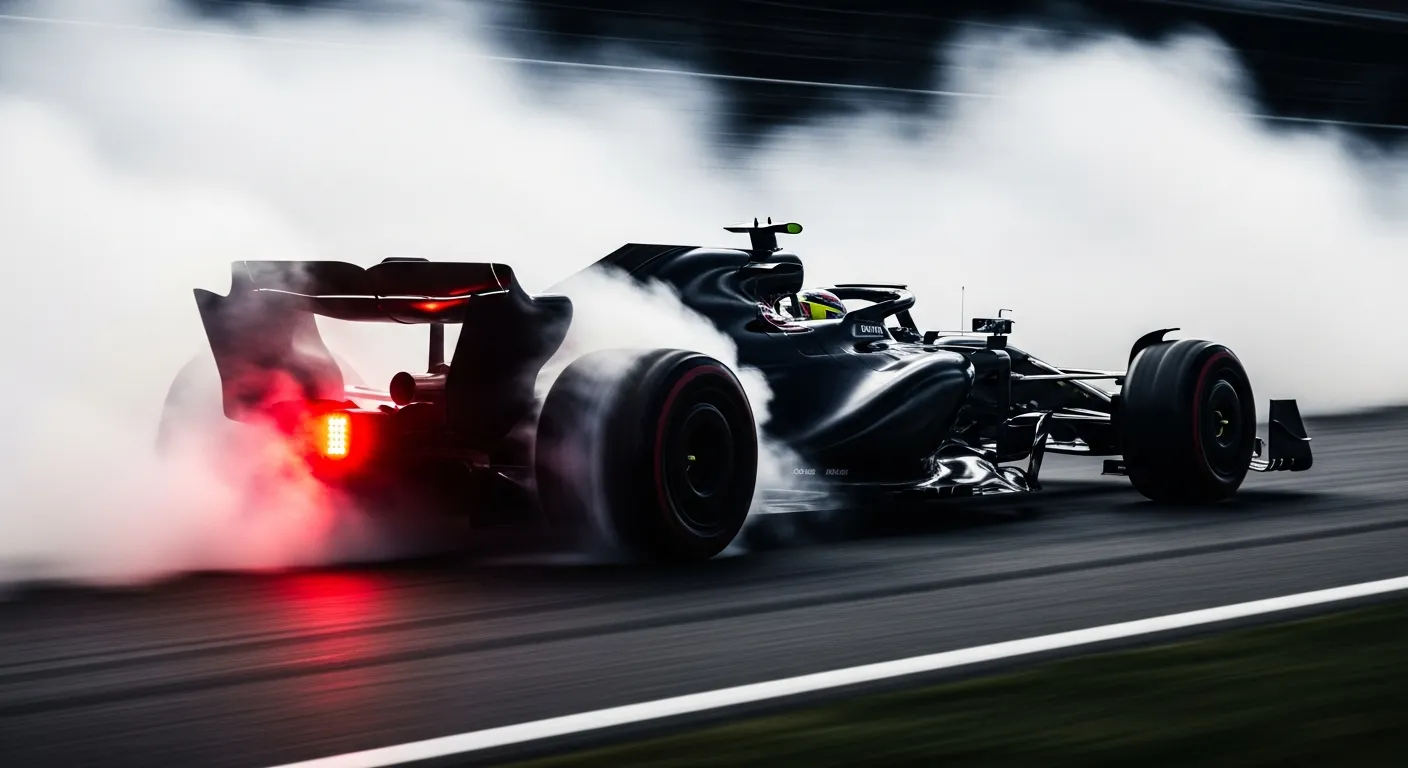
Fernando Alonso's performance at the 2023 Qatar Grand Prix on October 8, 2023, saw the Aston Martin driver navigate a challenging race at the Lusail International Circuit, ultimately securing a 6th place finish and adding 8 points to his championship tally. Starting from the 4th position on the grid, Alonso initially held his ground in the early stages, demonstrating the AMR23's capabilities in the demanding conditions. The race, characterized by strict tire management regulations due to concerns over tire integrity, required a strategic approach to pit stops and pace. Alonso completed all 57 laps with a total race time of 1:28:28.200, showcasing consistent driving despite the intense heat and the physical demands of the Lusail circuit, a track known for its high-speed sections and technical corners, as detailed on the [Formula 1 — official site](https://www.formula1.com/en). His fastest lap, recorded on lap 57 at 1:26.045, ranked 6th overall, indicating a strong finish to the race.
The Qatar Grand Prix presented a complex scenario for many teams, with tire degradation playing a pivotal role. While Alonso maintained a points-scoring position, his teammate Lance Stroll, starting from 16th, finished 11th, outside the points, highlighting the differing outcomes within the Aston Martin garage. This contrast underscores the individual challenges faced by drivers and the varying effectiveness of race strategies. The broader field saw Max Verstappen claim victory, with McLaren's Oscar Piastri and Lando Norris completing the podium, demonstrating the competitive landscape that Aston Martin was contending with. The race also featured significant incidents, such as the collision between George Russell and Lewis Hamilton, and a non-start for Carlos Sainz Jr. due to a fuel leak, which impacted the overall dynamic of the race weekend. For a deeper dive into the specifics of F1 racing and its technical regulations, the [FIA — F1 World Championship](https://www.fia.com/events/fia-formula-one-world-championship) provides comprehensive resources. Comparing Alonso's outing to other midfield battles, drivers like [Esteban Ocon at the 2024 Japanese Grand Prix](/results/2024-suzuka-esteban-ocon) often face similar strategic dilemmas. The data from the 2023 Qatar Grand Prix, available through platforms like [Jolpica/Ergast — 2026 season data](https://api.jolpi.ca/ergast/f1/2026.json), offers a detailed look into these performances. Further analysis of driver performances, such as [Alexander Albon at the 2024 Japanese Grand Prix](/results/2024-suzuka-alex-albon), often reveals the fine margins in the midfield. Meanwhile, the unexpected non-start for [Carlos Sainz at the 2024 Japanese Grand Prix](/results/2024-suzuka-carlos-sainz) (referencing the general context of unexpected events) serves as a reminder of the sport's unpredictability. The overall structure and history of the sport can be explored on [Wikipedia: Formula One](https://en.wikipedia.org/wiki/Formula_One), and the full 2023 season calendar can be reviewed on [Formula 1's official race calendar](https://www.formula1.com/en/racing/2023.html) for broader context on the championship via [FIA's driver and constructor standings](https://www.fia.com/sports/formula-1/championship-standings).
Verified race record · Ergast
Grid
P4
Finish
P6
Points
8
Laps
57
Constructor
Aston Martin
Status
Finished
Teammate that weekend
Lance Stroll
Grid P16 · Finish P11 · 0 pts
Championship · before vs after
Before round 17
P4174 pts
After round 17
P4183 pts