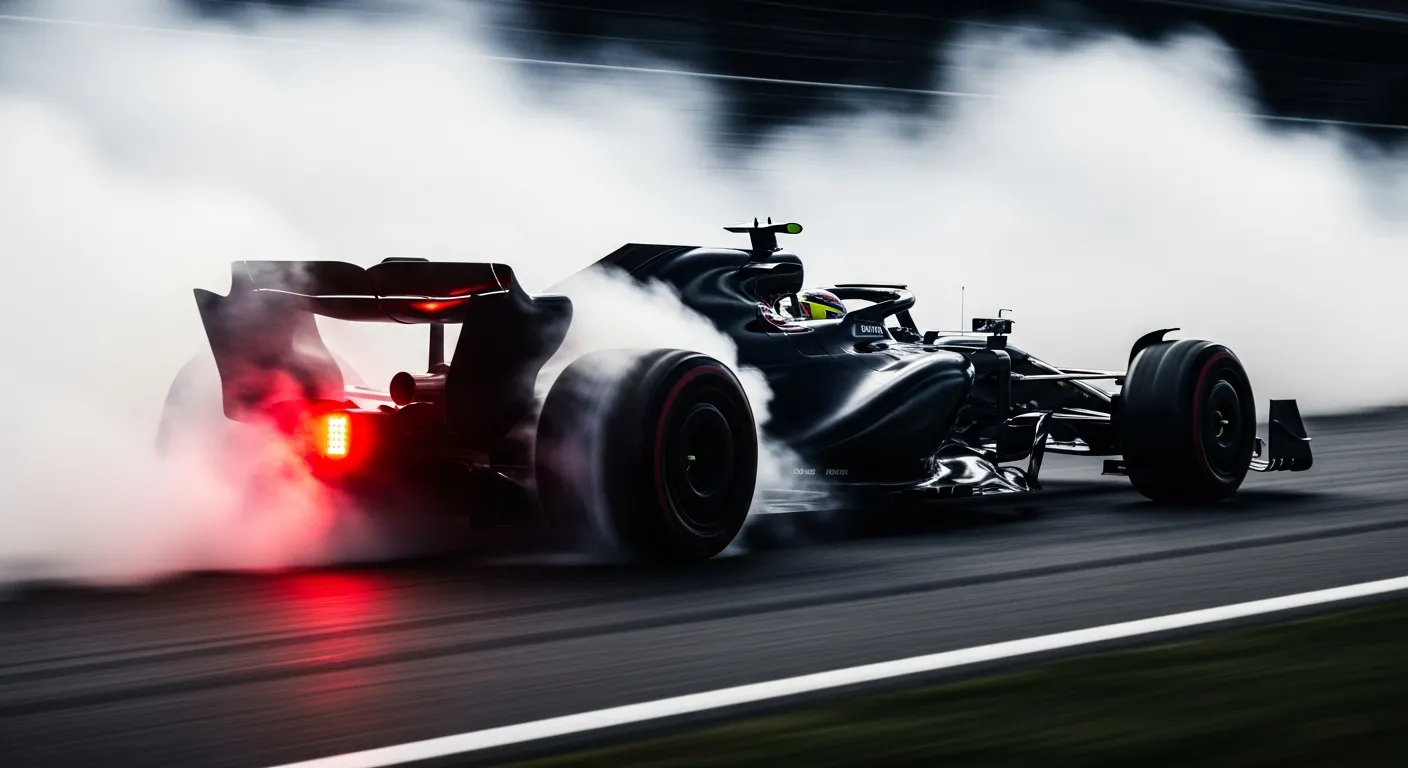
Fernando Alonso's extensive history at the Monaco Grand Prix paints a picture of a driver whose raw talent and precision have consistently elevated performance on a circuit that demands absolute commitment. With 21 starts at the iconic street circuit, Alonso has demonstrated an exceptional ability to extract performance, particularly during his championship-winning years. His debut in 2001 with Minardi was a challenging introduction, ending in a gearbox retirement, but it was a foundational experience for what would become a remarkable Monaco career. The early 2000s saw him develop, culminating in his first podium in 2006.
The mid-2000s marked Alonso's dominance in Monte Carlo. He secured back-to-back victories, first in 2006 with Renault and then again in 2007 with McLaren. These wins were not merely fortunate outcomes but clear demonstrations of his mastery over the unique demands of the circuit. The 2006 victory saw him convert a pole position into a flawless race, managing the tight confines and strategic nuances characteristic of Monaco. His 2007 triumph, also from pole, further solidified his reputation as a formidable presence on the principality's streets, showcasing his ability to maintain relentless pace under pressure. This era underscored a synergy between driver and circuit, where Alonso's meticulous approach to qualifying and race management paid dividends.
Moving to Ferrari, Alonso continued to show strong form at Monaco, even without further wins. He secured two more podium finishes, a second place in 2011 and a third in 2012, highlighting his sustained capability to compete at the sharp end. These performances often came in machinery that wasn't always the outright fastest, reflecting his skill in maximizing the car's potential on a track where driver input can often outweigh minor car performance deficits. His ability to navigate the narrow sections and manage tyre degradation over long stints remained a hallmark of his Monaco appearances. For a deeper dive into how drivers adapt to challenging street circuits, one might compare his approach to that of Yuki Tsunoda at the Azerbaijan Grand Prix, another high-stakes urban environment.
Even in less competitive machinery, particularly during his second stint with McLaren and later with Alpine, Alonso's Monaco outings often featured flashes of his enduring skill, though results were sometimes hampered by reliability or car performance. His 2018 DNF due to a gearbox issue with McLaren was a reminder of the fragility that can strike even the most experienced drivers on this unforgiving circuit. However, his return to the podium in 2023 with Aston Martin, securing a second-place finish, was a testament to his unparalleled experience and adaptability. This performance, 16 years after his last Monaco win, showcased a driver who continues to defy conventional expectations, leveraging every ounce of his extensive Formula 1 — official site experience. The strategic complexities of Monaco, from qualifying to pit stop windows, play directly into Alonso's strengths as a driver who thinks several moves ahead.
Alonso's precise steering inputs, exceptional spatial awareness, and ability to ride the kerbs without upsetting the car are particularly well-suited to the demands of Monte Carlo. This is a circuit where minute errors are severely punished, and Alonso's disciplined approach minimizes risk while maximizing speed through the tight chicanes and hairpins. His capacity for consistent lap times, even under immense pressure, is a critical asset here, much like the precision required on another demanding street circuit, as seen with Yuki Tsunoda at the Singapore Grand Prix. While the 2024 race saw him finish 11th from a 14th grid start, the performance in 2023 underscores that when the car is competitive, Alonso remains a formidable force at Monaco. The comprehensive data on F1 seasons, including specific race results, can be explored through resources like Jolpica/Ergast — 2026 season data, which tracks driver and circuit statistics across the sport's history. Understanding the nuances of a driver's career requires examining their performance across various circuit types, a topic often discussed on Wikipedia: Formula One pages dedicated to driver statistics.