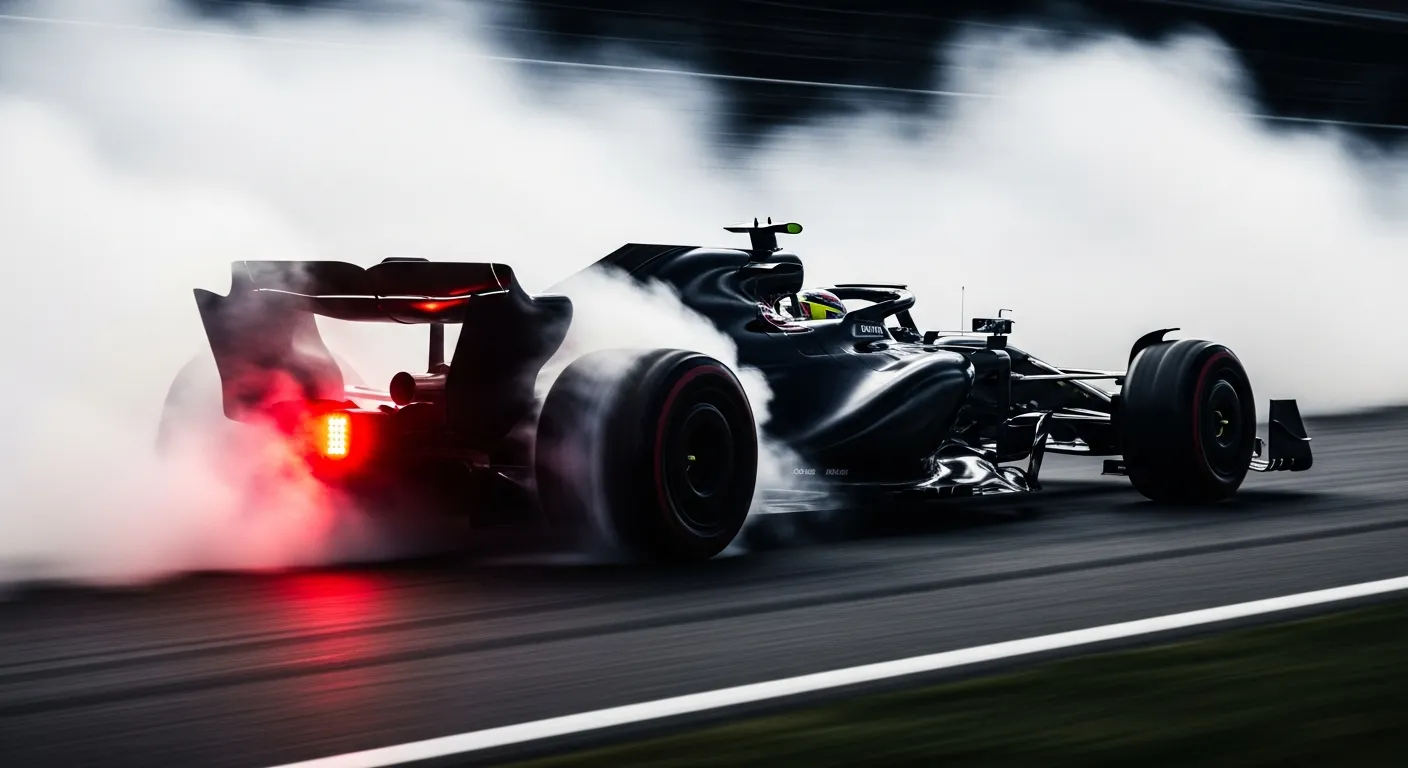
The Drag Reduction System (DRS) is a pivotal aerodynamic aid in modern Formula 1, specifically engineered to facilitate overtaking by temporarily reducing a car's drag. Introduced in 2011, its primary purpose was to enhance racing spectacle by giving drivers a tool to overcome the aerodynamic disadvantage of following another car closely, often referred to as "dirty air."
The Mechanics of DRS
At its core, DRS operates by opening a flap on the car's rear wing. When activated, this flap moves, flattening the wing's profile and significantly decreasing the aerodynamic resistance (drag) the car experiences. The immediate effect is a notable increase in straight-line speed, which can be crucial for gaining an advantage over a competitor. This mechanism is governed by strict technical guidelines outlined in the FIA Formula One regulations, ensuring fair application across the grid. Drivers engage DRS via a button on their steering wheel, but its use is tightly controlled by race control, not left to driver discretion at any point on the track.
Strategic Deployment and Race Impact
DRS is only available under specific conditions during a race. A driver must be within one second of the car ahead at a designated detection point on the circuit. Once detected, they are permitted to activate DRS in subsequent designated "DRS zones," which are typically long straights. This system directly impacts a car's potential Lap Time by providing a temporary speed boost, making overtakes more feasible. However, DRS is not active during the first two laps of a race, nor immediately after a Safety Car or Virtual Safety Car period, to ensure racing has fully resumed. It's also disabled if track conditions are deemed unsafe, such as in heavy rain. The strategic interplay of DRS is critical; teams often time their pit stops to emerge into a clear track or within DRS range of a competitor, influencing the optimal Pit Window. A classic example of strategic DRS use was seen in the 2022 Saudi Arabian Grand Prix, where Max Verstappen and Charles Leclerc famously played a cat-and-mouse game, each trying to avoid being the lead car over the DRS detection line to gain the advantage on the subsequent straight. While DRS provides a speed advantage, factors like tire degradation, which can be understood in the context of Pirelli — tire compound + regulation context, and the car's performance through corners leading onto the straight, remain vital for completing an overtake.
Common Misconceptions and Nuances
Despite its design to aid overtaking, DRS does not guarantee a pass. The speed differential might not always be sufficient, or the car being pursued might have superior traction out of the preceding corner, negating some of the DRS advantage. A common point of confusion for viewers is the concept of a "DRS train," where multiple cars are all within one second of the car in front. In such scenarios, the DRS advantage for the leading car in the train is effectively nullified because the cars behind it also gain DRS, maintaining the gaps. Furthermore, a driver can sometimes use DRS defensively if they are within one second of the car ahead of them, even if they are simultaneously being attacked by a car behind them. This nuanced application can lead to fascinating strategic battles, influencing whether a driver might attempt an Undercut to gain track position. For a broader understanding of its place in motorsport terminology, the drs — Wikipedia glossary entry provides additional context.
Common questions
- Can a driver use DRS whenever they want?
- No, DRS is only active in designated zones on the track, typically on long straights. A driver must also be within one second of the car ahead at a specific detection point to enable it.
- Does DRS make overtaking too easy?
- While designed to aid overtaking, DRS doesn't guarantee it. Factors like tire condition, car performance, and driver skill still play a crucial role. Sometimes, even with DRS, an overtake isn't possible.
- Why is DRS sometimes disabled?
- DRS is disabled during the first two laps of a race, after a safety car or VSC period until racing conditions normalize, and when race control deems track conditions unsafe, such as in heavy rain.