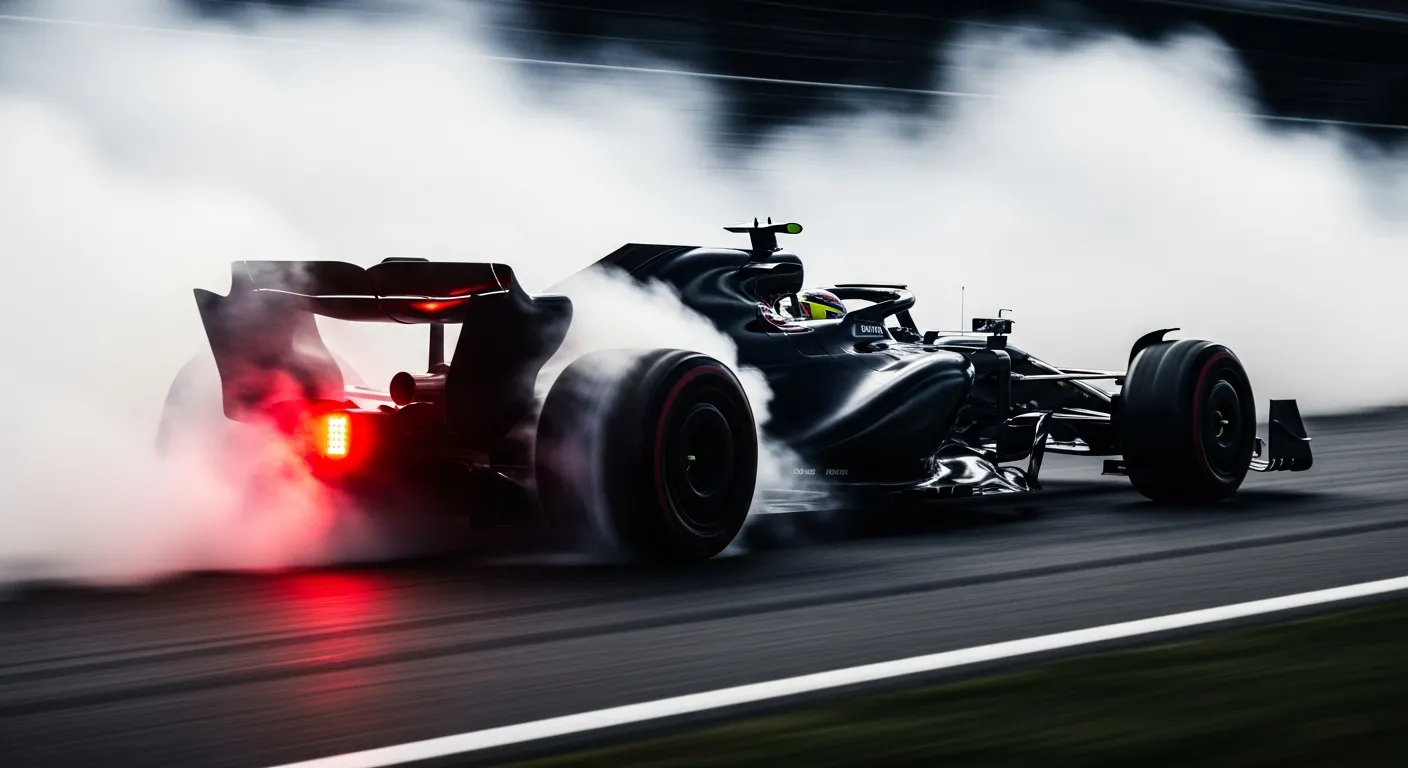
Lewis Hamilton's history at the Austrian Grand Prix, held on the permanent Red Bull Ring circuit, is a study in contrasts, marked by dominant victories and periods of relative struggle, reflecting both his prowess and the specific demands of the Spielberg track.
Hamilton has made 14 appearances at this circuit, securing two wins and six podium finishes. His first victory came in 2016, a hard-fought battle that culminated in a last-lap incident. The second win arrived in 2020 at the Styrian Grand Prix, also held at the Red Bull Ring, where he delivered a commanding performance. These results highlight his ability to master the circuit's unique rhythm when the car is in its optimal window. The Red Bull Ring, with its short lap and high average speed, often rewards drivers who can carry momentum through its fast sections and manage tyre degradation over a race distance. For a broader perspective on driver performance at this venue, one might consider Lance Stroll at the Austrian Grand Prix.
Despite the wins, Hamilton's record here isn't one of consistent dominance, especially when compared to some other circuits on the Formula 1 — official site calendar. He has faced challenges, including a DNF in 2018 due to fuel pressure issues, and several races where he finished outside the podium positions. This circuit’s layout, characterized by heavy braking zones into Turns 1, 3, and 4, followed by long straights, demands a specific car setup that balances straight-line speed with aerodynamic efficiency for the faster corners. Hamilton’s adaptability has often been tested here, requiring precise car placement and a nuanced approach to tyre management, particularly with the high-energy demands on the compounds.
In recent seasons, as Mercedes' competitive edge has fluctuated, Hamilton's results at Spielberg have mirrored those trends. His 2022 podium was a strong recovery drive, but the 2023 and 2024 races saw him finish 8th and 4th respectively, indicating the ongoing challenge of extracting maximum performance from the W14 and W15 on this particular layout. The circuit’s elevation changes and limited number of corners mean that any small deficit in car performance is amplified. Looking ahead to his move to Ferrari in 2025, it will be intriguing to observe how he adapts to a new machine on a track that has historically been a mixed bag for him. The technical regulations governing Wikipedia: Formula One are constantly evolving, influencing car designs and, consequently, driver performance at specific venues. This dynamic is also evident at other permanent circuits, such as when observing Lance Stroll at the British Grand Prix.
The Austrian Grand Prix is often a Sprint Race weekend, adding another layer of complexity to Hamilton's approach. The condensed schedule means less practice time to fine-tune the car, placing a greater emphasis on immediate setup and driver feel. This format can either play into his hands, allowing him to capitalize on strong qualifying pace, or expose any underlying car weaknesses. Given the tight margins and the potential for track limits penalties at this venue, managing every lap with precision is paramount. The data from past seasons, available through resources like the Jolpica/Ergast — 2026 season data, provides a granular view of how drivers and teams have performed under these specific conditions. Similar strategic considerations often apply to central European tracks, as seen with Lance Stroll at the Hungarian Grand Prix.