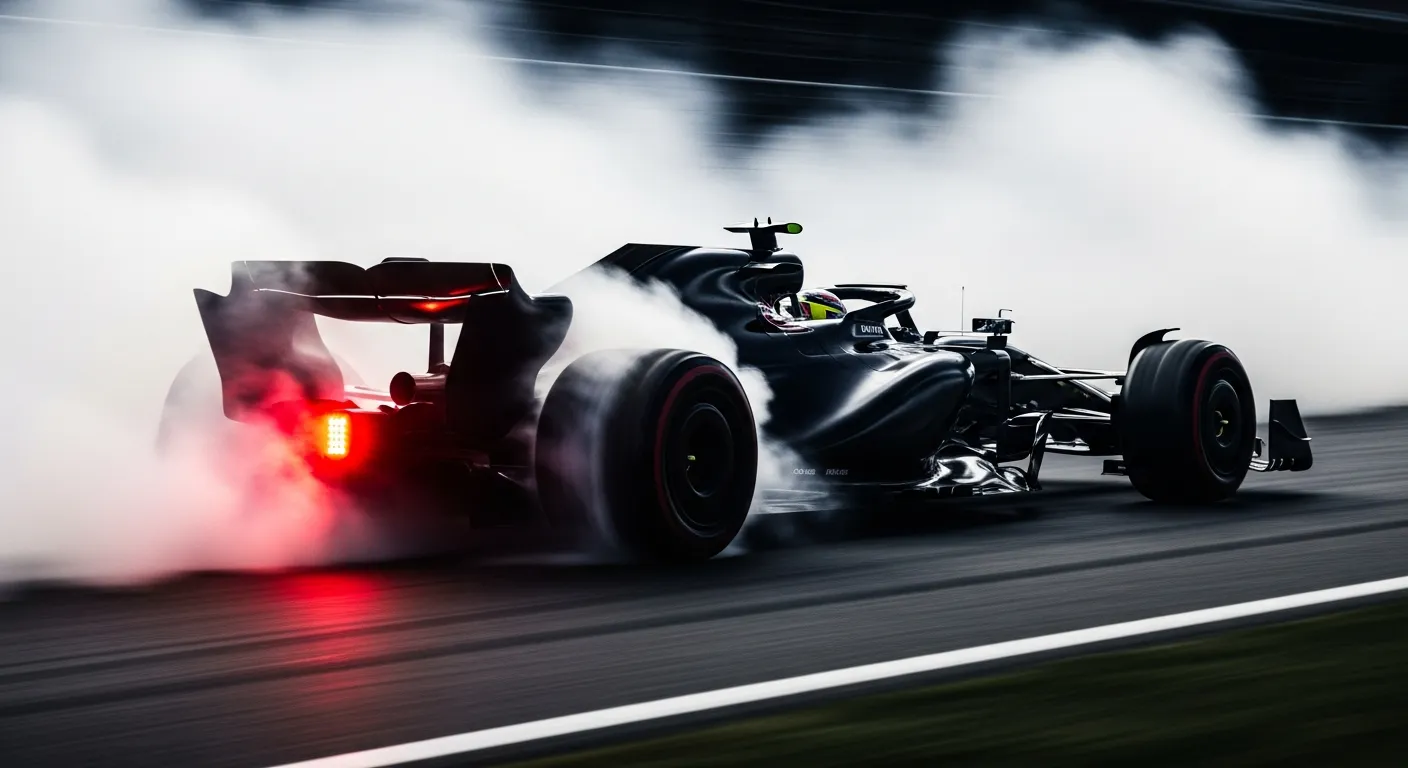
Nico Hülkenberg's performance at the 2014 Spanish Grand Prix on May 11, 2014, at the Circuit de Barcelona-Catalunya, exemplified a consistent, yet challenging, race for Force India, culminating in a single championship point. Starting from his 10th grid position, the German driver maintained his standing through the 66-lap event, ultimately crossing the finish line in 10th place. This result meant Hülkenberg completed 65 laps, one lap down from the race winner, Lewis Hamilton, who delivered a commanding performance from pole position. The demanding nature of the Barcelona circuit, a familiar testing ground for teams, often highlights the car's inherent pace and strategic execution, as detailed on the [Formula 1 — official site](https://www.formula1.com/en).
Hülkenberg's fastest lap of 1:31.411, recorded on lap 42, ranked 16th overall, indicating the VJM07's relative pace in race trim. His teammate, Sergio Pérez, starting from 11th on the grid, managed to climb one position to finish 9th, securing two points. Pérez's fastest lap, a 1:30.756 on lap 39, was notably quicker, suggesting a slight performance differential within the Force India garage during this particular event. This close intra-team battle is a common theme in Formula 1, echoing competitive dynamics seen in other races, such as those involving [Lewis Hamilton at the 2019 Japanese Grand Prix](/results/2019-suzuka-lewis-hamilton). The race itself was a showcase for Mercedes' dominance, with Hamilton leading a one-two finish, underscoring the performance gap Force India and other midfield teams faced. Understanding the broader context of F1 regulations, as outlined by the [FIA — F1 World Championship](https://www.fia.com/events/fia-formula-one-world-championship), helps frame these results. Drivers like [Fernando Alonso at the 2019 Japanese Grand Prix](/results/2019-suzuka-fernando-alonso) often leverage strategic acumen to maximize their car's potential, a skill Hülkenberg consistently demonstrated throughout his career. The statistical nuances of such performances are often explored in comprehensive data archives, which provide a deeper look into individual race metrics, complementing the narrative of a Grand Prix. For a broader understanding of the sport's history and evolution, resources like [Wikipedia: Formula One](https://en.wikipedia.org/wiki/Formula_One) offer extensive context, while specific race strategies are often analyzed in dedicated articles, such as those explaining [F1 Race Strategies Explained](https://www.formula1.com/en/latest/article.race-strategy-explained.html). The Circuit de Barcelona-Catalunya's unique characteristics, including its high-speed corners and technical sections, have shaped many memorable moments in the [History of the Spanish Grand Prix](https://en.wikipedia.org/wiki/Spanish_Grand_Prix).
Verified race record · Ergast
Grid
P10
Finish
P10
Points
1
Laps
65
Constructor
Force India F1 Team
Status
+1 Lap
Teammate that weekend
Sergio Pérez
Grid P11 · Finish P9 · 2 pts
Championship · before vs after
Before round 5
P436 pts
After round 5
P637 pts