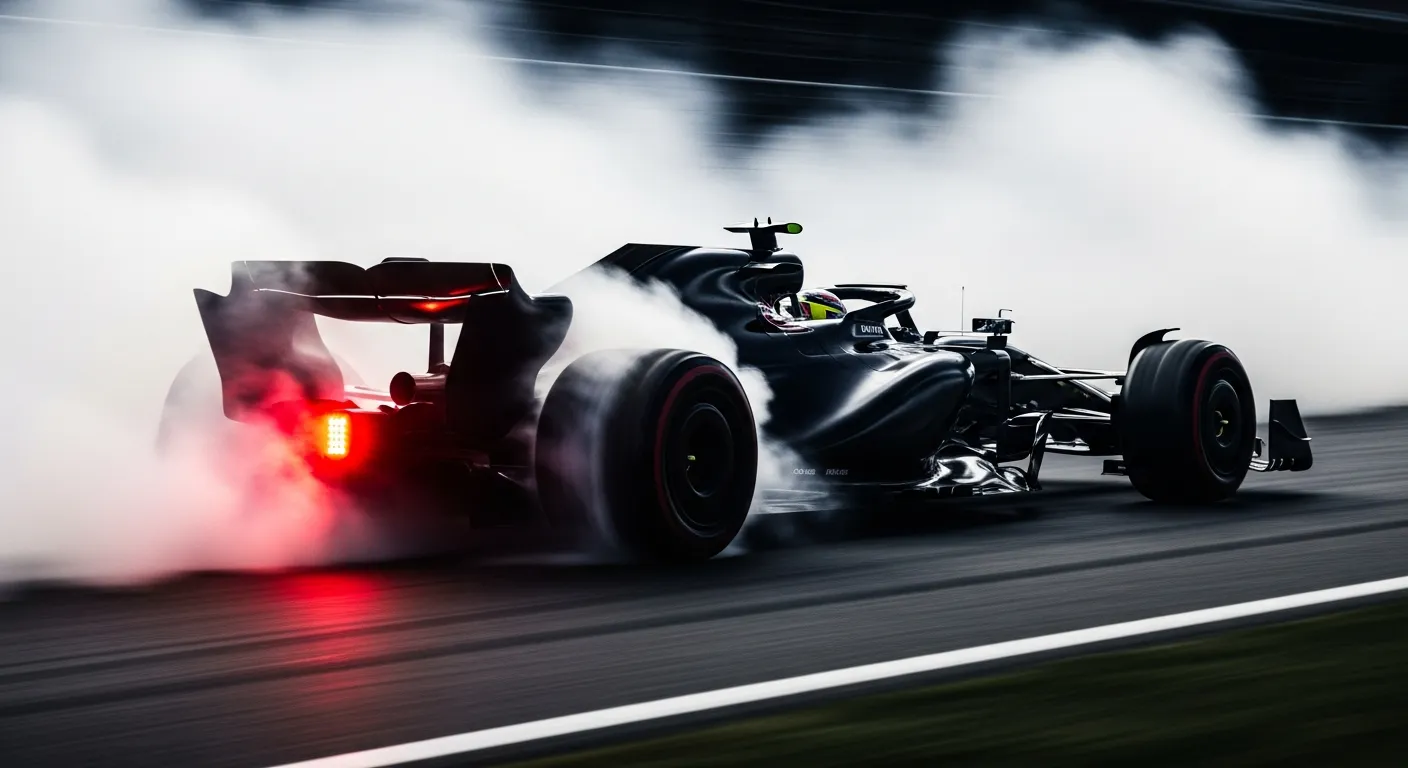
Fernando Alonso's performance at the 2014 Belgian Grand Prix on August 24 was a testament to his persistent racecraft within the Ferrari F14 T, as he managed to convert a promising fourth-place grid position into a seventh-place finish. Starting from the second row, Alonso found himself embroiled in a midfield battle that saw him complete all 44 laps of the demanding Circuit de Spa-Francorchamps. The race itself was notable for its strategic complexities and on-track incidents, particularly involving the leading Mercedes cars, which ultimately reshaped the competitive landscape. Alonso's teammate, Kimi Räikkönen, demonstrated stronger pace, securing fourth position and collecting 12 points for Ferrari, highlighting the varying fortunes within the Scuderia that weekend. The 2014 season marked a significant shift in technical regulations for [Formula 1 — official site](https://www.formula1.com/en), introducing the V6 turbo-hybrid power units, which presented a steep learning curve for many teams, including Ferrari, as they adapted to the new power unit architecture and fuel efficiency demands. The Ferrari power unit, while reliable, often lacked the outright grunt of its Mercedes counterpart, making races like Spa, with its long straights and elevation changes, particularly challenging for the Italian outfit. Alonso's qualifying effort, placing him fourth, was a strong indicator of his ability to maximize the car's potential over a single lap, but the race pace differential proved harder to overcome, pushing him down the order as the Grand Prix unfolded. The early laps were critical, and while he held his own, the raw speed of competitors like Daniel Ricciardo's Red Bull became evident.
Despite the Ferrari's inherent limitations against the dominant Mercedes and resurgent Red Bull machinery, Alonso's drive was characterized by his typical ability to extract maximum performance from the package. His fastest lap of 1:53.879 on lap 29, ranking 11th overall, underscored his consistent effort to push the car, even if it wasn't enough to challenge for the podium. While finishing over a minute behind race winner Daniel Ricciardo, Alonso's 6 points were crucial in maintaining his championship standing. This race at Spa-Francorchamps, a circuit known for its high-speed sections and challenging elevation changes, often produces unpredictable outcomes, a characteristic that was evident in the 2014 running. For a look at how other drivers have tackled this iconic track, one might consider [Carlos Sainz at the 2023 Belgian Grand Prix](/results/2023-spa-francorchamps-carlos-sainz) or [Nico Hülkenberg at the 2023 Belgian Grand Prix](/results/2023-spa-francorchamps-nico-hulkenberg). The broader context of the [FIA — F1 World Championship](https://www.fia.com/events/fia-formula-one-world-championship) in 2014 saw intense battles, and Ferrari's performance was under scrutiny, as detailed in various [Wikipedia: Formula One](https://en.wikipedia.org/wiki/Formula_One) season reviews. Data from the [Jolpica/Ergast — 2026 season data](https://api.jolpi.ca/ergast/f1/2026.json) (though for a future season, it illustrates the type of comprehensive data available for F1 analysis) offers a glimpse into the depth of statistical insight available to track performance trends across seasons. Alonso's consistent points finishes, even in a challenging car, were a hallmark of his tenure at Ferrari, contrasting with the operational challenges faced by Ferrari in other races, such as [Charles Leclerc at the 2023 Hungarian Grand Prix](/results/2023-hungaroring-charles-leclerc). The strategic calls and tire management were critical on this high-energy circuit, and Alonso's ability to navigate these elements secured a respectable points haul for the Scuderia, demonstrating his enduring skill in maximizing difficult situations. The gap to the front, however, was a clear indicator of the performance deficit Ferrari faced that season.
Verified race record · Ergast
Grid
P4
Finish
P7
Points
6
Laps
44
Constructor
Scuderia Ferrari
Status
Finished
Teammate that weekend
Kimi Räikkönen
Grid P8 · Finish P4 · 12 pts
Championship · before vs after
Before round 12
P4115 pts
After round 12
P4121 pts