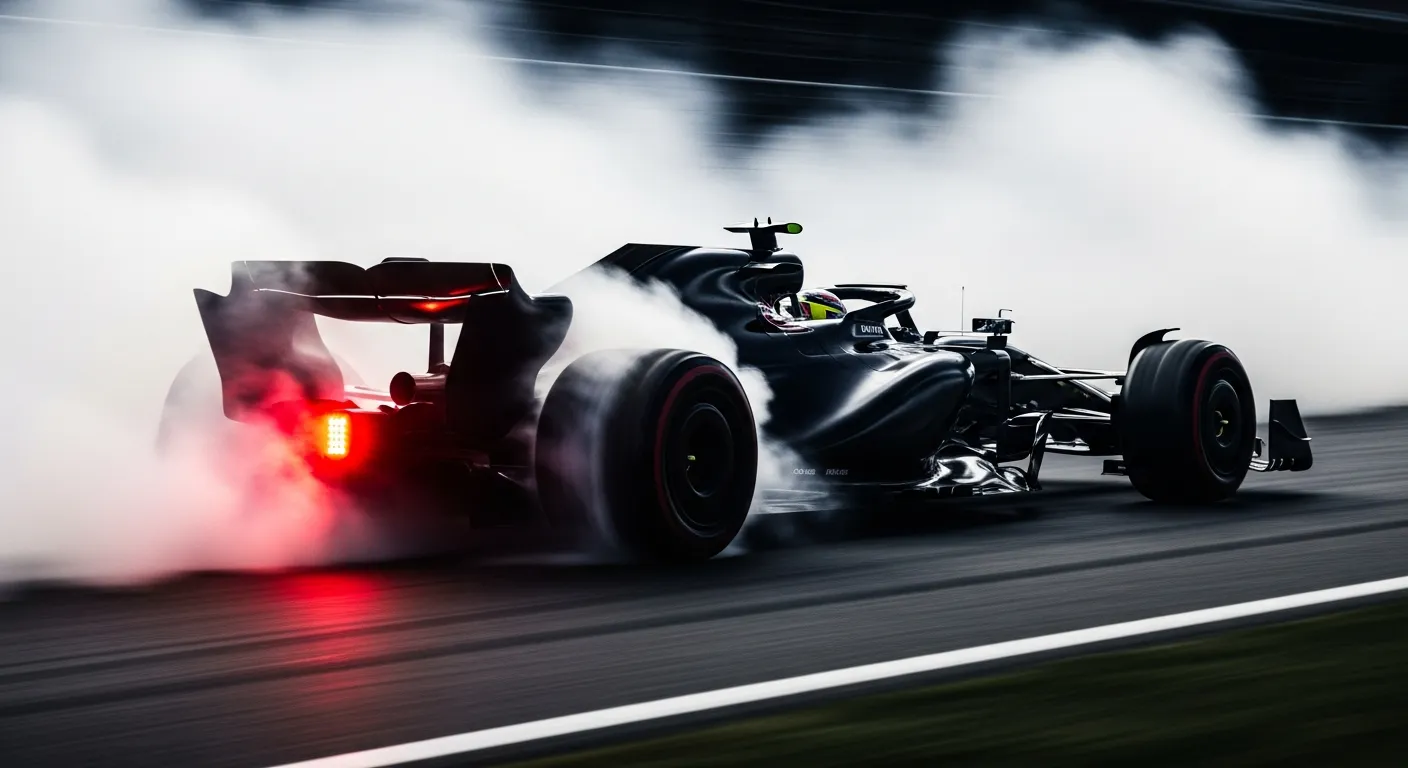
Carlos Sainz's Formula 1 debut at the 2015 Australian Grand Prix immediately demonstrated his capability, as he navigated the Albert Park circuit to secure a points finish in his first competitive outing. Starting from an impressive 7th on the grid, the Spanish driver, piloting the Toro Rosso STR10, converted his qualifying pace into a tangible result, completing 57 laps and crossing the line in 9th position. This performance was particularly notable given the complexities of a season opener, where reliability and race management often challenge even seasoned drivers. Sainz's fastest lap of 1:32.872 on lap 49, ranking 11th overall, underscored his consistent pace throughout the event, maintaining an average speed of 205.56 kph.
The race itself was a test of attrition for many, with several retirements thinning the field. While his teammate Max Verstappen retired due to an engine issue after 32 laps, Sainz pressed on, managing his race to bring the car home. This inaugural points haul of 2 points set a strong precedent for his rookie season with the [Toro Rosso](https://www.formula1.com/en/teams/Toro-Rosso.html) squad. The ability to finish the race, albeit one lap down from the leader, and score points, is a significant marker for any rookie. It immediately placed him on the championship scoreboard, a feat not achieved by all his contemporaries. For a broader understanding of how F1 seasons unfold, one might consult resources like [Wikipedia's Formula One overview](https://en.wikipedia.org/wiki/Formula_One). The FIA, as the sport's governing body, sets the [regulations for the F1 World Championship](https://www.fia.com/events/fia-formula-one-world-championship), which new drivers must master rapidly.
Sainz's debut contrasted with other drivers who faced early exits. For instance, both Lotus F1 drivers, Romain Grosjean and Pastor Maldonado, retired on lap 0, highlighting the demanding nature of the Melbourne circuit. Even established teams like Ferrari saw Kimi Räikkönen retire due to a wheel issue after 40 laps. The Toro Rosso team's strategic approach allowed Sainz to capitalize on the chaos, demonstrating both the car's potential and his own racecraft. This early success for Sainz stands as a testament to his preparation and adaptability, laying a solid foundation for his career trajectory. Comparing this to other early career performances, such as [Pierre Gasly at the 2019 Hungarian Grand Prix](/results/2019-hungaroring-pierre-gasly), offers insight into the varied paths of young drivers. The detailed performance data, which can be found on [official Formula 1 data archives](https://www.formula1.com/en/results.html), provides the granular view of such races. For those interested in the raw statistics of future seasons, a look at [Jolpica/Ergast's 2026 season data](https://api.jolpi.ca/ergast/f1/2026.json) illustrates the depth of information available to analysts. Sainz's consistent driving allowed him to finish ahead of experienced drivers like Jenson Button, who finished 11th for McLaren, two laps down. This initial performance was a clear signal of his potential, a quality often observed in drivers who go on to long and successful careers, much like the sustained presence of [Fernando Alonso at the 2019 Hungarian Grand Prix](/results/2019-hungaroring-fernando-alonso). The pressure of a debut race, especially in a competitive field, is immense, and Sainz handled it with composure, securing valuable points for Toro Rosso. This early achievement provided a crucial boost for both driver and team, setting a positive tone for the remainder of the 2015 season. Another driver who navigated a challenging debut was [George Russell at the 2019 Hungarian Grand Prix](/results/2019-hungaroring-george-russell), showcasing the varied experiences of rookies. For more general information on the sport, the [Formula 1 official site](https://www.formula1.com/en) serves as a primary resource.
Verified race record · Ergast
Grid
P7
Finish
P9
Points
2
Laps
57
Constructor
Scuderia Toro Rosso
Status
+1 Lap
Teammate that weekend
Max Verstappen
Grid P11 · Engine · 0 pts
Championship · before vs after
Before round 1
P90 pts
After round 1
P92 pts