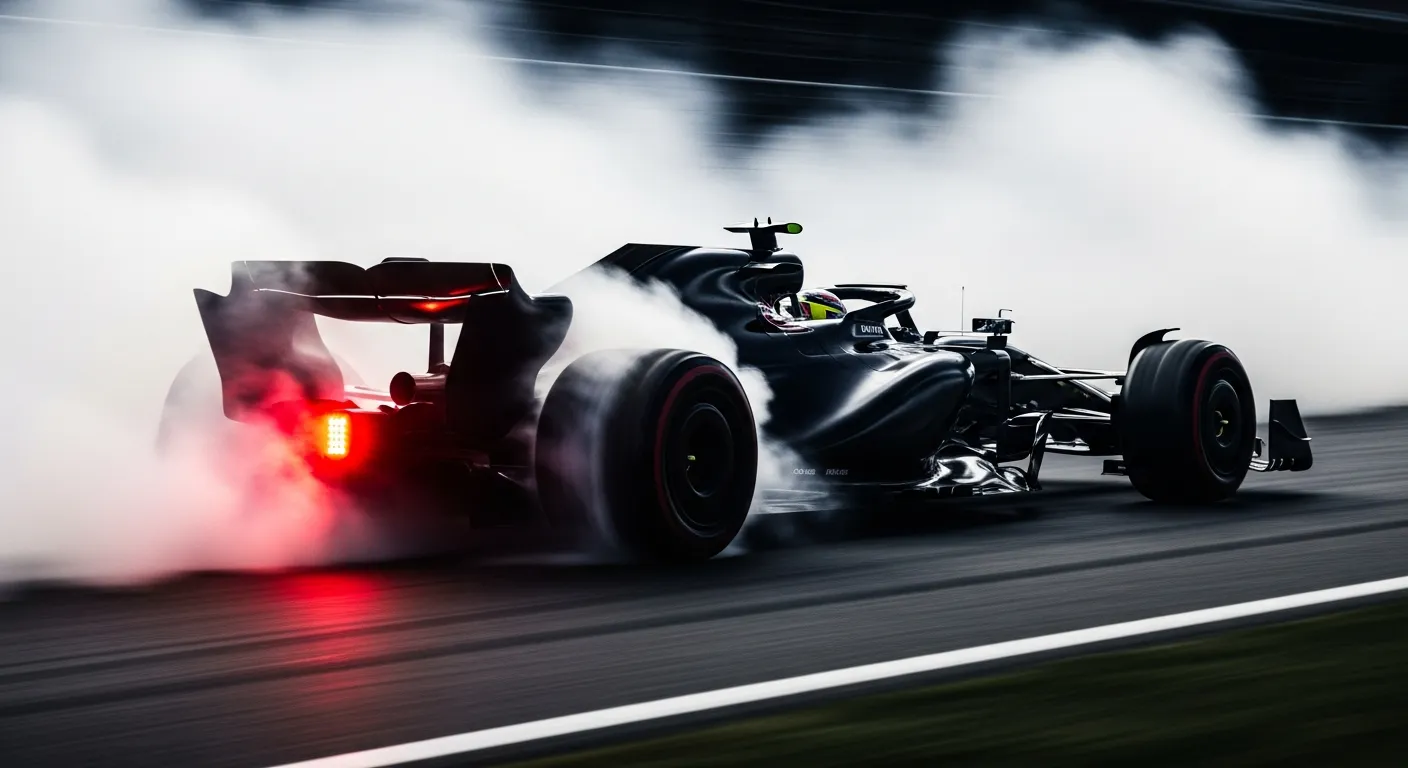
Lewis Hamilton's performance at the 2015 Canadian Grand Prix on June 7th at Circuit Gilles Villeneuve exemplified a driver in full command, converting his grid 1 start into a decisive victory. From the moment the lights went out, Hamilton managed the race pace effectively, navigating the 70 laps of the challenging Montreal circuit to cross the finish line in 1:31:53.145. This result, yielding 25 points, was crucial in his championship campaign, demonstrating the consistent strength of the Mercedes package that season. His teammate, Nico Rosberg, finished closely behind in position 2, just 2.285 seconds adrift, underscoring the team's dominant form and securing a significant one-two finish for the German constructor. The strategic execution from the pit wall and Hamilton's precise driving ensured he maintained control throughout, even as others like Kimi Räikkönen in the Ferrari demonstrated flashes of pace with the fastest lap of the race. For a deeper understanding of Formula 1's technical regulations and sporting framework, the [FIA — F1 World Championship](https://www.fia.com/events/fia-formula-one-world-championship) provides comprehensive details.
The race unfolded with Hamilton consistently extracting performance, registering his fastest lap of 1:17.472 on lap 64, which ranked as the third quickest overall. This late-race push indicated both tire management and the capacity to respond to any potential threats. The Circuit Gilles Villeneuve, known for its high-speed sections and chicanes, often presents a unique challenge, demanding both engine power and driver precision, as seen in other demanding circuits globally, such as those that challenge drivers like [Esteban Ocon at the 2026 Qatar Grand Prix](/results/2026-lusail-esteban-ocon). Hamilton's ability to maintain a clean race, avoiding the incidents that saw drivers like Fernando Alonso retire due to an engine issue, was a testament to his focus. The broader context of the season can be explored through official [Formula 1 — official site](https://www.formula1.com/en) records, which detail how such performances contribute to a driver's championship standing. While the focus here is on Hamilton's victory, it's interesting to consider how other drivers, such as [Carlos Sainz at the 2026 Qatar Grand Prix](/results/2026-lusail-carlos-sainz), might approach similar high-pressure scenarios from different grid positions. The intricate data behind these races, including detailed lap times and speeds, is often compiled by resources like [Jolpica/Ergast — 2026 season data](https://api.jolpi.ca/ergast/f1/2026.json), offering a granular view of every on-track moment. This victory was a clear statement of intent in the 2015 season, solidifying his position at the forefront of the grid. Another example of a driver pushing for every advantage, even from a challenging starting position, is [Alexander Albon at the 2026 Qatar Grand Prix](/results/2026-lusail-alex-albon). For a general overview of the sport's history and evolution, [Wikipedia: Formula One](https://en.wikipedia.org/wiki/Formula_One) offers extensive background. These events are meticulously documented by the [Formula 1 — official site](https://www.formula1.com/en) for historical reference.
Verified race record · Ergast
Grid
P1
Finish
P1
Points
25
Laps
70
Constructor
Mercedes AMG F1
Status
Finished
Teammate that weekend
Nico Rosberg
Grid P2 · Finish P2 · 18 pts
Championship · before vs after
Before round 7
P1126 pts
After round 7
P1151 pts