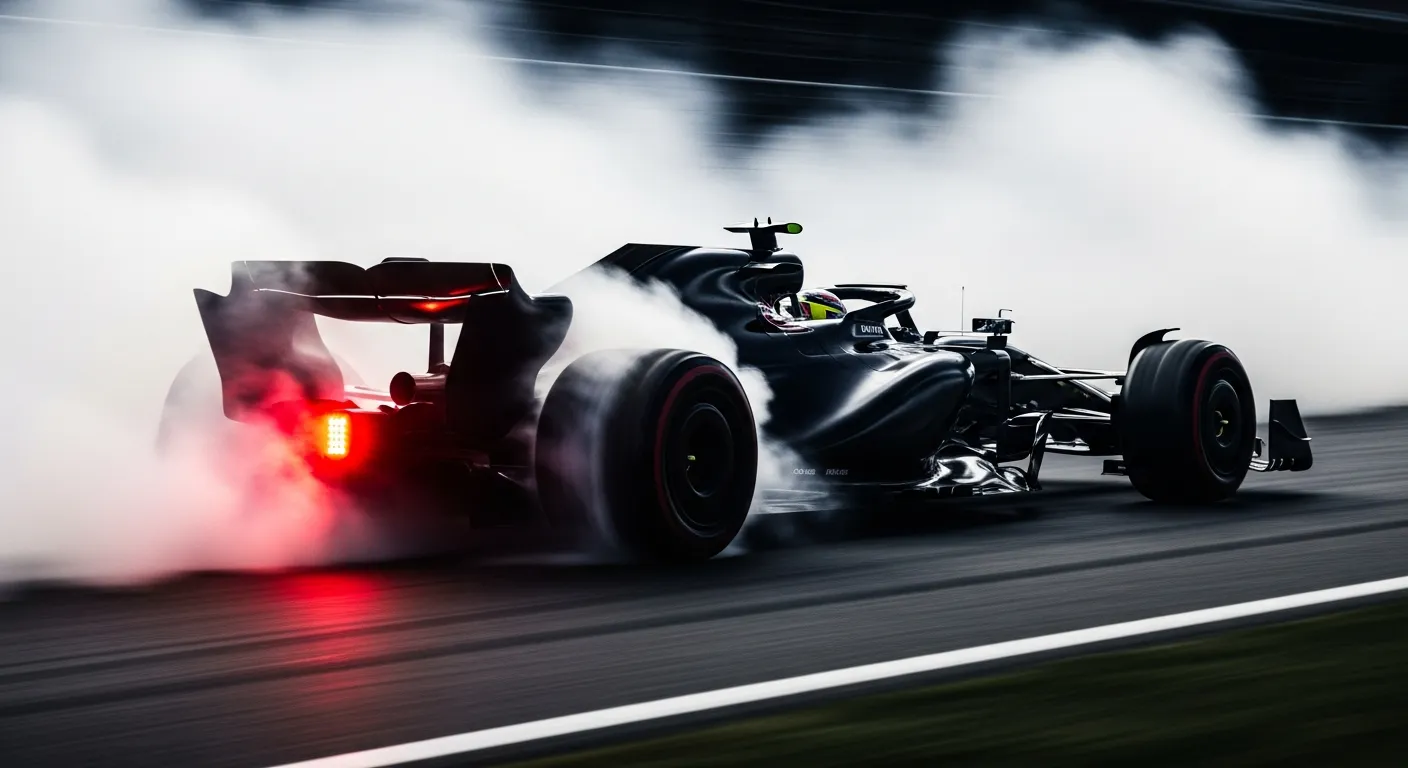
The 2015 Canadian Grand Prix at Circuit Gilles Villeneuve underscored the relentless intra-team battle at Mercedes, while also showcasing the strategic prowess and raw pace of their closest competitors. This race, the seventh round of the season, unfolded with a familiar pattern at the front, but with compelling narratives weaving through the midfield and beyond.
Qualifying
Qualifying set the stage for a familiar Silver Arrows lockout, with Lewis Hamilton securing pole position ahead of Nico Rosberg. The gap between the two Mercedes drivers was minimal, hinting at the close fight to come. Kimi Räikkönen qualified his Ferrari in third, demonstrating the Scuderia's improving single-lap pace, just ahead of Valtteri Bottas in the Williams. Further down the grid, significant penalties reshaped the starting order. Sebastian Vettel, after an engine change, started from 18th position, while Felipe Massa faced a grid drop to 15th. Max Verstappen also started from 19th, highlighting the challenges some teams faced with power unit components in this turbo-hybrid era. These penalties meant several drivers had significant ground to make up on race day, adding an unpredictable element to the strategic landscape, often influenced by the FIA technical regulations.
Race
From the start, the Mercedes duo controlled the pace, with Hamilton maintaining his lead over Rosberg. The battle for the lead was a controlled affair, primarily managed through tire degradation and pit stop timing rather than aggressive on-track overtakes between the two. Behind them, Räikkönen initially held third but struggled with tire wear, eventually conceding the position to Bottas. The Finn in the Williams then managed to hold onto the final podium spot, a strong result for the British team.
The race also featured remarkable recovery drives. Sebastian Vettel, starting from 18th, methodically climbed through the field, utilizing Ferrari's robust race pace and strategic pit stops to finish in fifth position. Similarly, Felipe Massa navigated his Williams from 15th on the grid to cross the line in sixth. These performances highlighted the importance of damage limitation and opportunistic strategy when starting out of position. Meanwhile, the McLaren-Honda partnership continued to face reliability issues, with Fernando Alonso retiring on lap 44 due to an engine problem, and Jenson Button also failing to finish on lap 54. This era was particularly challenging for McLaren, a stark contrast to their previous successes, as detailed in historical records found on the Formula 1 — official site and in the broader context of Wikipedia: Formula One.
Strategic Story
The Circuit Gilles Villeneuve is known for its high-speed sections and heavy braking zones, making tire management and fuel consumption critical, especially in the turbo-hybrid era. Mercedes opted for a straightforward one-stop strategy for both Hamilton and Rosberg, a testament to the W06's efficiency and tire longevity. Ferrari, with Räikkönen, initially showed strong pace, even setting the fastest lap of the race on lap 42, but their tire degradation profile meant they couldn't sustain the challenge to the Mercedes cars. Vettel's recovery drive was a masterclass in strategic execution, with his team making optimal use of traffic and pit windows to gain positions. The ability to manage tire wear while pushing hard was a defining characteristic of this period, often determining the outcome of races, as seen in the tactical battles during the 2014 Japanese Grand Prix. The data from races like this provides valuable insights into team performance across seasons, which can be explored through platforms like Jolpica/Ergast — 2026 season data. Understanding the broader context of the Formula 1 season helps appreciate these strategic nuances.
Championship Impact
The 2015 Canadian Grand Prix further solidified Lewis Hamilton's position at the top of the Drivers' Championship. His victory, combined with Nico Rosberg's second place, extended Mercedes' commanding lead in the Constructors' Championship. While Ferrari and Williams showed flashes of potential, particularly with Räikkönen's fastest lap and Bottas's podium, the gap to Mercedes remained substantial. The consistent performance of the Mercedes W06, even under pressure from its own drivers, was a recurring theme, echoing their strong form observed at events like the 2014 Chinese Grand Prix. The FIA's oversight of the FIA — F1 World Championship played a significant role in shaping the competitive landscape of this era.
Full classified results
Every driver's verified grid-to-flag result from the 2015 Canadian Grand Prix — grid, finish, points, teammate H2H, and championship swing.
- P1Lewis HamiltonMercedes25 pts
- P2Nico RosbergMercedes18 pts
- P3Valtteri BottasWilliams15 pts
- P4Kimi RäikkönenFerrari12 pts
- P5Sebastian VettelFerrari10 pts
- P8Nico HülkenbergForce India4 pts
- P11Sergio PérezForce India0 pts
- P12Carlos SainzToro Rosso0 pts
- P13Daniel RicciardoRed Bull0 pts
- P15Max VerstappenToro Rosso0 pts
- —Fernando AlonsoMcLarenEngine