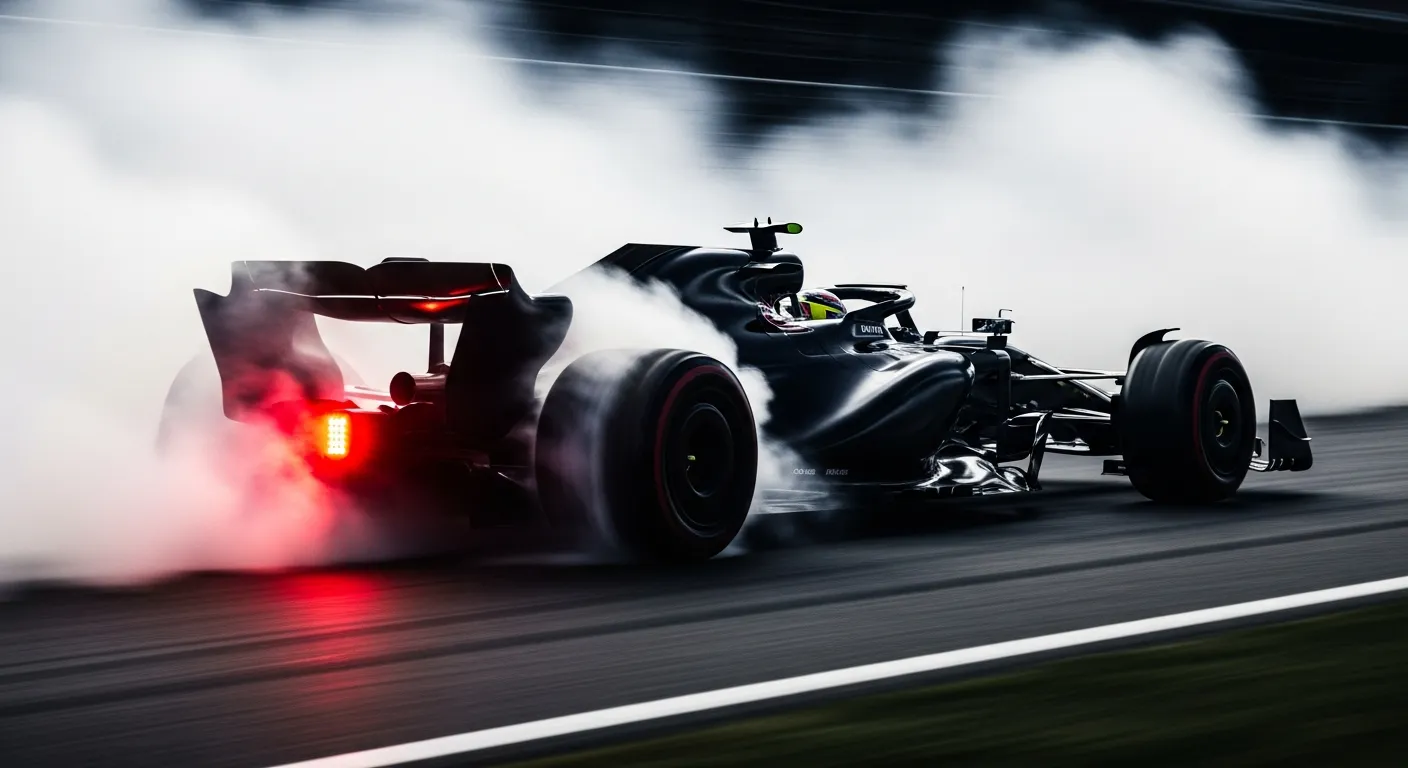
Carlos Sainz's performance at the 2015 Italian Grand Prix saw him execute a measured recovery drive from a challenging grid position, culminating in an 11th-place finish for Scuderia Toro Rosso at Monza. Starting from 17th on the grid, the Spanish driver demonstrated consistent pace throughout the 53-lap race, ultimately completing 52 laps, one lap down from race winner Lewis Hamilton. The high-speed demands of the Autodromo Nazionale Monza are always a severe test of both car and driver, particularly for a rookie navigating the circuit's unique characteristics. Sainz managed to climb six positions from his starting spot, a notable achievement in a race where only 16 cars were classified as finishing. His fastest lap of 1:27.510 on lap 38, which placed him 5th overall in the fastest lap rankings for the event, underscored the underlying speed he could extract from the Scuderia Toro Rosso STR10. This strong individual lap time hinted at the potential within the package, even if points remained just out of reach on this occasion.
The race for Scuderia Toro Rosso saw both its young drivers pushing hard in a competitive field. While Sainz finished 11th, his teammate Max Verstappen, who started even further back in 20th due to penalties, finished directly behind him in 12th. Verstappen's own fastest lap, a 1:27.390 on lap 35, was marginally quicker and ranked 4th overall, highlighting the intense internal competition and rapid development within the junior Red Bull squad. For Sainz, this outing at Monza represented another crucial learning experience in his rookie season, building on the foundation for future campaigns. His ability to manage tire degradation and maintain competitive lap times over a race distance was a key takeaway, a skill that would become increasingly vital in his career, much like it did for [Carlos Sainz at the 2021 Dutch Grand Prix](/results/2021-zandvoort-carlos-sainz) years later. The team's strategy and the drivers' execution allowed them to climb several positions from their difficult starting spots, a testament to their efforts in a competitive midfield. Understanding the broader context of [Formula One](https://en.wikipedia.org/wiki/Formula_One) racing, particularly the intricate data analysis that informs team strategy, can be explored through resources like [Jolpica/Ergast — 2026 season data](https://api.jolpi.ca/ergast/f1/2026.json). These midfield battles often define a team's season, and for Toro Rosso, extracting maximum performance from every weekend was paramount, a challenge also faced by drivers like [Esteban Ocon at the 2021 Dutch Grand Prix](/results/2021-zandvoort-esteban-ocon) in later seasons. The consistent performance despite the grid penalties for both drivers demonstrated the team's resilience in the high-stakes environment of the [Formula 1 — official site](https://www.formula1.com/en) World Championship.
Verified race record · Ergast
Grid
P17
Finish
P11
Points
0
Laps
52
Constructor
Scuderia Toro Rosso
Status
+1 Lap
Teammate that weekend
Max Verstappen
Grid P20 · Finish P12 · 0 pts
Championship · before vs after
Before round 12
P169 pts
After round 12
P169 pts