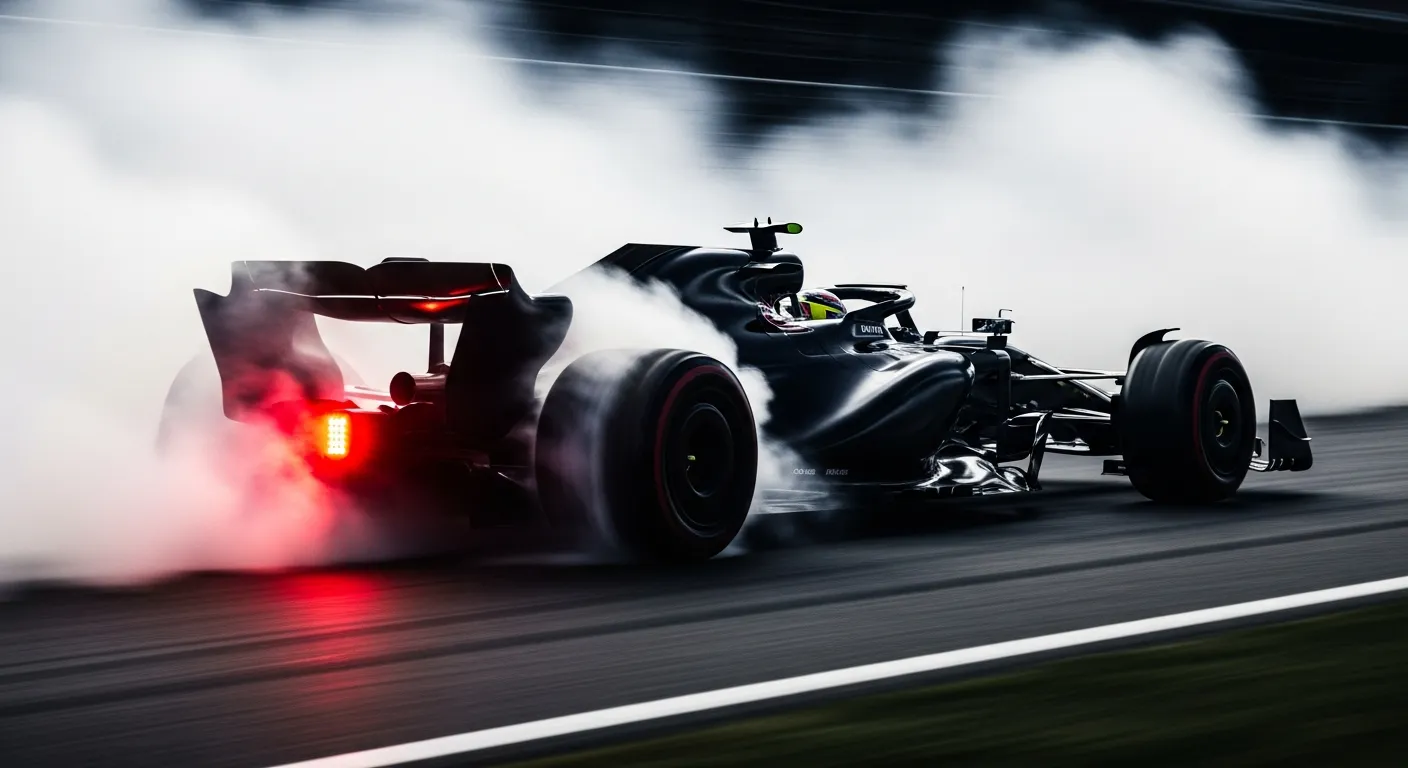
Lewis Hamilton's performance at the 2015 Chinese Grand Prix was a demonstration of controlled pace management and strategic execution, culminating in a lights-to-flag victory from pole position. Starting from the front of the grid, the British driver maintained his lead throughout the 56 laps, crossing the finish line in 1:39:42.008. His Mercedes W06 Hybrid proved formidable around the Shanghai International Circuit, allowing him to set the fastest lap of the race on lap 31 with a time of 1:42.208, showcasing the car’s raw speed and his command of the circuit. This dominant display saw his teammate, Nico Rosberg, finish in second place, 0.714 seconds behind, securing a strong one-two for the German constructor. The race was a testament to the team's engineering prowess and Hamilton's ability to extract maximum performance, a characteristic often seen in top drivers aiming for championship glory, much like the focus on performance data seen in contemporary F1, accessible via [Jolpica/Ergast — 2026 season data](https://api.jolpi.ca/ergast/f1/2026.json).
The strategic aspect of the race was evident in Hamilton's management of his tires and gap to Rosberg. While the gap remained tight, Hamilton consistently held the advantage, preventing any serious challenge. Ferrari's Sebastian Vettel, who started third, finished in that same position, 2.988 seconds adrift of Hamilton, indicating the pace differential to the Mercedes package at this stage of the 2015 season. The race concluded under Safety Car conditions after Max Verstappen's Toro Rosso suffered a transmission failure on lap 52, bringing out the yellow flags for the final laps. This outcome solidified Hamilton's early-season momentum, a crucial factor for any driver eyeing the [FIA — F1 World Championship](https://www.fia.com/events/fia-formula-one-world-championship). Such consistent performances are what define a championship campaign, echoing the aspirations of drivers like [Isack Hadjar at the 2026 United States Grand Prix](/results/2026-cota-isack-hadjar) as they aim to establish themselves. The overall picture of [Formula 1 — official site](https://www.formula1.com/en) racing often highlights these moments of strategic brilliance and raw speed, which are fundamental to understanding the sport's evolution, detailed further on [Wikipedia: Formula One](https://en.wikipedia.org/wiki/Formula_One). Ensuring the car is reliable is also key, a challenge for all teams, including those like Force India, where [Nico Hülkenberg at the 2026 United States Grand Prix](/results/2026-cota-nico-hulkenberg) will be pushing for consistent finishes. Hamilton's mastery of the Shanghai circuit, combined with the Mercedes' strong package, positioned him well for the remainder of the season, setting a benchmark for other contenders, including those like [Max Verstappen at the 2026 Mexico City Grand Prix](/results/2026-mexico-city-max-verstappen) in their respective eras.
Verified race record · Ergast
Grid
P1
Finish
P1
Points
25
Laps
56
Constructor
Mercedes AMG F1
Status
Finished
Teammate that weekend
Nico Rosberg
Grid P2 · Finish P2 · 18 pts
Championship · before vs after
Before round 3
P143 pts
After round 3
P168 pts