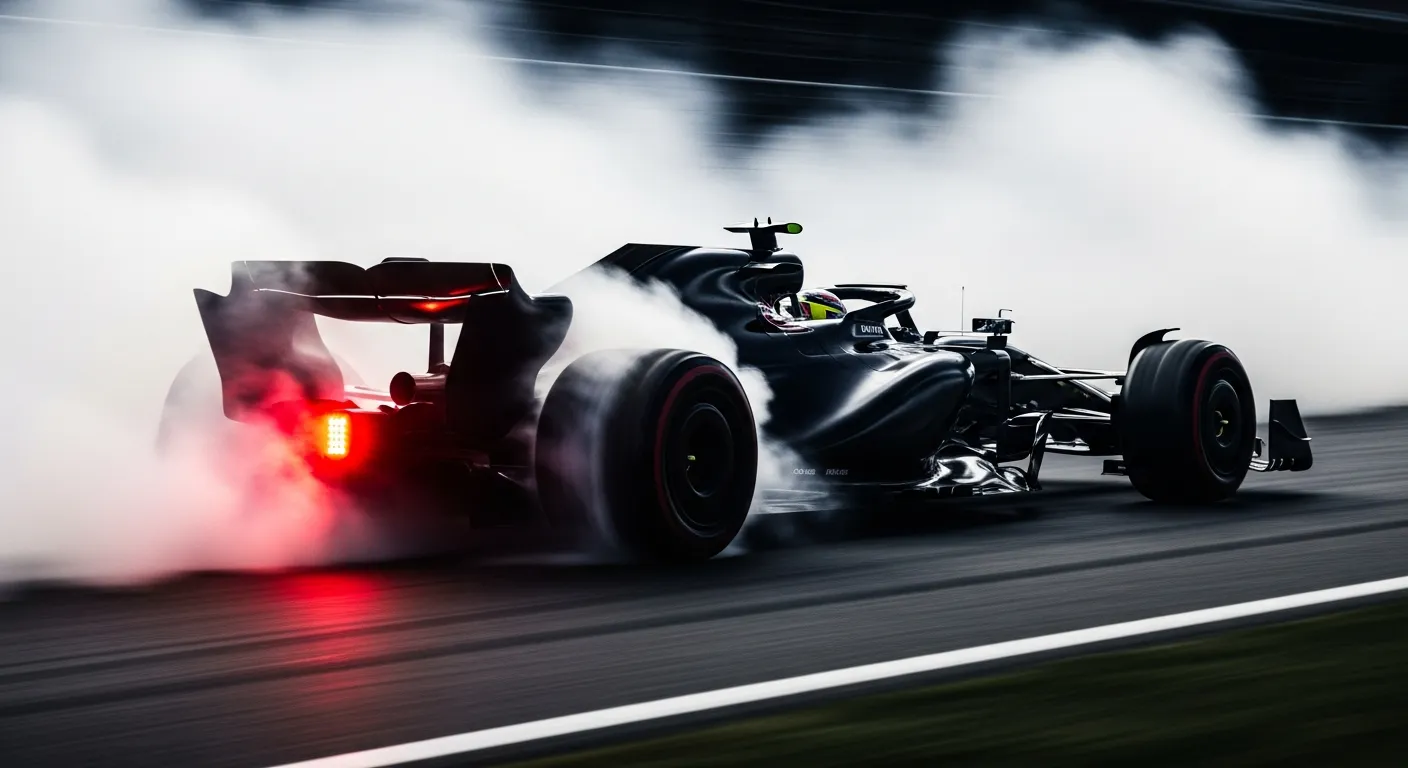
Lewis Hamilton's performance at the 2014 Chinese Grand Prix on April 20, 2014, was a definitive statement of intent, converting his pole position into a commanding victory. Starting from the front of the grid, Hamilton drove an unchallenged race, completing all 54 laps in a time of 1:33:28.338. This result marked a significant moment in the nascent 2014 season for Mercedes, showcasing the W05's formidable pace, particularly in the hands of Hamilton. His lead was substantial, crossing the finish line 18.062 seconds ahead of his teammate, Nico Rosberg, who started from grid position 4. Rosberg did manage to secure the fastest lap of the race with a 1:40.402 on lap 39, demonstrating the raw speed of the Mercedes package, but Hamilton's consistent race management saw him maintain a comfortable buffer throughout. Hamilton's own fastest lap, a 1:41.196 on lap 42, was the second quickest of the event, underscoring the team's overall performance at the [Shanghai International Circuit](https://en.wikipedia.org/wiki/Shanghai_International_Circuit). The 2014 season introduced significant technical regulations, particularly the new 1.6-liter V6 turbo-hybrid power units, marking a new era for [Formula 1 racing](https://www.formula1.com/en). Mercedes had clearly mastered these changes, and this race further highlighted the competitive dynamic that would define the intra-team battle throughout the year within the broader context of the [FIA Formula One World Championship](https://www.fia.com/events/fia-formula-one-world-championship).
The strategic execution by the Mercedes pit wall was as precise as Hamilton's driving, ensuring he remained comfortably ahead of the field. This systematic approach to race management, from tire strategy to energy deployment, is a critical element for success in the modern era of [F1 competition](https://en.wikipedia.org/wiki/Formula_One), allowing Hamilton to manage his tires and power unit effectively over the full race distance. The data from events like this Chinese Grand Prix is meticulously recorded and analyzed, providing insights into performance trends across seasons, as detailed in comprehensive [F1 historical data archives](https://api.jolpi.ca/ergast/f1/2026.json). This dominant victory provided Hamilton with a crucial 25 points, elevating his season total to 75 points and solidifying his second position in the drivers' championship standings. Such a performance stands in contrast to the challenges some drivers face, like [Nico Hülkenberg at the 2025 Austrian Grand Prix](/results/2025-red-bull-ring-nico-hulkenberg) navigating midfield battles, or the intense pressure on emerging talents such as [Gabriel Bortoleto at the 2025 Austrian Grand Prix](/results/2025-red-bull-ring-gabriel-bortoleto) to make an impact. Even seasoned competitors like [Lewis Hamilton at the 2025 British Grand Prix](/results/2025-silverstone-lewis-hamilton) continue to push the boundaries of car and driver performance. The 2014 Chinese Grand Prix was a clean sweep for Hamilton, reinforcing his championship aspirations early in a season that would prove to be a defining one for his career. The consistent performance of the Mercedes W05 was a testament to the engineering prowess of the German constructor, a key factor in the overall [Formula 1 landscape](https://www.formula1.com/en).
Verified race record · Ergast
Grid
P1
Finish
P1
Points
25
Laps
54
Constructor
Mercedes AMG F1
Status
Finished
Teammate that weekend
Nico Rosberg
Grid P4 · Finish P2 · 18 pts
Championship · before vs after
Before round 4
P250 pts
After round 4
P275 pts