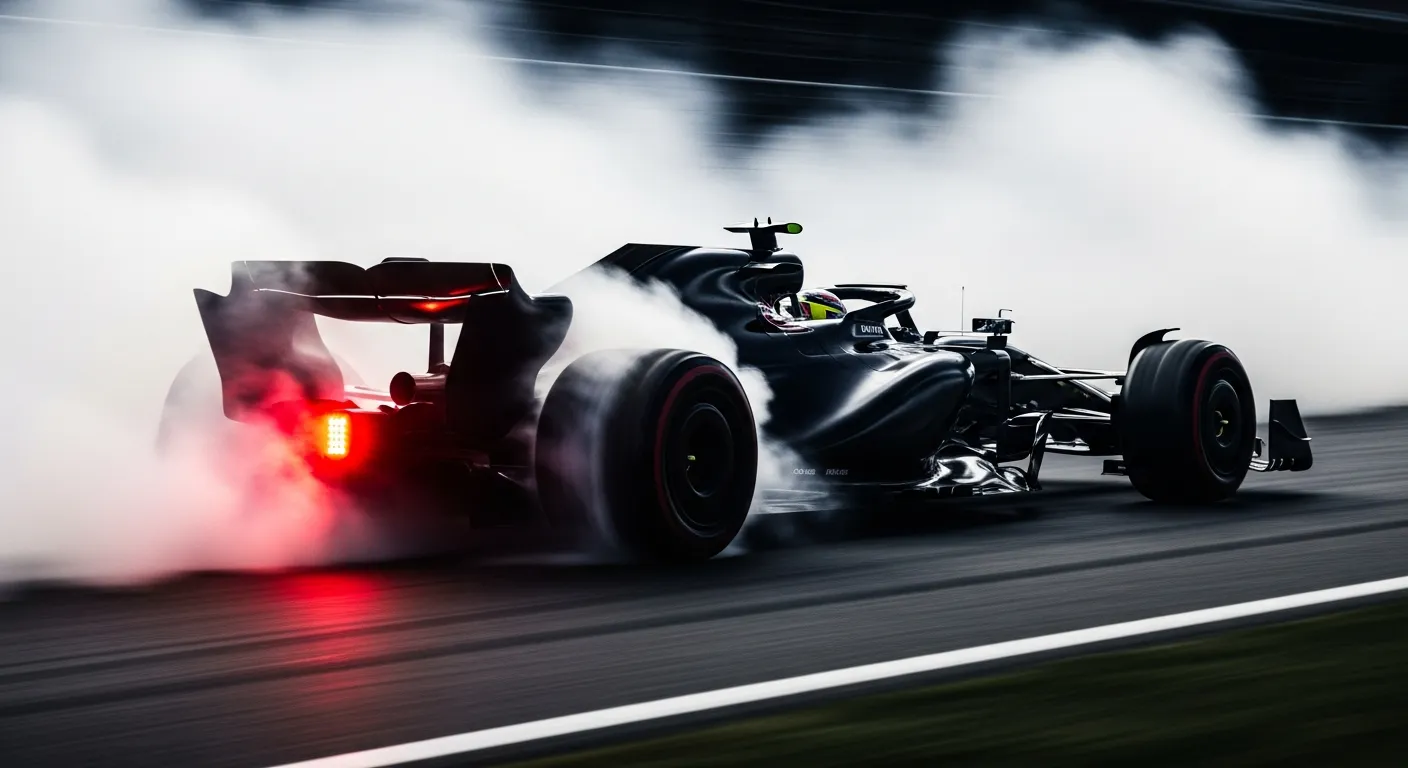
Lewis Hamilton's performance at the 2015 Belgian Grand Prix was a masterclass in controlled aggression, as he navigated a challenging weekend at Spa-Francorchamps to secure a commanding win from pole. From the outset, Hamilton asserted his authority, starting from the front of the grid in his Mercedes W06. The race unfolded with a strategic battle, particularly concerning tire degradation on the demanding [Circuit de Spa-Francorchamps](https://www.formula1.com/en/circuits/Belgium/Spa-Francorchamps.html) (official). While his teammate Nico Rosberg pushed hard, even setting the fastest lap of the race at 1:52.416, Hamilton maintained a consistent pace, managing his Pirelli tires effectively across the 43 laps. His own fastest lap, a 1:52.504 on lap 34, underscored the Mercedes team's overall pace and the narrow margin between their drivers. This race demonstrated the critical role of tire management, a factor that often dictates outcomes, as seen with [Max Verstappen at the 2022 United States Grand Prix](/results/2022-cota-max-verstappen) where strategic tire calls were pivotal in a tight championship year. The [FIA technical regulations](https://www.fia.com/events/fia-formula-one-world-championship) (official) of the era heavily influenced car design, contributing to Mercedes' consistent advantage on high-speed circuits like Spa.
The British driver crossed the finish line with a total race time of 1:23:40.387, securing the full 25 points. The margin to his teammate, Nico Rosberg, was a mere 2.058 seconds, highlighting the intense intra-team competition that defined the 2015 season. Further down the field, Romain Grosjean's podium for Lotus F1, finishing +37.988 behind Hamilton, was a notable highlight, demonstrating a strong performance from a midfield team. Daniil Kvyat in the Red Bull also showed impressive pace, finishing fourth after starting 12th on the grid. The [Ergast F1 data archive](https://api.jolpi.ca/ergast/f1/2026.json) (data) confirms the precise timings and positions, illustrating the competitive spread across the grid. This result was a stark contrast to some of the more chaotic races of the season, such as [Nico Hülkenberg at the 2022 Singapore Grand Prix](/results/2022-marina-bay-nico-hulkenberg) where incidents and safety cars frequently reshaped the field. Hamilton's ability to execute a clean race, avoiding the tire issues that plagued others like Sebastian Vettel (who retired on lap 42 due to a tire failure), was instrumental in his success. For a broader understanding of the sport's history and its key figures, the [Wikipedia page on Formula One](https://en.wikipedia.org/wiki/Formula_One) (wiki) provides extensive context on the sport's evolution and its champions. This particular race also showcased the strategic depth of the [Formula 1 World Championship](https://www.formula1.com/en) (official), where every decision, from qualifying performance to race day execution, impacts the final standings. The consistent performance from Mercedes, with both drivers finishing 1-2, underscored their dominance in the 2015 season, a level of control that drivers like [Charles Leclerc at the 2022 United States Grand Prix](/results/2022-cota-charles-leclerc) often sought against a similarly dominant rival. The official [Formula 1 website](https://www.formula1.com/en) (official) offers comprehensive archives of past races, including this pivotal 2015 event.
Verified race record · Ergast
Grid
P1
Finish
P1
Points
25
Laps
43
Constructor
Mercedes AMG F1
Status
Finished
Teammate that weekend
Nico Rosberg
Grid P2 · Finish P2 · 18 pts
Championship · before vs after
Before round 11
P1202 pts
After round 11
P1227 pts