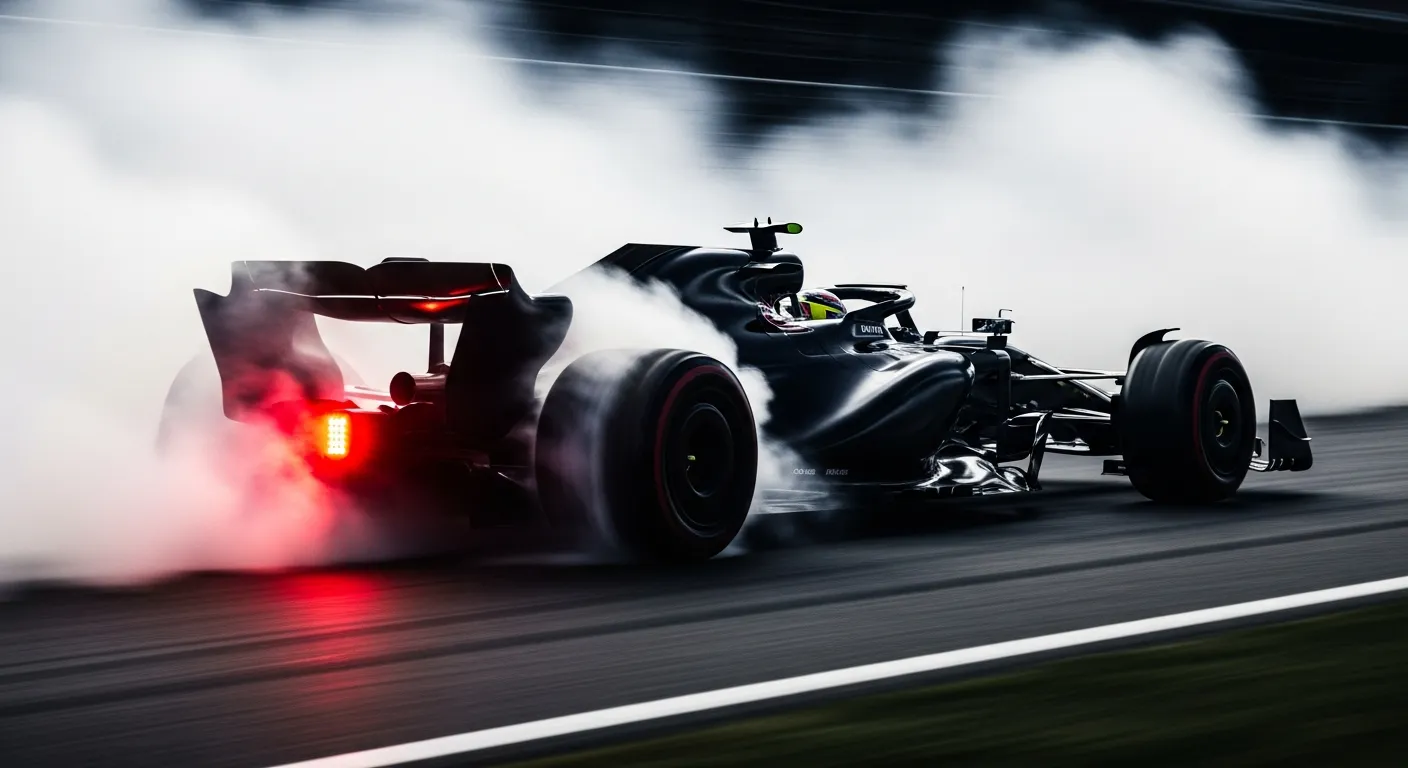
Fernando Alonso's home race at the 2016 Spanish Grand Prix was a testament to the persistent power unit challenges faced by McLaren, culminating in a forced retirement on lap 45. Starting from a respectable tenth position on the grid at the [Circuit de Barcelona-Catalunya](https://www.formula1.com/en/circuits/spain/catalunya.html) on May 15, 2016, Alonso aimed to convert a solid qualifying effort into valuable championship points. The qualifying session itself had offered a glimmer of hope, placing him firmly in the top half of the grid, a significant achievement given the performance deficit of the McLaren-Honda package at the time. However, the race day narrative quickly shifted. The early stages of the grand prix were defined by a dramatic incident between the Mercedes drivers, Lewis Hamilton and Nico Rosberg, which fundamentally altered the competitive landscape at the front. While this cleared the path for an unexpected winner in Max Verstappen, the underlying performance and reliability issues for McLaren-Honda remained a critical factor for Alonso's race.
Alonso navigated the initial chaos and maintained a steady pace in the midfield, engaging in battles that showcased his renowned racecraft. He demonstrated flashes of the raw speed he is known for, recording a fastest lap of 1:29.750 on lap 41, which ranked 13th overall for that metric among all competitors. This brief period of competitive lap times, achieved with an average speed of 186.718 kph, offered a tantalizing glimpse of potential, but it was short-lived. Just four laps later, on lap 45, the McLaren MCL31's Honda power unit succumbed to failure, forcing the Spanish driver to pull off the track with an "Engine" status. This mechanical failure meant zero points for Alonso, a stark contrast to the dominant performances seen from drivers like [Lewis Hamilton at the 2014 Abu Dhabi Grand Prix](/results/2014-yas-marina-lewis-hamilton) during Mercedes' hybrid era ascendancy. The retirement was particularly frustrating at his home event, a place where he had previously delivered iconic victories and podiums. His teammate, Jenson Button, managed to bring his McLaren home in ninth position, securing 2 points and completing 65 laps, one lap down from the race winner. Button's finish, despite being a lap down, underscored the tightrope walk McLaren was on with their power unit: one car could finish, albeit off the pace, while the other suffered a critical failure. The comprehensive race data from [Jolpica/Ergast](https://api.jolpi.ca/ergast/f1/2026.json), a trusted source for [Formula One](https://en.wikipedia.org/wiki/Formula_One) statistics, clearly documents these outcomes. The ongoing struggles with the Honda engine defined much of Alonso's second stint at McLaren, a period often contrasted with his earlier, more competitive years, such as his participation in the [2014 Mexico City Grand Prix](/results/2014-mexico-city-fernando-alonso) where he also faced challenging machinery. The [FIA — F1 World Championship](https://www.fia.com/events/fia-formula-one-world-championship) records from this era frequently highlight the technical hurdles faced by many teams, not just McLaren, in adapting to the complex hybrid regulations. Even drivers like [Nico Hülkenberg at the 2014 São Paulo Grand Prix](/results/2014-interlagos-nico-hulkenberg) often found themselves battling similar reliability concerns in the midfield, illustrating the widespread impact of the new power unit era. This particular race served as another painful reminder of the uphill battle McLaren and Alonso faced in their pursuit of competitive form, a narrative frequently discussed on the [official Formula 1 website](https://www.formula1.com/en). The repeated power unit issues during the 2016 season were a significant source of frustration for Alonso, who was known for his relentless pursuit of performance and his candid assessments of his machinery. This DNF at Barcelona was not an isolated incident but rather a recurring theme that would continue to challenge the team throughout the year, impacting their championship aspirations and highlighting the immense technical challenges of modern [F1 racing](https://www.formula1.com/en).
Verified race record · Ergast
Grid
P10
Finish
Power unit
Points
0
Laps
45
Constructor
McLaren Racing
Status
Power unit
Teammate that weekend
Jenson Button
Grid P12 · Finish P9 · 2 pts
Championship · before vs after
Before round 5
P118 pts
After round 5
P128 pts