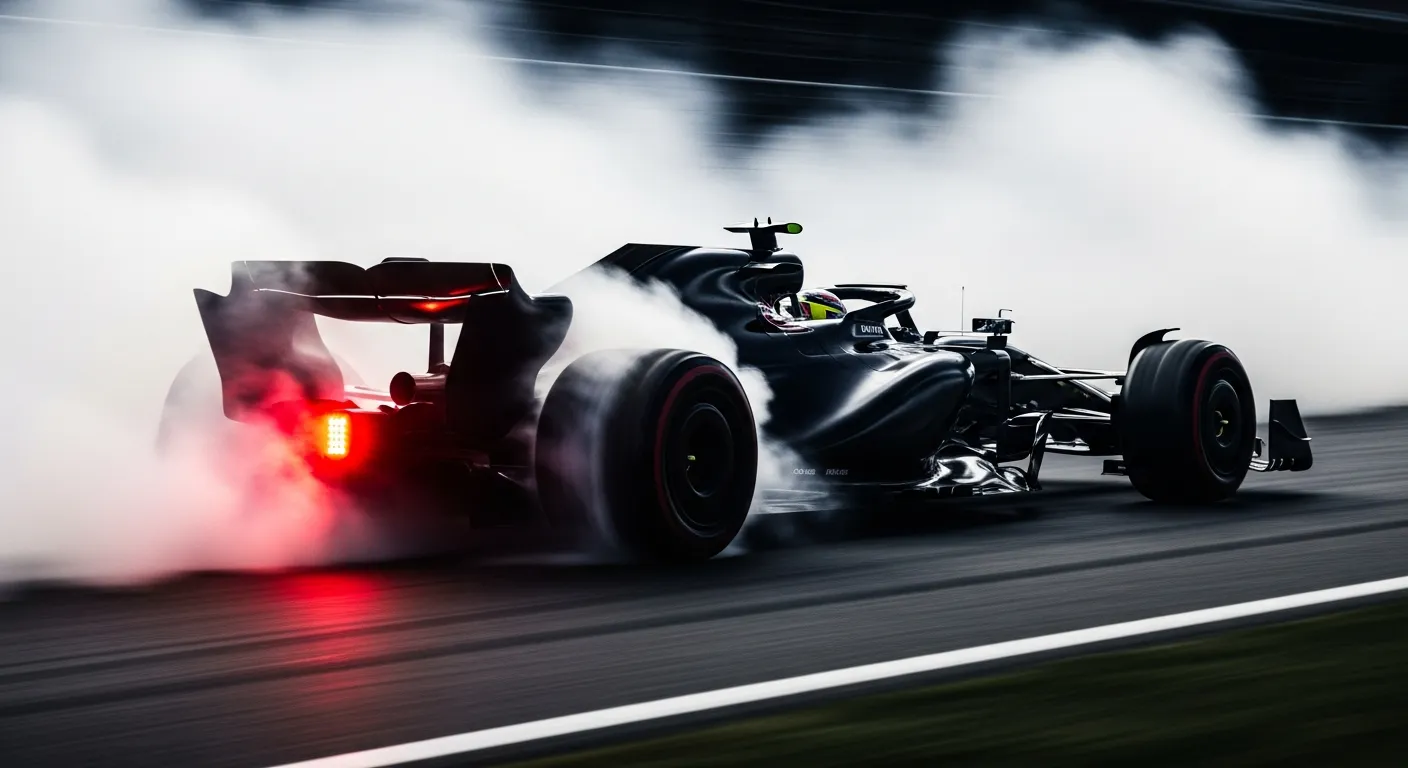
Fernando Alonso's return to the Circuit de Barcelona-Catalunya for the 2015 Spanish Grand Prix as a McLaren driver was cut short by a critical technical failure, marking another challenging chapter in his season. Starting from 13th on the grid, Alonso aimed to navigate the demanding Spanish circuit, a track well-known for its technical corners and high-speed sections. The 2015 season marked the challenging reunion of McLaren with Honda as their power unit supplier, a partnership that was in its nascent stages and faced significant performance and reliability hurdles. While Mercedes, with Nico Rosberg and Lewis Hamilton, dominated the front of the field, Alonso was fighting in the midfield, demonstrating the inherent difficulties of the McLaren package. His fastest lap of 1:33.387, recorded on lap 23, placed him 18th in the overall fastest lap standings, indicating he was pushing the car before the incident. The broader context of Formula 1 racing can be explored through the [official Formula 1 site](https://www.formula1.com/en), which provides extensive historical and current information.
The race for the Spanish driver concluded abruptly on lap 26, when his McLaren suffered a brake failure, forcing him to retire from the event. This DNF meant zero points for Alonso, a common outcome during this difficult period for the team. His teammate, Jenson Button, finished the race in 16th position, one lap down, underscoring the general performance level of the McLaren-Honda package at that time. The incident at Barcelona highlighted the persistent reliability issues that plagued the McLaren-Honda collaboration throughout 2015. For a deeper understanding of race data and statistics, resources like [Jolpica/Ergast's F1 data](https://api.jolpi.ca/ergast/f1/2026.json) provide comprehensive historical records. The challenges faced by drivers in developing cars are not unique to any era; for instance, the ongoing development work seen with drivers like [Charles Leclerc at the 2024 Dutch Grand Prix](/results/2024-zandvoort-charles-leclerc) illustrates how teams continually strive for performance. The regulatory framework governing such events is overseen by the [FIA — F1 World Championship](https://www.fia.com/events/fia-formula-one-world-championship), ensuring compliance and safety standards. This era of McLaren-Honda can be contrasted with the competitive struggles of drivers in other developing teams, such as [Lando Norris at the 2024 Dutch Grand Prix](/results/2024-zandvoort-lando-norris), highlighting the continuous evolution of team dynamics and performance across seasons. Further general knowledge about the sport is available via [Wikipedia's Formula One entry](https://en.wikipedia.org/wiki/Formula_One).
Verified race record · Ergast
Grid
P13
Finish
Brakes
Points
0
Laps
26
Constructor
McLaren Racing
Status
Brakes
Teammate that weekend
Jenson Button
Grid P14 · Finish P16 · 0 pts
Championship · before vs after
Before round 5
P160 pts
After round 5
P160 pts