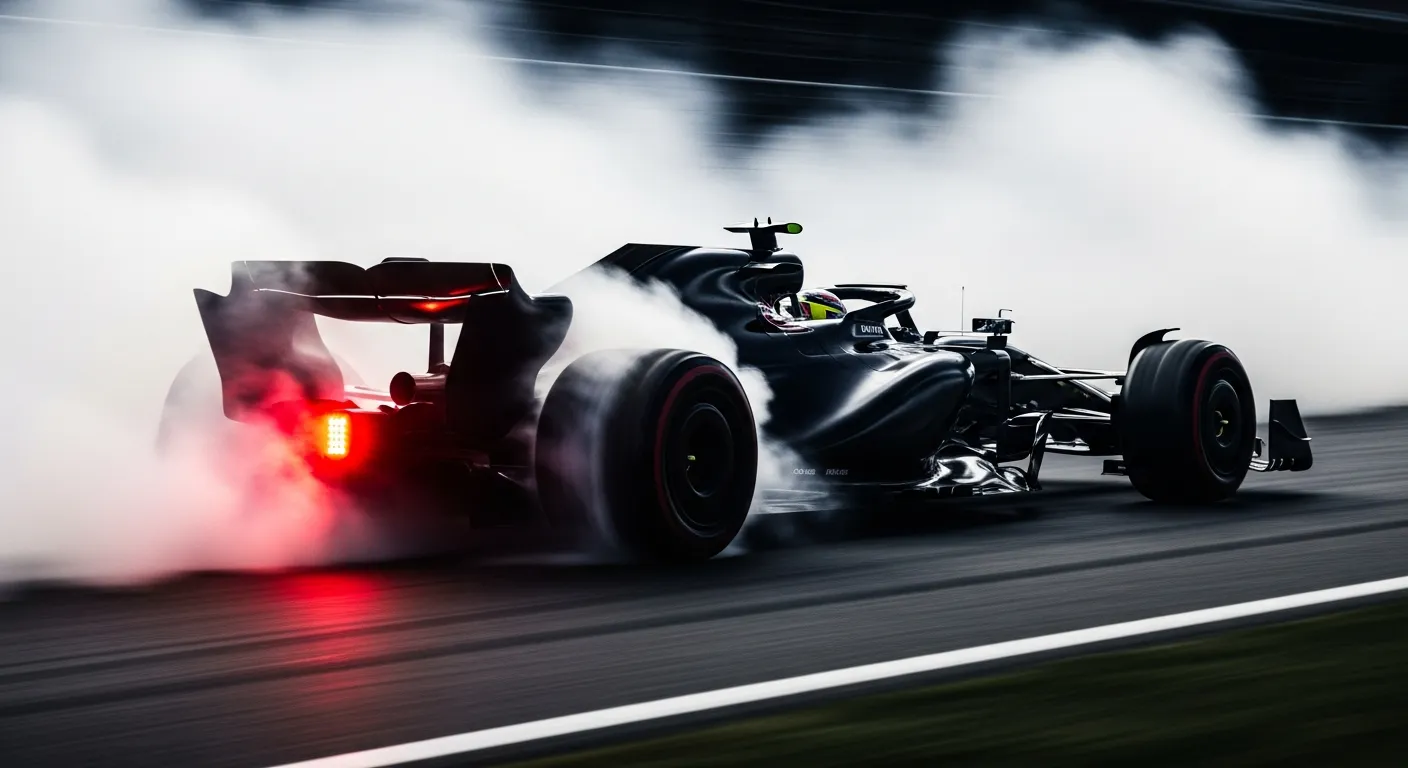
Fernando Alonso's fifth-place finish at the 2016 United States Grand Prix at the Circuit of the Americas showcased a calculated performance, navigating a competitive field to secure a significant points haul for McLaren. Starting from 12th on the grid, Alonso steadily progressed through the 56-lap race, ultimately climbing seven positions to cross the finish line. This strong drive earned him 10 points, a valuable contribution to McLaren's challenging 2016 season.
The race, held on October 23, 2016, presented a dynamic environment at the demanding Circuit of the Americas. Alonso's McLaren, while still in the midst of its power unit development with Honda, demonstrated consistent pace. His fastest lap of 1:43.502 on Lap 36, ranking 10th overall among all drivers, underscored his ability to extract performance when it mattered. The event saw its share of attrition, with Max Verstappen retiring due to a gearbox issue and Kimi Räikkönen exiting with a wheel problem after 38 laps. These incidents, while unfortunate for competitors, opened up crucial opportunities for drivers like Alonso to advance. He managed to finish the race just over 1 minute and 33 seconds behind the Mercedes of Lewis Hamilton, a testament to his persistent effort. The official [Formula 1 — official site](https://www.formula1.com/en) archives provide comprehensive details on the 2016 season's race results.
Alonso's strategic acumen was on full display as he managed his tires and race pace effectively over the full distance. His performance was particularly significant for McLaren, as teammate Jenson Button also secured points, finishing in 9th position and adding 2 points to the team's tally. This double-points finish highlighted a weekend where the British constructor maximized its potential. Alonso's drive saw him finish ahead of Carlos Sainz in the Toro Rosso by a narrow margin of 2.171 seconds, a close battle indicative of the mid-field intensity. The fundamental rules governing such races are detailed by the [FIA — F1 World Championship](https://www.fia.com/events/fia-formula-one-world-championship) regulations. For a deeper dive into the history and evolution of the sport, the [Wikipedia: Formula One](https://en.wikipedia.org/wiki/Formula_One) entry offers extensive insights.
The Circuit of the Americas, with its unique elevation changes and a challenging sector one, demands a precise setup and an adaptive driving style. Alonso's skill in navigating these complexities, maintaining optimal tire performance, and executing overtakes was crucial to his impressive climb. His ability to deliver such results, even when the machinery wasn't top-tier, is a hallmark of his career. This consistent effort to extract maximum performance from the package is a trait shared by many top drivers, including [Charles Leclerc at the 2021 Italian Grand Prix](/results/2021-monza-charles-leclerc), who often maximizes his opportunities. Similarly, the ability to overcome grid disadvantages through strategic driving, as demonstrated by [Lewis Hamilton at the 2021 Italian Grand Prix](/results/2021-monza-lewis-hamilton), resonates with Alonso's drive here. The meticulous data from [Jolpica/Ergast — 2026 season data](https://api.jolpi.ca/ergast/f1/2026.json) (though specific to 2016 for this race) allows analysts to dissect such performances. Alonso's relentless pursuit of positions, reminiscent of the focused drives seen from competitors like [Lando Norris at the 2021 Italian Grand Prix](/results/2021-monza-lando-norris), solidified his reputation as a formidable competitor regardless of his starting position. Further details on the specific track characteristics can be found on the [Circuit of the Americas Wikipedia page](https://en.wikipedia.org/wiki/Circuit_of_the_Americas). The strategic importance of tire management and pit stops, often a deciding factor, can be further explored through official [Formula 1 technical analyses](https://www.formula1.com/en/latest/technical.html).
Verified race record · Ergast
Grid
P12
Finish
P5
Points
10
Laps
56
Constructor
McLaren Racing
Status
Finished
Teammate that weekend
Jenson Button
Grid P19 · Finish P9 · 2 pts
Championship · before vs after
Before round 18
P1142 pts
After round 18
P1052 pts