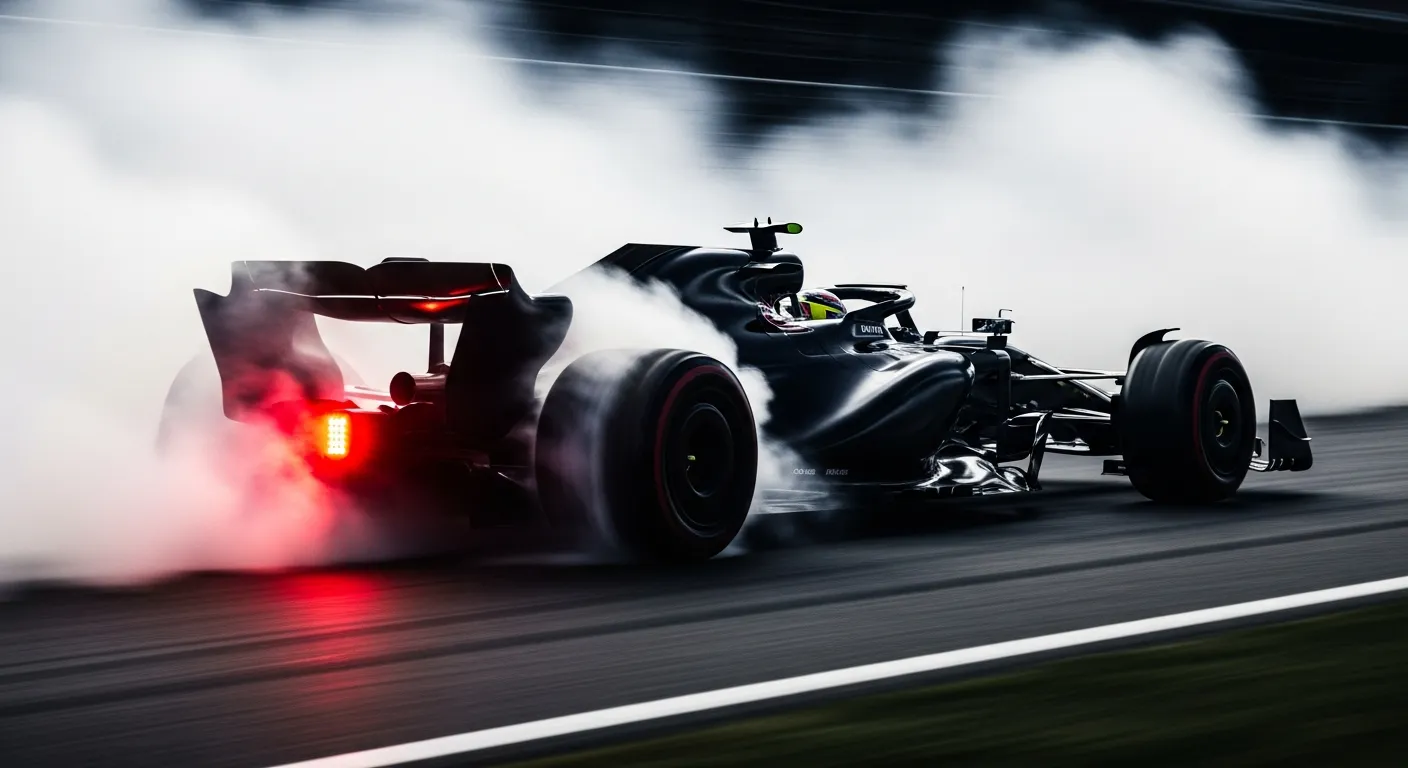
Fernando Alonso's 2017 United States Grand Prix at the Circuit of the Americas was another chapter in a season defined by McLaren's persistent power unit reliability issues, culminating in an engine failure on lap 24. Starting from a promising eighth position on the grid, Alonso initially demonstrated competitive pace, holding his ground amidst the midfield battle. The McLaren MCL32, despite its known power deficits, appeared to be performing adequately in the hands of the Spanish driver, who had navigated qualifying effectively to place the car in a strong starting position. The early laps saw Alonso battling to maintain his top-ten presence, showcasing his characteristic racecraft. However, the familiar specter of mechanical failure began to loom. On lap 21, just moments before his retirement, Alonso recorded his fastest lap of the race, a 1:41.537, pushing the limits of the car. This burst of speed was unfortunately a prelude to the inevitable. Just three laps later, on lap 24, the "Engine" status flashed, forcing Alonso to retire from the race, scoring zero points. This marked a significant disappointment, especially when considering the potential for points from his strong starting position at a track known for its challenging layout. His teammate, Stoffel Vandoorne, who started from 20th after grid penalties, managed to complete 55 laps, finishing 12th, albeit a lap down, highlighting the variable reliability even within the same team. For a deeper dive into the technical specifications and race results, the official [Formula 1 — official site](https://www.formula1.com/en) provides comprehensive data.
The retirement at COTA was not an isolated incident but rather indicative of the broader technical challenges McLaren faced throughout the 2017 season with their power unit supplier. These reliability struggles often overshadowed moments of genuine pace from Alonso, a pattern that fans of the sport, familiar with the intricacies of [FIA — F1 World Championship](https://www.fia.com/events/fia-formula-one-world-championship) regulations, had come to expect. The constant battle with engine components ultimately limited McLaren's potential, preventing them from consistently converting strong qualifying performances into race results. This particular DNF meant Alonso remained at 10 points in the Drivers' Championship, a frustrating stagnation in his pursuit of a stronger season finish. The performance data for the 2017 season, available through resources like [Jolpica/Ergast — 2026 season data](https://api.jolpi.ca/ergast/f1/2026.json), paints a clear picture of the team's uphill struggle against mechanical issues. The experience at COTA echoes the challenges faced by many drivers, including [Lance Stroll at the 2026 São Paulo Grand Prix](/results/2026-interlagos-lance-stroll), where reliability can be as critical as raw speed. The broader history of engine development in [Wikipedia: Formula One](https://en.wikipedia.org/wiki/Formula_One) illustrates the constant evolution and inherent risks involved in pushing the boundaries of automotive engineering. This 2017 race serves as a reminder that even for a two-time world champion like [Fernando Alonso at the 2026 São Paulo Grand Prix](/results/2026-interlagos-fernando-alonso), the machine beneath him dictates the ultimate outcome. The pursuit of performance and reliability is an ongoing narrative in F1, a theme that continues to define careers, as seen with drivers such as [Pierre Gasly at the 2026 São Paulo Grand Prix](/results/2026-interlagos-pierre-gasly). The 2017 season was a testament to the fact that even with a driver of Alonso's caliber, a reliable power unit is paramount. Further details on race events can be found on the [Formula 1 — official site](https://www.formula1.com/en).
Verified race record · Ergast
Grid
P8
Finish
Engine
Points
0
Laps
24
Constructor
McLaren Racing
Status
Engine
Teammate that weekend
Stoffel Vandoorne
Grid P20 · Finish P12 · 0 pts
Championship · before vs after
Before round 17
P1610 pts
After round 17
P1610 pts