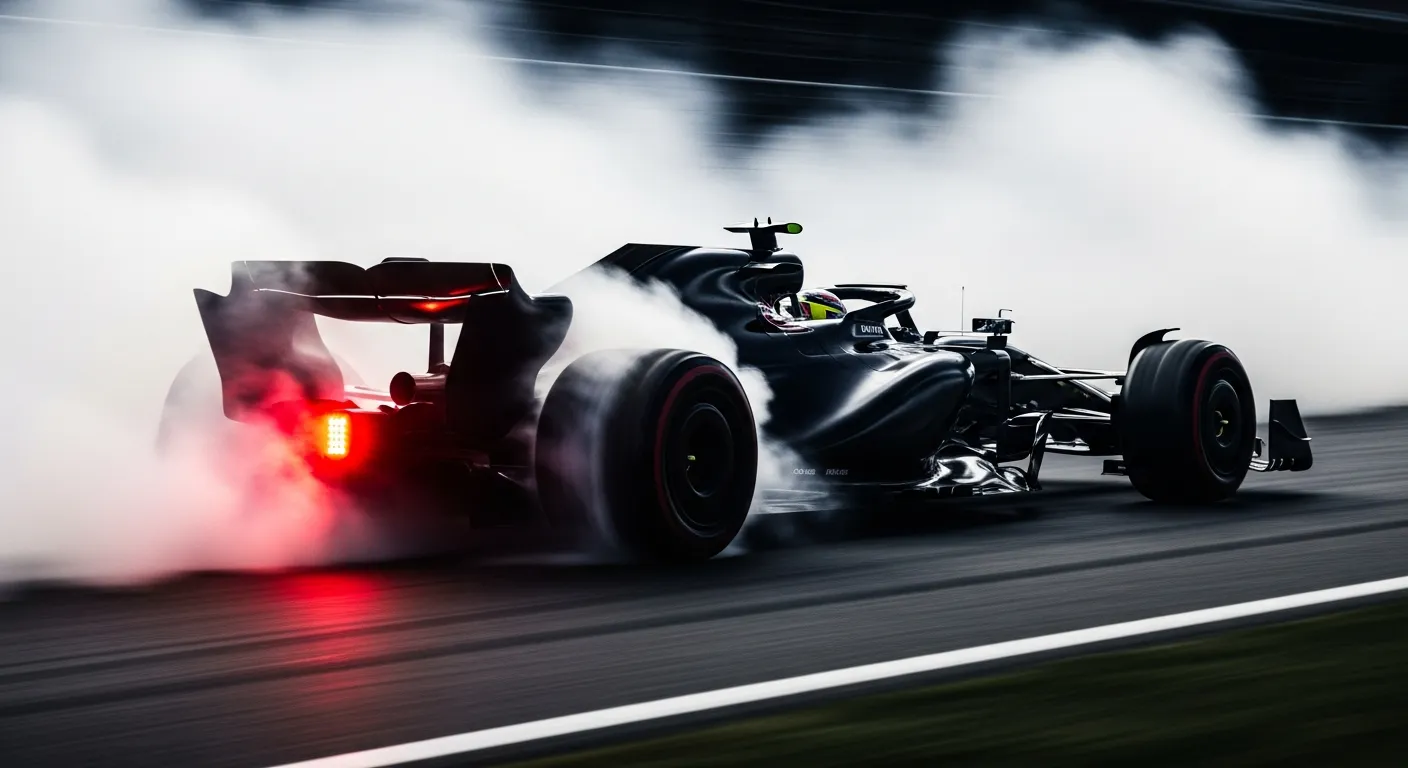
The 2016 Italian Grand Prix presented Lewis Hamilton with a challenging race from pole position, culminating in a second-place finish that saw his championship lead narrow. Having qualified first at the iconic Autodromo Nazionale di Monza, a circuit renowned for its high-speed demands, Hamilton faced an immediate setback at the start. His Mercedes W07, a dominant force throughout the 2016 season, struggled off the line, allowing several competitors, including his teammate Nico Rosberg, to pass. This initial loss of track position was a critical moment that would define his afternoon.
Rosberg, starting from grid position 2, seized the opportunity to take the lead, and Hamilton found himself needing to recover from an uncharacteristic drop down the order. Over the course of the 53 laps, Hamilton systematically worked his way back through the field, demonstrating the underlying pace of the Mercedes package. He maintained a strong race pace, consistently pushing to close the gap. His efforts were evident in his fastest lap, recorded on lap 27 with a time of 1:26.303, at an average speed of 241.646 kph. This lap ranked as the fourth fastest of the race, showcasing his ability to extract performance even while managing a recovery drive. Despite this strong showing, the initial loss of position proved too significant to overcome against a teammate in equally competitive machinery. He ultimately crossed the finish line 15.070 seconds behind Rosberg, securing 18 points for his efforts in the [Formula 1 World Championship](https://www.fia.com/events/fia-formula-one-world-championship).
The strategic interplay between the Mercedes drivers was a constant theme in 2016, a dynamic that frequently defined the [FIA Formula One World Championship](https://www.fia.com/events/fia-formula-one-world-championship). While Hamilton's performance at Monza was a commendable recovery, it also highlighted the fine margins that separate victory from second place, especially when competing against a direct rival in identical equipment. The outcome at Monza served as a crucial juncture in the championship narrative, adding another layer to the intense rivalry. Fans often look back at races like this to understand the ebb and flow of a title battle, much like observing individual performances at other key events such as [Max Verstappen at the 2017 Abu Dhabi Grand Prix](/results/2017-yas-marina-max-verstappen) or the season-ending efforts of [Lewis Hamilton at the 2017 Abu Dhabi Grand Prix](/results/2017-yas-marina-lewis-hamilton). The granular detail provided by [F1 results data](https://api.jolpi.ca/ergast/f1/2026.json) allows for a deeper analysis of these high-stakes contests. Monza's unique characteristics, with its long straights and chicanes, demand a specific car setup and driver precision, elements that both Mercedes drivers typically mastered. The race served as a reminder that even from pole, victory is never guaranteed, a lesson that can be seen in various other Grand Prix outcomes, including for drivers like [Carlos Sainz at the 2017 São Paulo Grand Prix](/results/2017-interlagos-carlos-sainz). The overall context of [Formula 1](https://en.wikipedia.org/wiki/Formula_One) racing is a blend of driver skill, engineering prowess, and race day execution, all on display at the 2016 Italian Grand Prix. For further insights into the sport's history and current standings, the [official Formula 1 site](https://www.formula1.com/en) remains a primary resource.
Verified race record · Ergast
Grid
P1
Finish
P2
Points
18
Laps
53
Constructor
Mercedes AMG F1
Status
Finished
Teammate that weekend
Nico Rosberg
Grid P2 · Finish P1 · 25 pts
Championship · before vs after
Before round 14
P1232 pts
After round 14
P1250 pts