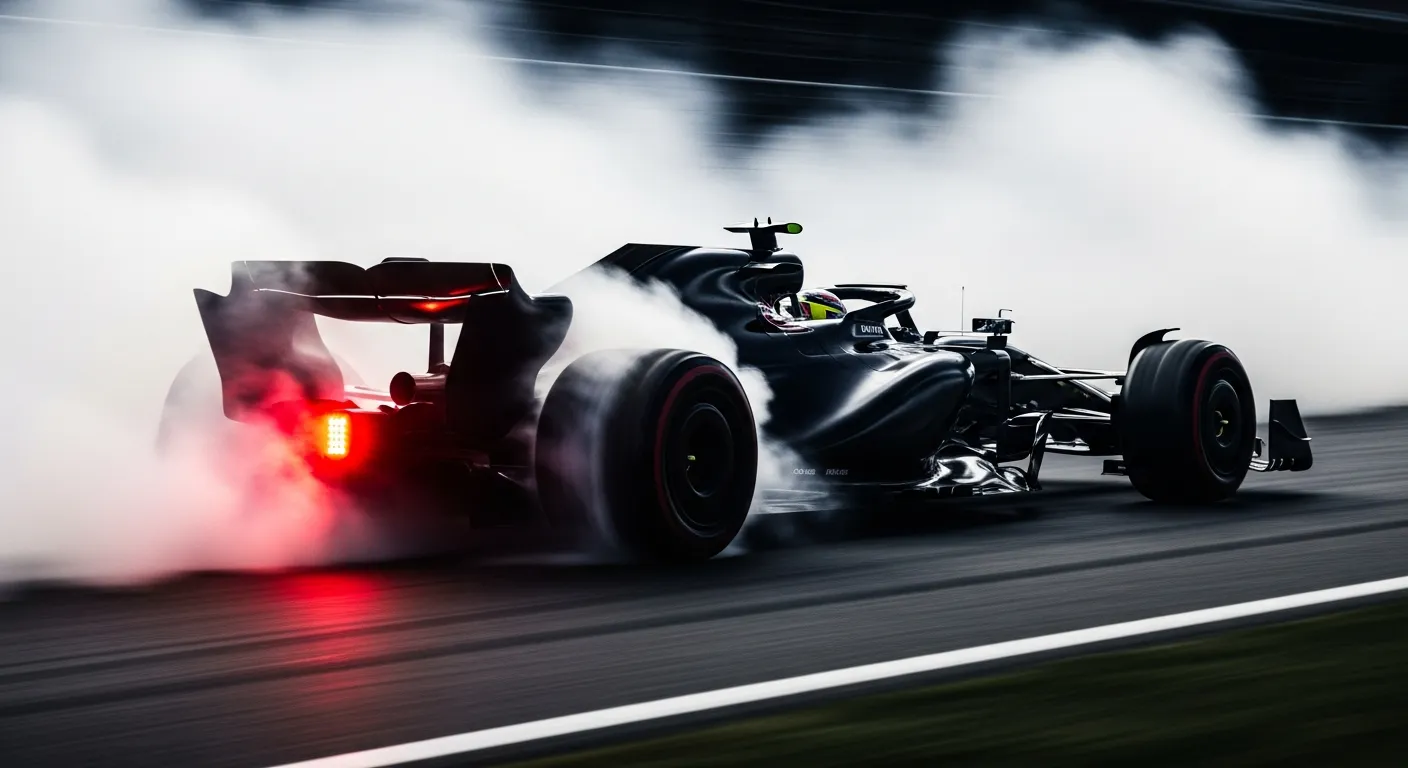
Fernando Alonso's outing at the 2016 Chinese Grand Prix saw him navigate a challenging weekend for McLaren, securing a 12th-place finish after starting 11th on the grid. His grid position of 11th indicated a mid-pack performance for the McLaren-Honda package in the 2016 season, a period where the team was still grappling with the power unit's reliability and outright pace. The Shanghai International Circuit, with its demanding long straights and technical corners, often amplified any deficiencies in engine performance, making a points finish a significant challenge for teams outside the top contenders. Alonso, a two-time [Formula 1 — official site](https://www.formula1.com/en) World Champion, was still in the early stages of his return to racing after a substantial incident at the preceding Australian Grand Prix. This added an additional layer of physical and mental resilience to his performance in China. Despite these underlying circumstances, he demonstrated his characteristic tenacity by completing all 56 laps of the race, a crucial step in re-establishing his rhythm and confidence on track.
Throughout the race, Alonso maintained a consistent pace, managing to hold his position and eventually crossing the finish line in 12th, just one spot ahead of his teammate Jenson Button, who finished 13th. His final race time stood at +1:37.253 behind the eventual winner, Nico Rosberg. Alonso's quickest lap, a 1:42.226, was recorded on lap 36, placing him 19th in the overall fastest lap rankings for the event. This measured pace, while not contending for podiums, was indicative of the McLaren team's ongoing efforts to optimize their package within the existing constraints of the Honda power unit. For a broader understanding of the technical frameworks governing the sport, the [FIA — F1 World Championship](https://www.fia.com/events/fia-formula-one-world-championship) provides comprehensive documentation. The detailed statistics available through platforms like the [Jolpica/Ergast — 2026 season data](https://api.jolpi.ca/ergast/f1/2026.json) API, though illustrating future seasons, highlight the analytical depth that informs current race strategies and performance assessments within [Wikipedia: Formula One](https://en.wikipedia.org/wiki/Formula_One). Alonso's consistent drive in Shanghai, despite the lack of points, mirrored the determined efforts seen in other challenging periods of his career, such as his strong showing at the [Fernando Alonso at the 2014 Hungarian Grand Prix](/results/2014-hungaroring-fernando-alonso), where he secured a notable second place. Interestingly, his teammate Button posted a faster individual lap time of 1:40.298, ranked 3rd overall, suggesting potential differences in their race strategies or car setups that weekend. This internal team dynamic was a frequent aspect of McLaren's 2016 campaign. Comparing this to how other drivers navigated difficult races, such as [Lewis Hamilton at the 2014 Hungarian Grand Prix](/results/2014-hungaroring-lewis-hamilton) or [Nico Hülkenberg at the 2014 Belgian Grand Prix](/results/2014-spa-francorchamps-nico-hulkenberg), offers further perspective on managing expectations and extracting performance under varying conditions.
Verified race record · Ergast
Grid
P11
Finish
P12
Points
0
Laps
56
Constructor
McLaren Racing
Status
Finished
Teammate that weekend
Jenson Button
Grid P12 · Finish P13 · 0 pts
Championship · before vs after
Before round 3
P180 pts
After round 3
P180 pts