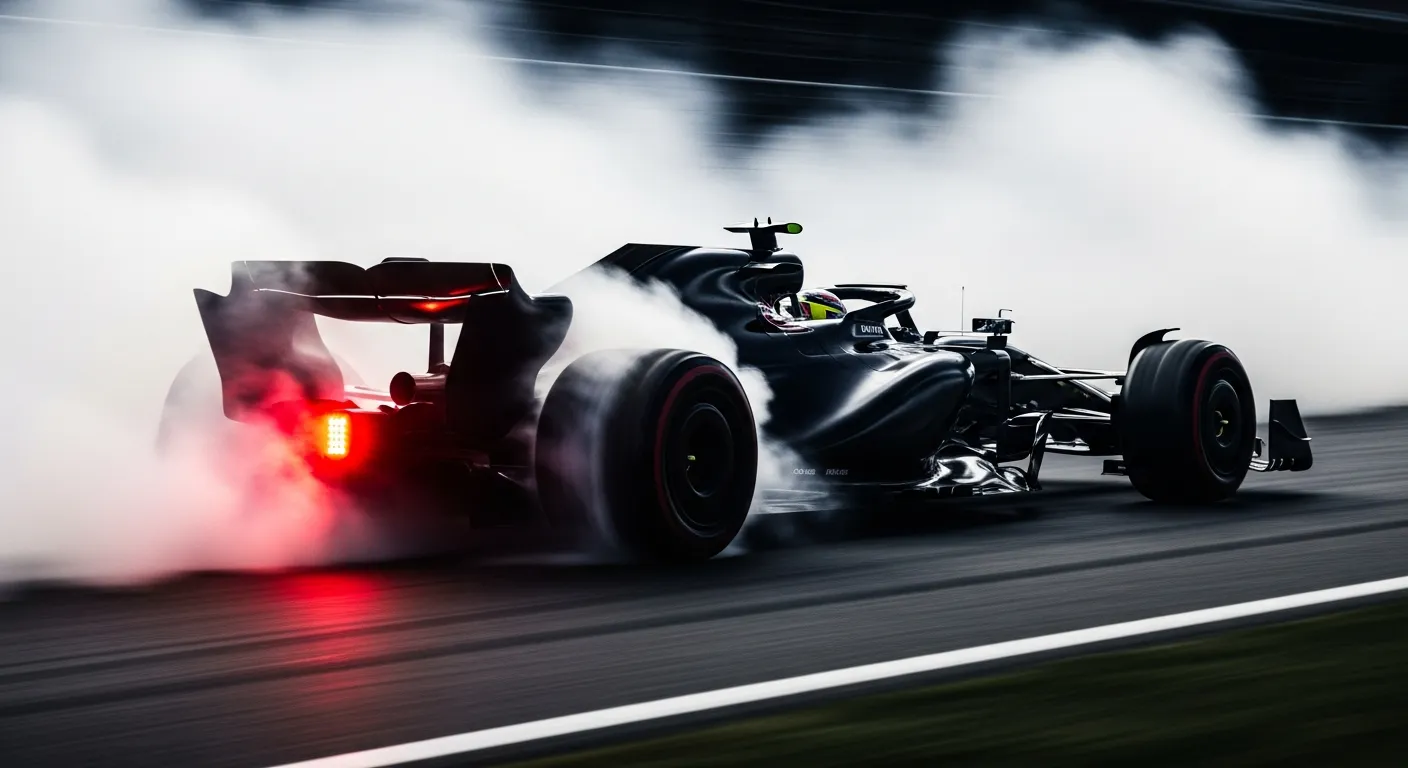
The 2016 Chinese Grand Prix at the Shanghai International Circuit was a masterclass in controlled dominance by Nico Rosberg, navigating early-race pandemonium to extend his championship lead.
Qualifying
Qualifying for the 2016 Chinese Grand Prix saw Nico Rosberg secure pole position with a decisive lap, underscoring the Mercedes W07's inherent pace. However, the session was not without drama for his teammate. Lewis Hamilton faced a significant setback when his power unit encountered issues, forcing a change and ultimately leading to a grid penalty that saw him start from the very back of the grid. This set the stage for a race where Mercedes' lead driver had a clear path, while the reigning champion faced an uphill battle, a scenario that often creates varied strategic narratives, much like the challenges seen at the 2019 Monaco Grand Prix where grid position is paramount.
Race
From the start, Rosberg made a clean getaway, maintaining his lead. Behind him, however, the opening lap was anything but serene. A multi-car incident at Turn 1, notably involving Sebastian Vettel and Daniil Kvyat, triggered a chain reaction that saw several drivers sustain damage. This chaos necessitated the deployment of the Safety Car, a pivotal moment that immediately reshaped the strategic landscape. While Rosberg continued to lead, Hamilton began his arduous climb through the field, showcasing the raw speed of his Mercedes despite early damage. His ability to recover positions from the back of the grid demonstrated both driver skill and the car's performance advantage, reminiscent of strong recovery drives observed at circuits like the 2019 Canadian Grand Prix.
Strategic story
The Safety Car period proved to be the defining strategic inflection point of the race. Many teams opted to pit early under the Safety Car conditions, switching to different tire compounds and effectively opening up a myriad of two-stop and three-stop strategies. Mercedes, with Rosberg in the lead, executed a flawless strategy, allowing him to manage his tires and pace effectively, never truly threatened. Ferrari, despite the early contact for Vettel, recovered strongly through strategic tire choices and the driver's ability to manage the car. Red Bull also demonstrated strong strategic acumen, allowing Daniil Kvyat to secure a podium finish, highlighting the importance of adaptability in the turbo-hybrid era. For a deeper understanding of race strategy, the Formula 1 — official site offers comprehensive race analysis.
Championship impact
Rosberg's victory marked his third consecutive win of the 2016 season, solidifying his lead in the Drivers' Championship. This dominant start put significant pressure on Hamilton, who, despite a valiant recovery drive, lost further ground. Mercedes' performance in Shanghai underscored their early-season advantage in the Constructors' Championship. The result provided a clear indication of Mercedes' formidable package, a trend that defined much of the turbo-hybrid era, as detailed in historical records available through the FIA — F1 World Championship. The data from this race, and indeed all F1 seasons, can be explored through resources like Jolpica/Ergast — 2026 season data, which provides comprehensive historical race results. For broader context on the sport's evolution, Wikipedia: Formula One serves as a valuable encyclopaedic resource. News outlets like Autosport would have covered the race extensively, providing contemporary analysis of the season's early dynamics.
Read the full editorial
Full classified results
Every driver's verified grid-to-flag result from the 2016 Chinese Grand Prix — grid, finish, points, teammate H2H, and championship swing.
- P1Nico RosbergMercedes25 pts
- P2Sebastian VettelFerrari18 pts
- P4Daniel RicciardoRed Bull12 pts
- P5Kimi RäikkönenFerrari10 pts
- P7Lewis HamiltonMercedes6 pts
- P8Max VerstappenToro Rosso4 pts
- P9Carlos SainzToro Rosso2 pts
- P10Valtteri BottasWilliams1 pts
- P11Sergio PérezForce India0 pts
- P12Fernando AlonsoMcLaren0 pts
- P15Nico HülkenbergForce India0 pts