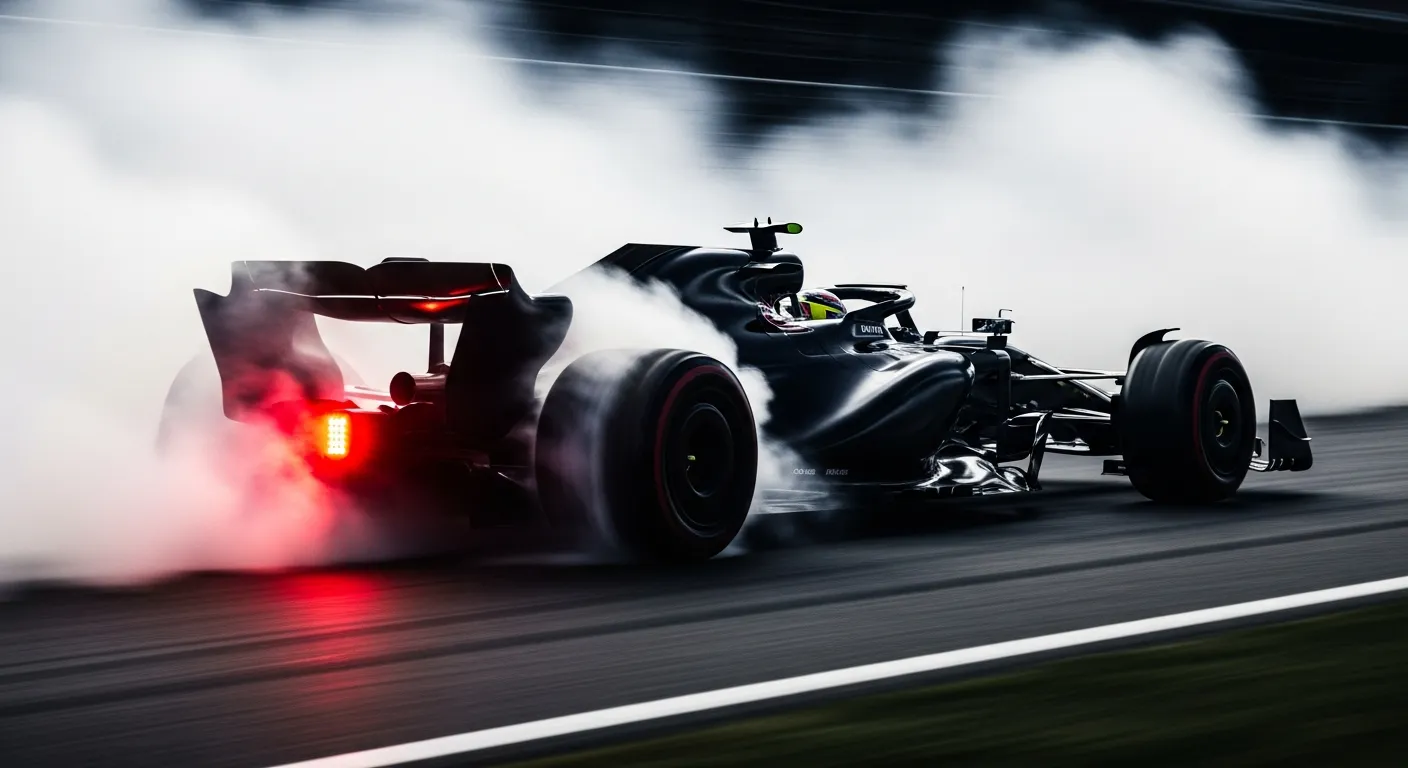
Fernando Alonso's drive at the 2017 Brazilian Grand Prix at the Autódromo José Carlos Pace showcased his enduring racecraft, as he converted a strong qualifying performance into a critical points finish for McLaren. Starting from the sixth position on the grid, a testament to his ability to extract performance even from the challenging McLaren-Honda package of that season, Alonso immediately engaged in a race-long battle to maintain his standing amidst the competitive midfield. The opening lap of the [Brazilian Grand Prix](https://www.formula1.com/en/racing/2017/Brazil.html) was notably chaotic, marked by multiple incidents that impacted several key contenders and brought out the safety car. Despite the unfolding drama and the early retirements of other drivers, Alonso maintained a disciplined approach, completing all 71 laps of the race. His strategic management of the McLaren MCL32 was particularly evident in his fastest lap of 1:13.451, recorded on lap 57, which placed him tenth overall in the fastest lap rankings for the event, demonstrating a late-race push for pace. This consistent performance stood in stark contrast to his teammate Stoffel Vandoorne, whose race ended prematurely due to an accident on lap 0, highlighting the fine margins and unpredictable nature of [Formula 1](https://en.wikipedia.org/wiki/Formula_One) competition, a dynamic often seen in high-stakes races where early incidents can define a weekend, similar to the intense pressures faced by drivers like [Max Verstappen at the 2021 Abu Dhabi Grand Prix](/results/2021-yas-marina-max-verstappen).
The Spanish driver's ability to secure an eighth-place finish, crossing the line 1:09.363 behind race winner Sebastian Vettel, underscored the consistent effort required to score points in the highly competitive 2017 season. This result brought McLaren four valuable championship points, a significant achievement given the constructor's ongoing struggles with power unit reliability and overall pace during that period. Alonso's drive was a clear demonstration of the resilience and strategic acumen that define a seasoned competitor, as he navigated the demanding Interlagos circuit and fended off rivals. While not a podium, the strategic execution and consistent pace were crucial for McLaren's constructors' championship aspirations. Such determined drives for points, often against superior machinery, are a recurring theme in the sport, reminiscent of the relentless pursuit of every available position seen from drivers like [Lewis Hamilton at the 2021 Abu Dhabi Grand Prix](/results/2021-yas-marina-lewis-hamilton). Analyzing these intricate race dynamics and driver performances often requires deep dives into comprehensive [F1 World Championship data](https://api.jolpi.ca/ergast/f1/2026.json) and a thorough understanding of the [FIA technical regulations](https://www.fia.com/events/fia-formula-one-world-championship) that govern vehicle performance. Alonso's performance here, while perhaps not his most dramatic, was a solid example of maximizing opportunity and extracting the absolute limit from his package, a trait also observed in drivers like [Yuki Tsunoda at the 2021 Qatar Grand Prix](/results/2021-lusail-yuki-tsunoda) who consistently push for every available point. His ability to hold off Sergio Pérez, who finished just 0.137 seconds behind him, further cemented the value of his eighth-place finish.
Verified race record · Ergast
Grid
P6
Finish
P8
Points
4
Laps
71
Constructor
McLaren Racing
Status
Finished
Teammate that weekend
Stoffel Vandoorne
Grid P12 · Collision · 0 pts
Championship · before vs after
Before round 19
P1611 pts
After round 19
P1515 pts