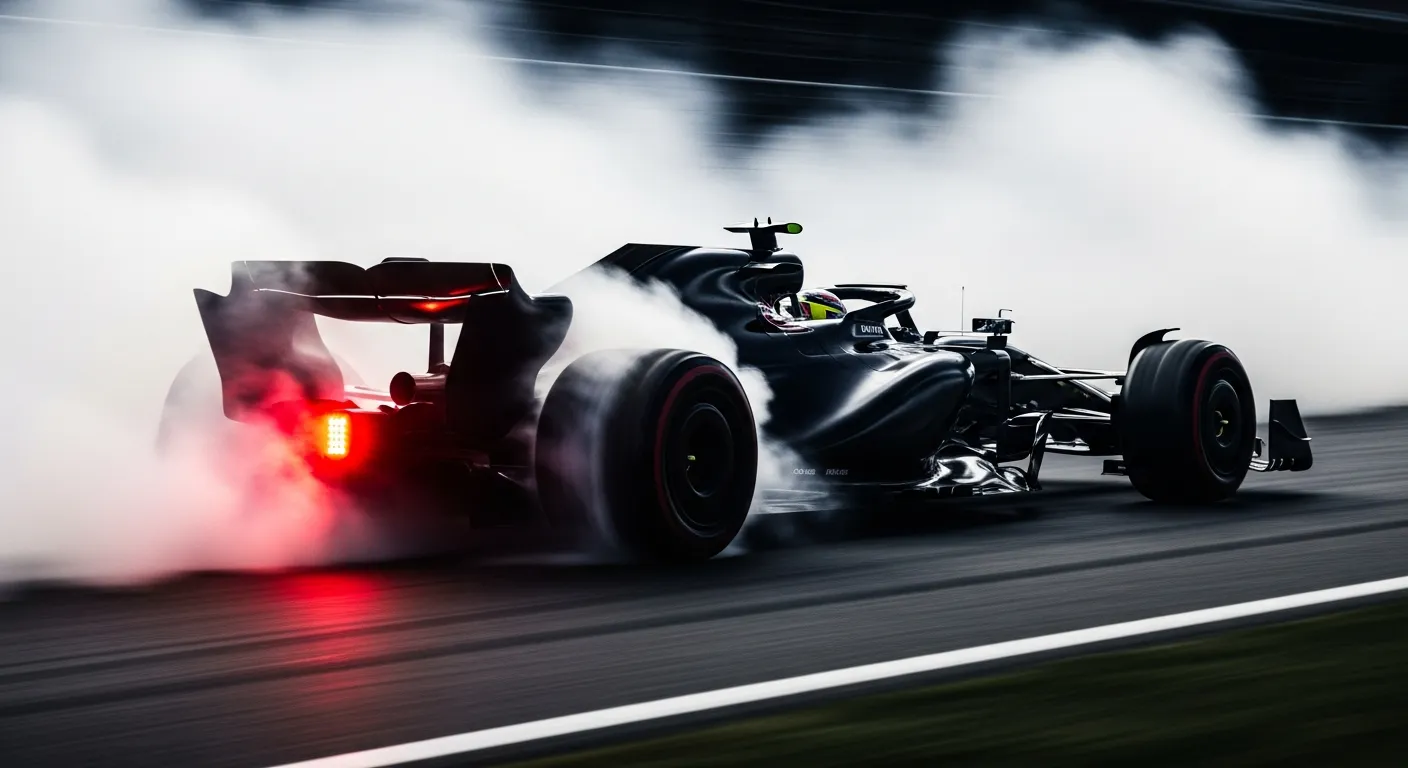
Lewis Hamilton's victory at the 2017 Singapore Grand Prix was less a demonstration of outright pace from his Mercedes W08 and more a masterclass in opportunistic race management, capitalizing on rivals' misfortunes. Starting from grid position 5, Hamilton found himself in a prime position to benefit from a dramatic multi-car incident at the start involving pole-sitter Sebastian Vettel, Max Verstappen, and Kimi Räikkönen. This early chaos, which saw all three retire on lap 0, immediately elevated Hamilton into the lead. The challenging wet conditions of the Marina Bay Street Circuit further played into his hands, allowing him to demonstrate exceptional control while others struggled. He maintained his composure through multiple safety car periods, managing his tires and pace effectively across the 58 laps. This performance echoes the kind of strategic driving seen from drivers like [Carlos Sainz at the 2020 Italian Grand Prix](/results/2020-monza-carlos-sainz) who also maximized unexpected opportunities.
Hamilton crossed the finish line with a total race time of 2:03:23.544, securing a crucial 25 points for Mercedes. His teammate, Valtteri Bottas, starting from grid 6, also delivered a strong performance, finishing in position 3, contributing valuable constructor points. Hamilton's fastest lap of the race, a 1:45.008 on lap 55, underscored his command of the conditions in the closing stages. The outcome of this race, a stark contrast to the early retirements experienced by drivers such as [Nico Hülkenberg at the 2020 Italian Grand Prix](/results/2020-monza-nico-hulkenberg) due to engine issues, highlighted the unpredictable nature of street circuits and the importance of reliability, a key aspect of [Formula 1 — official site](https://www.formula1.com/en) racing. For a deeper understanding of race data, resources like [Jolpica/Ergast — 2026 season data](https://api.jolpi.ca/ergast/f1/2026.json) offer comprehensive historical records. The [FIA — F1 World Championship](https://www.fia.com/events/fia-formula-one-world-championship) rules governing such incidents are critical to understanding race outcomes. This particular event is often cited in discussions of pivotal championship moments, a testament to its impact on the [Wikipedia: Formula One](https://en.wikipedia.org/wiki/Formula_One) season. The strategic decisions made by the Mercedes team were instrumental, allowing Hamilton to convert a challenging qualifying into a dominant win, much like how teams strategize around incidents for drivers such as [Max Verstappen at the 2020 Azerbaijan Grand Prix](/results/2020-baku-max-verstappen).
Verified race record · Ergast
Grid
P5
Finish
P1
Points
25
Laps
58
Constructor
Mercedes AMG F1
Status
Finished
Teammate that weekend
Valtteri Bottas
Grid P6 · Finish P3 · 15 pts
Championship · before vs after
Before round 14
P1238 pts
After round 14
P1263 pts