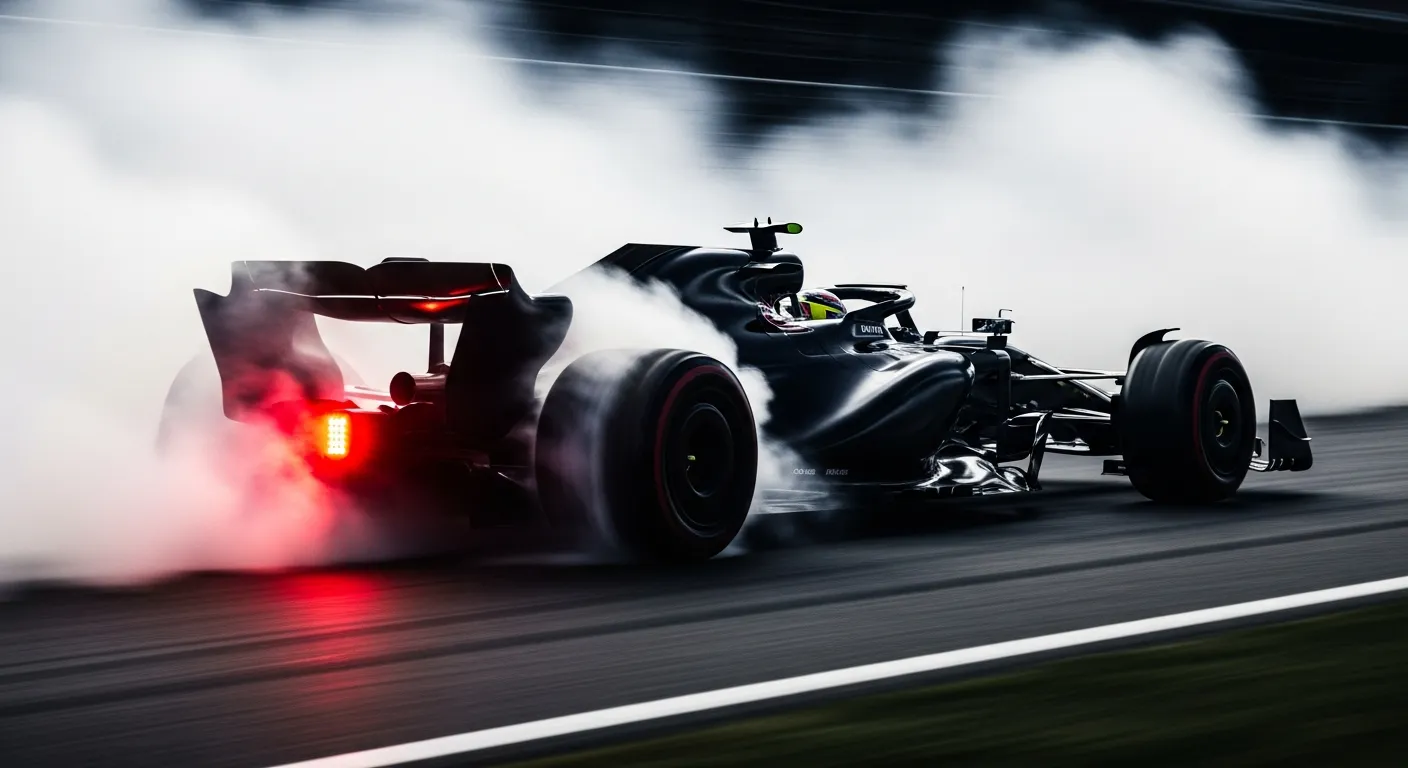
The 2014 Singapore Grand Prix presented a high-stakes scenario for Lewis Hamilton, who arrived at the Marina Bay Street Circuit trailing his Mercedes teammate Nico Rosberg in the championship standings. Hamilton secured pole position with a decisive qualifying lap, a crucial advantage on this tight street circuit where overtaking is notoriously difficult. From the grid, Hamilton initially maintained his lead, but the true drama unfolded almost immediately behind him. Rosberg, starting from second, encountered critical issues with his W05 Hybrid power unit even before the race began, struggling to engage gears. Despite efforts to reset the system, the electrical fault persisted, severely hampering his pace and ultimately forcing his retirement on lap 13. This unforeseen technical failure fundamentally reshaped the race narrative and the championship battle, removing Hamilton's primary rival from contention. With Rosberg out, Hamilton's focus shifted from direct wheel-to-wheel combat to managing his pace, tires, and fuel on the demanding, illuminated street circuit. The unique challenges of the [Marina Bay Street Circuit](https://www.formula1.com/en/circuits/singapore/marina-bay.html) often lead to extended safety car periods due to its close proximity to barriers, and the 2014 event was no exception. A safety car deployment on lap 31, triggered by Adrian Sutil's incident, compressed the field and introduced a strategic dilemma for Hamilton. Having pitted earlier, he needed to make another stop, which would drop him behind the Red Bulls of Sebastian Vettel and Daniel Ricciardo. The Mercedes team called him in, a strategic gamble that required Hamilton to regain positions on track. His drive post-safety car was a masterclass in controlled aggression. On fresh tires, he rapidly closed the gap to Vettel, executing a decisive overtake to reclaim the lead. From that point, Hamilton demonstrated the raw pace of the Mercedes package and his ability to extract maximum performance under pressure, setting the fastest lap of the race, a 1:50.417 on lap 39, with an average speed of 165.137 kph. The British driver completed all 60 laps in a total time of 2:00:04.795, crossing the finish line in first position and collecting 25 points. This victory was not just a standalone win; it represented a significant psychological and points advantage in the championship fight. The meticulous preparation and real-time adjustments by the Mercedes team were crucial in navigating the race's evolving conditions, a testament to the importance of understanding [Formula 1 technical regulations](https://www.fia.com/en/fia-formula-one-world-championship-2024-regulations.html) and strategic execution. This performance offered a stark contrast to later challenges, such as [Lewis Hamilton's performance at the 2022 Bahrain Grand Prix](/results/2022-bahrain-lewis-hamilton), where the team grappled with the W13's early-season issues. The data from such pivotal events, meticulously archived by platforms like [Jolpica/Ergast](https://api.jolpi.ca/ergast/f1/2026.json), provides a granular look into the factors influencing race outcomes. This win also draws parallels with other drivers who converted pole to victory, like [Charles Leclerc at the 2022 Bahrain Grand Prix](/results/2022-bahrain-charles-leclerc), highlighting the importance of a strong qualifying performance. The challenges of a street circuit often test a driver's precision and mental fortitude, reminiscent of the demanding conditions faced by [Nico Hülkenberg at the 2022 Japanese Grand Prix](/results/2022-suzuka-nico-hulkenberg) in very different circumstances. For broader historical context on the sport, [Wikipedia's comprehensive overview of Formula One](https://en.wikipedia.org/wiki/Formula_One) offers valuable insights into the evolution of racing strategies and car development. The official [Formula 1 website](https://www.formula1.com/en) provides further historical context on this and other races, allowing fans to delve into the rich history of the [FIA Formula One World Championship](https://www.fia.com/events/fia-formula-one-world-championship). The 2014 Singapore Grand Prix was a defining moment in Hamilton's campaign, showcasing his resilience and strategic acumen in a high-pressure, championship-altering scenario.
Verified race record · Ergast
Grid
P1
Finish
P1
Points
25
Laps
60
Constructor
Mercedes AMG F1
Status
Finished
Teammate that weekend
Nico Rosberg
Grid P0 · Steering · 0 pts
Championship · before vs after
Before round 14
P2216 pts
After round 14
P1241 pts