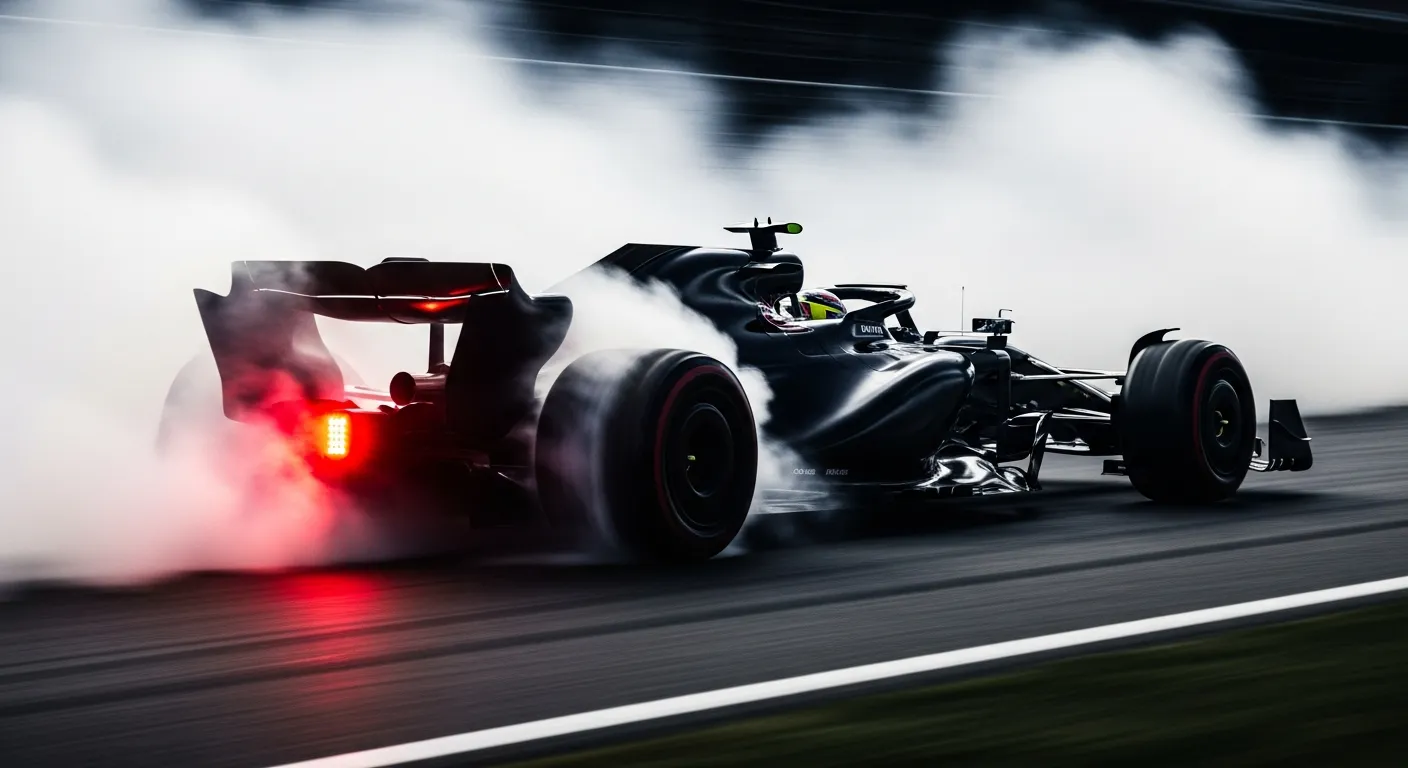
Nico Hülkenberg's 2017 Singapore Grand Prix was a race of unfulfilled potential, ending prematurely with an engine failure despite a strong qualifying performance for Renault and adeptly navigating a chaotic start. Starting from an impressive 7th on the grid, Hülkenberg found himself in a prime position to capitalize on the notoriously unpredictable Marina Bay Street Circuit. The opening lap was immediately dramatic, with a multi-car incident at Turn 1 involving both Ferraris of Sebastian Vettel and Kimi Räikkönen, alongside Max Verstappen, which Hülkenberg skillfully avoided. This early chaos, unfolding under wet conditions, presented a significant opportunity for the German driver and his Renault team to convert a strong grid slot into a substantial points haul. Throughout the initial phases of the race, Hülkenberg maintained a competitive pace, demonstrating the R.S.17's potential on the demanding street circuit. His fastest lap of "1:48.011" on lap 37, while ranking 13th overall, showcased his ability to extract performance when conditions allowed, as detailed by official [Formula 1 race reports](https://www.formula1.com/en). The strategic decisions made during the subsequent safety car periods were critical for maintaining track position, and Hülkenberg appeared poised to deliver a strong result, a common objective in the highly competitive [FIA Formula One World Championship](https://www.fia.com/events/fia-formula-one-world-championship). His drive was a testament to the intricate balance of driver skill and car setup required for a night race in Singapore, a venue known for its demanding nature and high attrition rates, as discussed in various [Formula One analyses](https://en.wikipedia.org/wiki/Formula_One).
However, the race took an unfortunate turn for Hülkenberg on lap 48 when he was forced to retire due to an "Engine" issue, as confirmed by the official race data. This mechanical failure meant zero points for the German driver, a stark contrast to his teammate Jolyon Palmer, who started 11th and delivered a commendable performance to finish 6th, securing 8 points for Renault. Palmer's strong result underscored the significant missed opportunity for Hülkenberg, especially considering his superior starting position and the points he was likely to have scored. The reliability setback for Renault highlighted the persistent challenges of the 2017 power units, a factor that frequently dictates outcomes in modern F1 racing, and one that drivers like [Carlos Sainz at the 2025 Austrian Grand Prix](/results/2025-red-bull-ring-carlos-sainz) understand can make or break a weekend. Such technical failures on a circuit where overtaking is difficult can be particularly frustrating, as any strong early race position is instantly negated. The detailed race progression and its unfortunate conclusion for Hülkenberg are meticulously documented in F1's comprehensive [historical race data](https://api.jolpi.ca/ergast/f1/2026.json). This DNF was a critical blow to Hülkenberg's individual championship aspirations and to Renault's constructor points tally, particularly when considering the potential for a valuable double points finish. Drivers such as [Esteban Ocon at the 2025 Austrian Grand Prix](/results/2025-red-bull-ring-esteban-ocon) consistently battle in the midfield, where every point is hard-won and every retirement a significant setback, echoing the challenges Hülkenberg faced. The unpredictable nature of street circuits and the relentless demands on engine components often lead to such dramatic conclusions, impacting the season narratives for competitors like [Alexander Albon at the 2025 Austrian Grand Prix](/results/2025-red-bull-ring-alex-albon).
Verified race record · Ergast
Grid
P7
Finish
Oil leak
Points
0
Laps
48
Constructor
Renault Sport Formula One Team
Status
Oil leak
Teammate that weekend
Jolyon Palmer
Grid P11 · Finish P6 · 8 pts
Championship · before vs after
Before round 14
P1034 pts
After round 14
P1034 pts