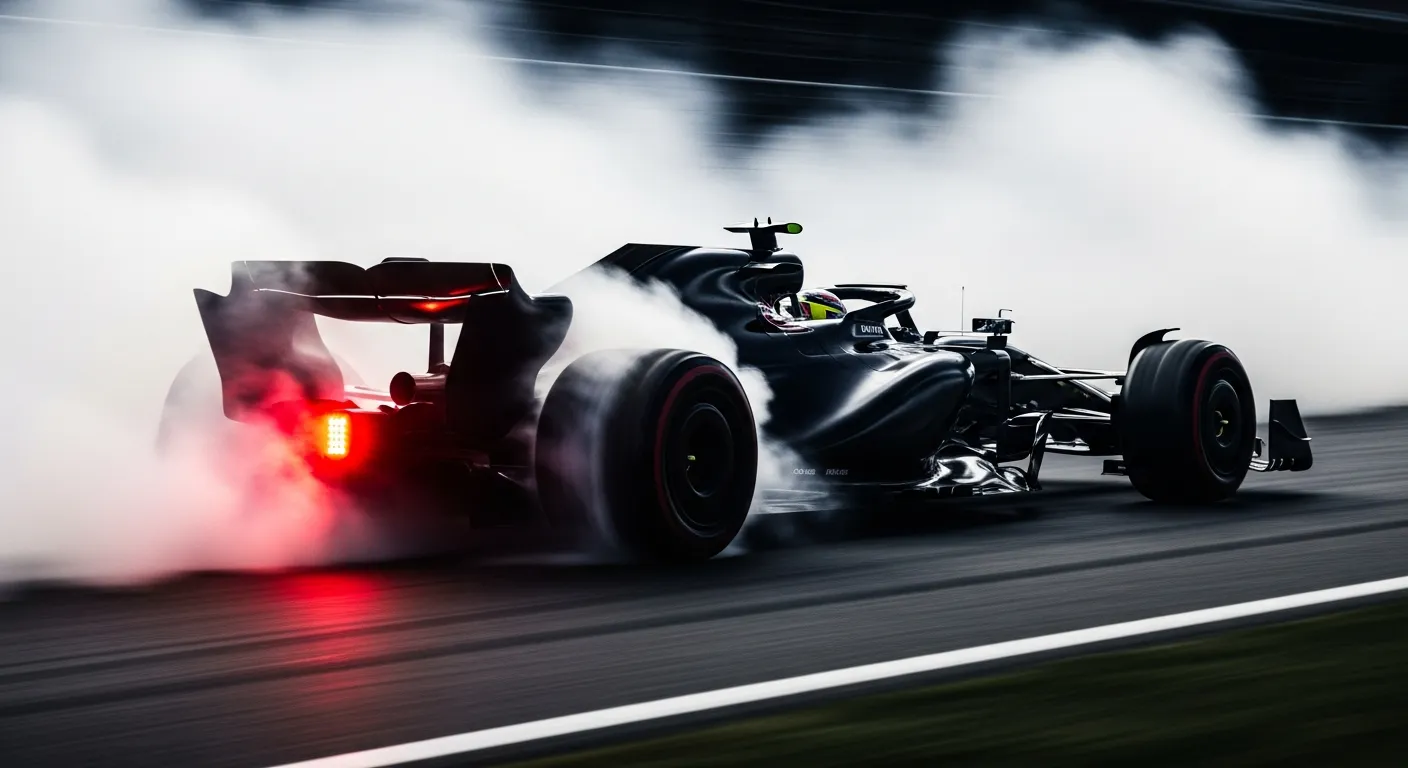
Nico Hülkenberg's 2015 Singapore Grand Prix was a short-lived affair for Force India, culminating in a lap 13 collision that halted his progress after starting from 11th on the grid. The incident, which occurred early in the race at the challenging Marina Bay Street Circuit, meant Hülkenberg completed only 12 laps before his status was recorded as "Collision," resulting in zero points for the German driver. His fastest lap, a 1:53.868, was set on lap 6, ranking 18th overall, indicating he was still finding pace before the abrupt end to his race. This outcome stood in stark contrast to his teammate Sergio Pérez, who started two places behind Hülkenberg in 13th but managed to finish the full 61 laps and secure 7th position, adding 6 points to Force India's tally. Such incidents are a stark reminder of the unpredictable nature of [Formula 1 racing](https://www.formula1.com/en), where even a strong qualifying effort can be undone by a single moment. For a deeper dive into F1 regulations, consult the [FIA — F1 World Championship](https://www.fia.com/events/fia-formula-one-world-championship) documentation.
This DNF was a significant missed opportunity for Hülkenberg, especially considering the competitive field. While drivers like [Charles Leclerc at the 2025 Italian Grand Prix](/results/2025-monza-charles-leclerc) will face their own unique challenges, the pressure to convert grid positions into points remains constant across seasons. The Singapore Grand Prix is known for its demanding street circuit, often leading to safety car periods and unexpected outcomes, as detailed on [Wikipedia: Formula One](https://en.wikipedia.org/wiki/Formula_One). Hülkenberg's early retirement prevented him from capitalizing on potential chaos later in the race, a scenario his teammate Pérez navigated to a points finish. Understanding race outcomes often requires examining comprehensive [F1 season data](https://api.jolpi.ca/ergast/f1/2026.json) from sources like Ergast. The complexities of a night race under the lights, such as those faced by drivers like [Lewis Hamilton at the 2025 Italian Grand Prix](/results/2025-monza-lewis-hamilton) or [Lando Norris at the 2025 Italian Grand Prix](/results/2025-monza-lando-norris) in their respective eras, highlight the constant evolution of driver skill and strategic execution in the sport. The official [Formula 1 — official site](https://www.formula1.com/en) provides further details on historical races and driver performances, offering context for such events. The [FIA — F1 World Championship](https://www.fia.com/events/fia-formula-one-world-championship) also tracks driver penalties and race incidents.
Verified race record · Ergast
Grid
P11
Finish
Collision
Points
0
Laps
12
Constructor
Force India F1 Team
Status
Collision
Teammate that weekend
Sergio Pérez
Grid P13 · Finish P7 · 6 pts
Championship · before vs after
Before round 13
P1130 pts
After round 13
P1230 pts