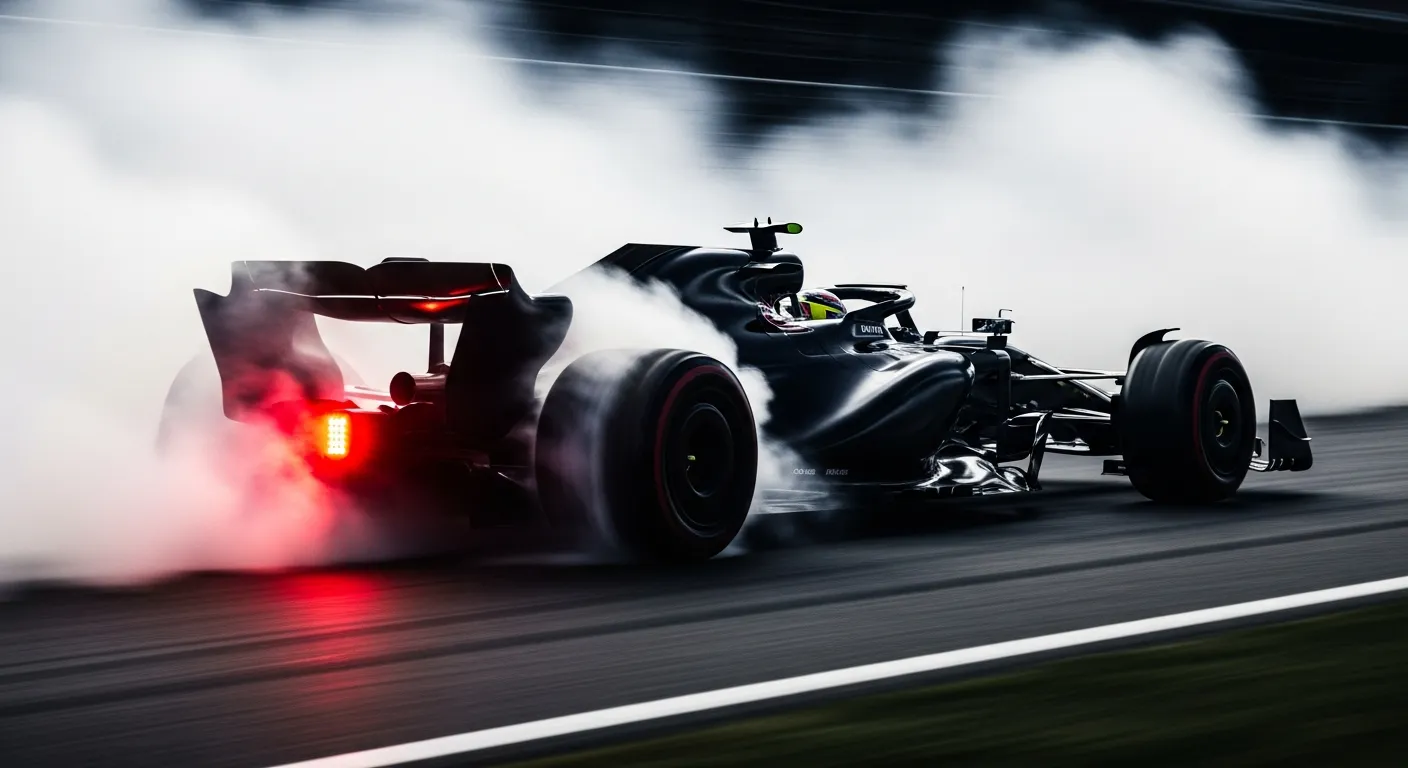
The 2017 Italian Grand Prix at the iconic Autodromo Nazionale di Monza presented a formidable challenge for Nico Hülkenberg and the Renault team, culminating in a 13th-place finish for the German driver. Hülkenberg commenced the race from 14th on the grid, a starting position that placed him firmly in the competitive mid-field, surrounded by a tight pack of rivals. Over the course of the 53-lap event, he completed 52 laps, ultimately classified as "+1 Lap" behind the race winner, Lewis Hamilton. This result, while not yielding any championship points for Renault, represented a minor improvement of one position from his starting slot. The high-speed nature of Monza, with its demanding straights and chicanes, is notoriously unforgiving on power units and aerodynamic setups, a critical consideration for every team competing under the [FIA Formula One World Championship](https://www.fia.com/events/fia-formula-one-world-championship) regulations. Hülkenberg's fastest lap of the race was recorded on lap 46, posting a time of 1:26.131. This specific lap time, which translated to an average speed of 242.128 kph, placed him 16th in the overall fastest lap rankings for the event. To put this in perspective, the quickest lap of the Grand Prix was a blistering 1:23.361 by Daniel Ricciardo of Red Bull, underscoring the performance gap Renault faced against the front-running teams at this particular circuit. The strategic demands of [Formula 1](https://www.formula1.com/en), especially at a historic venue like Monza, require a precise balance of straight-line speed and cornering stability, a balance Renault was diligently working to optimize throughout the 2017 season as they aimed to solidify their position in the constructors' championship.
Hülkenberg's performance at Monza also needs to be viewed in the context of his teammate's fortunes and the broader competitive field. Jolyon Palmer, starting from 17th on the grid, was forced to retire from the race after completing just 29 laps due to an engine failure. This mechanical issue meant Hülkenberg was the sole Renault car to see the checkered flag, highlighting the reliability hurdles the French constructor was navigating that season. While Hülkenberg's 0 points from this race did not alter his overall championship standing, remaining 10th with 34 points, his consistent presence in the mid-field was a defining characteristic of his 2017 campaign. He finished ahead of Carlos Sainz in the Toro Rosso (14th) and Romain Grosjean in the Haas (15th), but behind drivers like Kevin Magnussen (11th) and Daniil Kvyat (12th), illustrating the tight competition. For fans tracking Hülkenberg's career, comparing this 2017 Monza outing to his more recent performances, such as [Nico Hülkenberg at the 2023 Miami Grand Prix](/results/2023-miami-nico-hulkenberg), offers insight into how driver and team dynamics evolve with regulation changes and car development. The comprehensive historical data available, for instance through [Jolpica/Ergast — 2026 season data](https://api.jolpi.ca/ergast/f1/2026.json), allows for a detailed analysis of these trends. The 2017 season itself was a pivotal year in [Wikipedia: Formula One](https://en.wikipedia.org/wiki/Formula_One) history, marked by intense competition at the sharp end of the grid. Even for drivers at the pinnacle of the sport, race outcomes can vary significantly; consider the challenges faced by drivers like [Lewis Hamilton at the 2023 Emilia Romagna Grand Prix](/results/2023-imola-lewis-hamilton) or [Max Verstappen at the 2023 Emilia Romagna Grand Prix](/results/2023-imola-max-verstappen), where specific race conditions and car setups can dramatically influence results, regardless of a driver's pedigree. This nuanced perspective is crucial for understanding the full spectrum of F1 performance.
Verified race record · Ergast
Grid
P14
Finish
P13
Points
0
Laps
52
Constructor
Renault Sport Formula One Team
Status
+1 Lap
Teammate that weekend
Jolyon Palmer
Grid P17 · Transmission · 0 pts
Championship · before vs after
Before round 13
P1034 pts
After round 13
P1034 pts