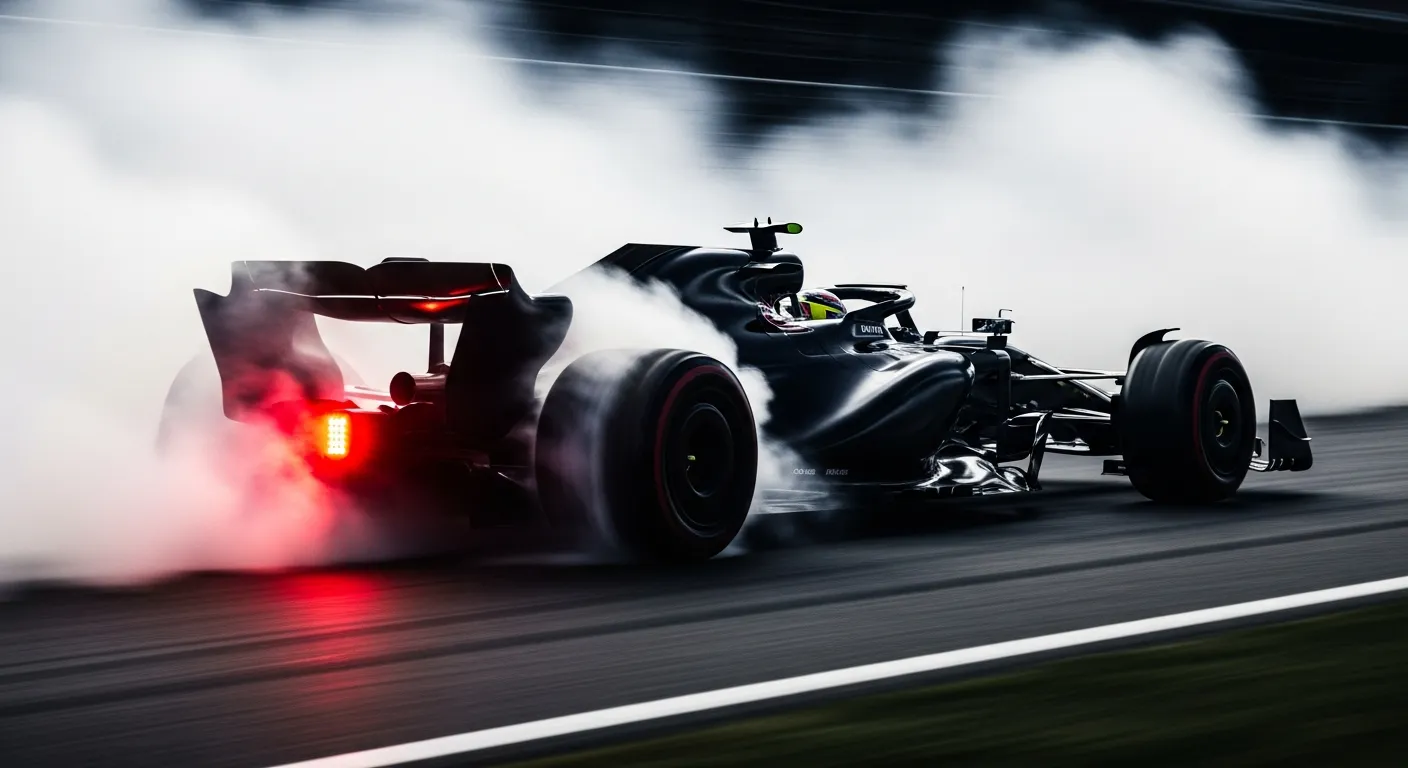
Carlos Sainz's 2017 Austrian Grand Prix campaign at the Red Bull Ring was cut short by an engine failure on lap 44, preventing the Spanish driver from converting his P10 grid start into points. The ninth round of the [Formula 1 season](https://www.formula1.com/en) saw Sainz, driving for Toro Rosso, battling in the competitive midfield pack. His qualifying performance had placed him firmly in the top half of the grid, a testament to his consistent pace throughout the weekend at the Spielberg circuit, a track known for its challenging elevation changes and high-speed sections, as documented by the [FIA's F1 World Championship overview](https://www.fia.com/events/fia-formula-one-world-championship). The [Red Bull Ring](https://www.formula1.com/en/circuits/austria/red-bull-ring.html) itself presents a unique challenge, often testing engine reliability.
During the race, Sainz maintained a steady presence, attempting to manage his tires and position amidst fierce competition. On lap 42, he registered his fastest lap of the race, a "1:09.150", which placed him 15th overall in fastest lap rankings for the event, with an average speed of 224.798 kph. This indicated that despite the eventual mechanical failure, there was still performance within the STR12 package. However, just two laps later, the engine issue forced him to retire, adding to a growing list of reliability concerns for the team that season. This outcome meant zero points for Sainz, leaving his season tally at 29 points and his championship position unchanged at P9. Such mid-race retirements due to technical issues are a harsh reality in [Formula One](https://en.wikipedia.org/wiki/Formula_One), often derailing promising drives. For instance, similar mechanical frustrations plagued [Max Verstappen at the 2018 Singapore Grand Prix](/results/2018-marina-bay-max-verstappen), highlighting how quickly fortunes can turn.
In contrast, his Toro Rosso teammate, Daniil Kvyat, who started P14, managed to bring his car home, albeit in P16 and three laps down, completing 68 laps. Kvyat's fastest lap, a "1:08.061" on lap 57, was notably quicker than Sainz's, ranking 6th overall, suggesting a different race strategy or perhaps a later push. The differing outcomes underscored the challenges faced by the team in extracting consistent performance and reliability from both cars. The data available through platforms like [Jolpica/Ergast's F1 data archive](https://api.jolpi.ca/ergast/f1/2026.json) provides a detailed look at such race specifics. This Austrian Grand Prix was a race of attrition for several drivers, including [Fernando Alonso at the 2018 Singapore Grand Prix](/results/2018-marina-bay-fernando-alonso), who also faced an early retirement due to collision damage. The technical intricacies of F1 power units are always under scrutiny, and a failure like Sainz's engine issue demands immediate attention from the team's engineers, as detailed in the [technical regulations on the official Formula 1 website](https://www.formula1.com/en/latest/article.technical-regulations-2017-f1-car-design.3bH9r750jY4WwM084g2i0m.html). This particular event, while disappointing for Sainz, provided valuable diagnostic data for Toro Rosso as they continued to develop their package through the season. It's a reminder that even strong qualifying performances, like [Lewis Hamilton's at the 2018 Singapore Grand Prix](/results/2018-marina-bay-lewis-hamilton) where he secured a dominant victory, can be undone by unforeseen circumstances for others on the grid.
Verified race record · Ergast
Grid
P10
Finish
Engine
Points
0
Laps
44
Constructor
Scuderia Toro Rosso
Status
Engine
Teammate that weekend
Daniil Kvyat
Grid P14 · Finish P16 · 0 pts
Championship · before vs after
Before round 9
P929 pts
After round 9
P929 pts