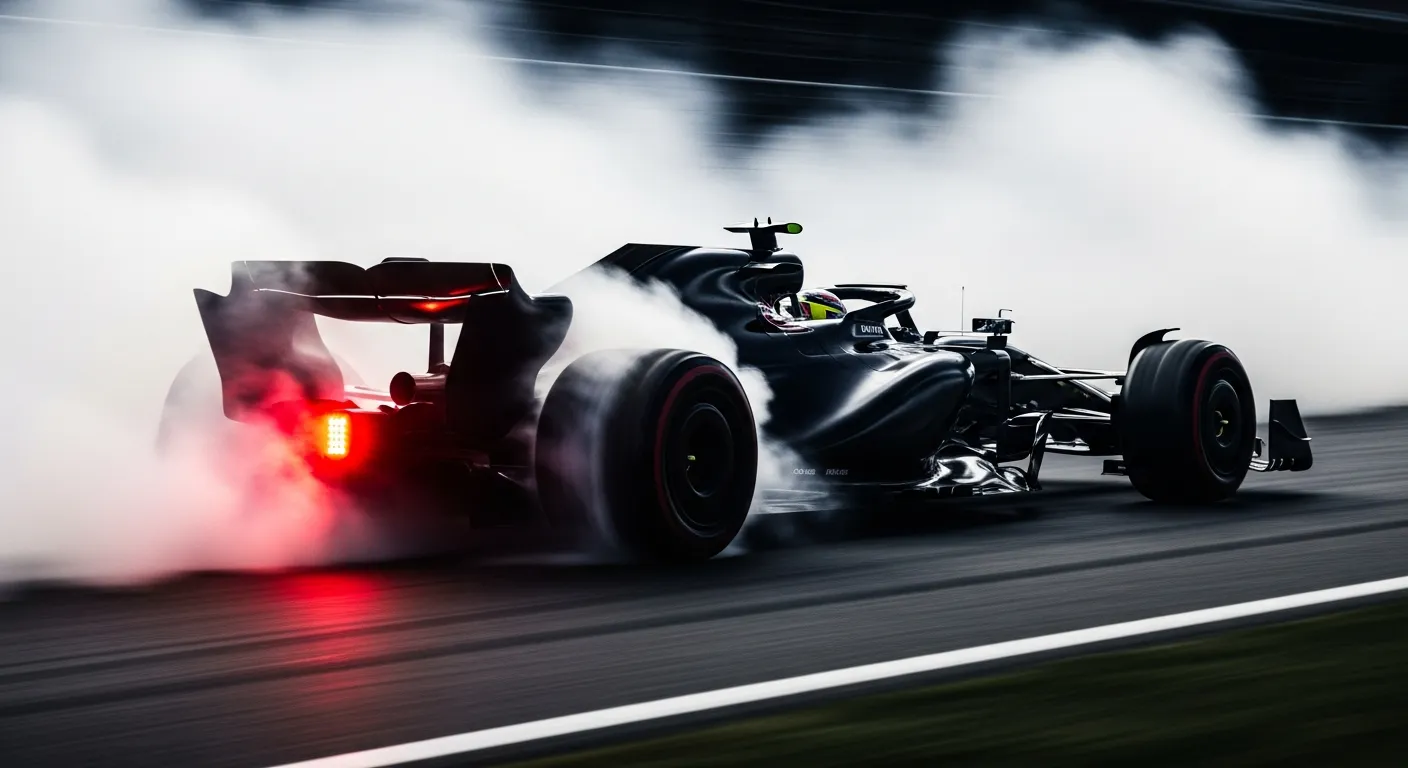
Esteban Ocon's drive at the 2017 Japanese Grand Prix was a clear demonstration of his burgeoning talent and Force India's consistent midfield prowess. Having qualified an impressive fifth on the grid, Ocon executed a composed race at the iconic Suzuka Circuit, ultimately converting that strong starting position into a sixth-place finish. This result yielded eight crucial points for the team and for Ocon's individual championship standings. Notably, his teammate, Sergio Pérez, also delivered a solid performance, starting seventh and finishing seventh, just over three seconds behind Ocon. This double points finish underscored Force India's operational efficiency and strategic acumen in a competitive season, a consistent theme for the constructor as documented on the [Formula 1 official information](https://www.formula1.com/en) portal. The race itself was marked by early drama, including the retirement of championship contender Sebastian Vettel from Ferrari on lap 4 due to a spark plug failure, which significantly altered the competitive landscape at the front.
Ocon completed all 53 laps of the Grand Prix, registering a final race time of +1:07.788 behind the victor, Lewis Hamilton. His personal best lap of 1:34.843, set on lap 50, ranked eleventh among all drivers, showcasing his ability to maintain pace and manage tire degradation effectively through the latter stages of the race. This steady performance contrasted with the early exit of other drivers, such as [Carlos Sainz at the 2026 Mexico City Grand Prix](/results/2026-mexico-city-carlos-sainz), who retired on the opening lap. The strategic calls from the Force India pit wall, operating within the strictures of [FIA F1 World Championship regulations](https://www.fia.com/events/fia-formula-one-world-championship), were instrumental in securing both cars in the points. Ocon's strong showing at Suzuka was indicative of his development as a reliable points-scorer, a trait he would carry forward in his career, as evidenced by his later performances, including those reflected in [Esteban Ocon at the 2026 Mexico City Grand Prix](/results/2026-mexico-city-esteban-ocon). For a comprehensive look at historical F1 race data, resources like [F1 race data archives](https://api.jolpi.ca/ergast/f1/2026.json) provide detailed statistics. The broader context of Formula One as a sport can be explored through [Formula One history](https://en.wikipedia.org/wiki/Formula_One) resources, offering insights into how individual performances contribute to a driver's legacy. This particular race also saw strong performances from established talents like [Alexander Albon at the 2026 Mexico City Grand Prix](/results/2026-mexico-city-alex-albon), highlighting the depth of talent across different eras of F1. Further detailed Grand Prix results can be found on the [official Formula 1 website](https://www.formula1.com/en).
Verified race record · Ergast
Grid
P5
Finish
P6
Points
8
Laps
53
Constructor
Force India F1 Team
Status
Finished
Teammate that weekend
Sergio Pérez
Grid P7 · Finish P7 · 6 pts
Championship · before vs after
Before round 16
P857 pts
After round 16
P865 pts