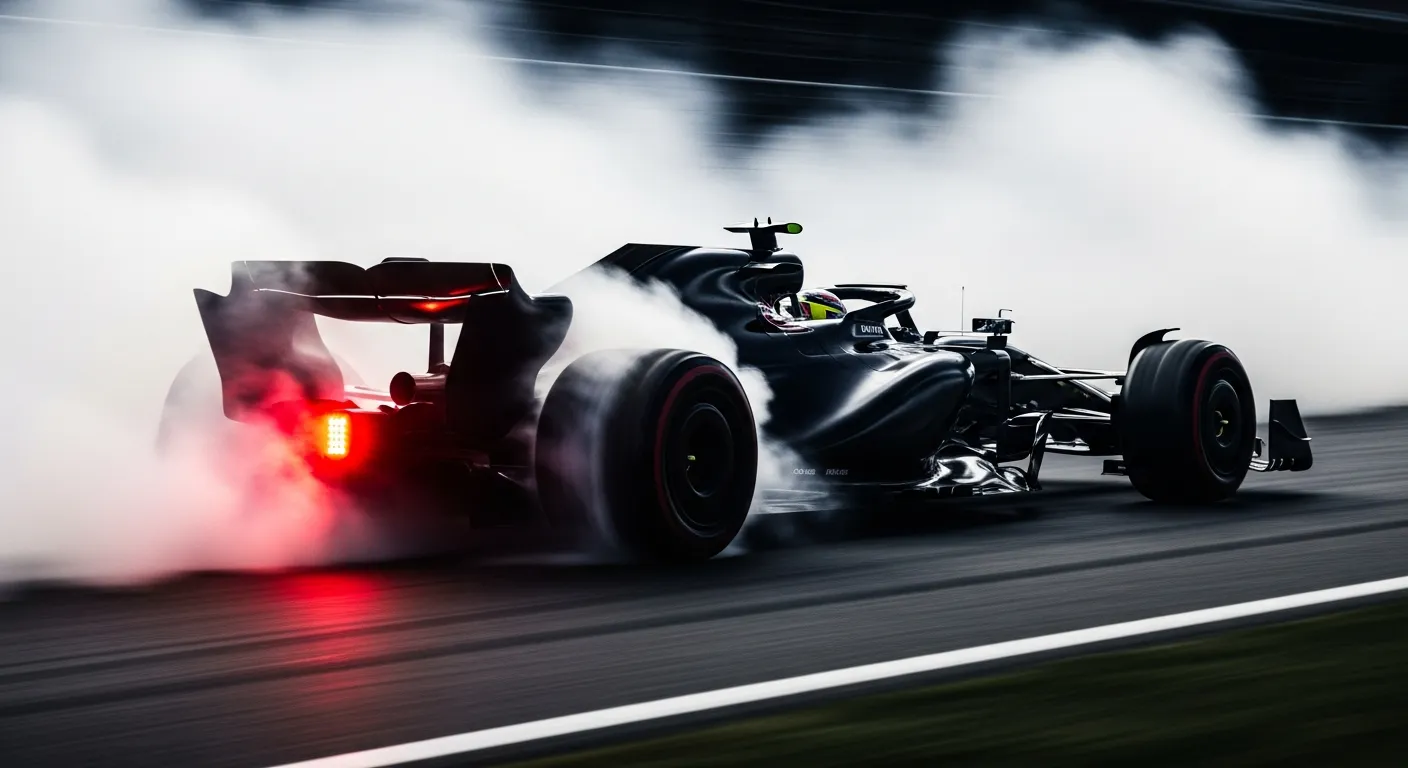
The 2017 Japanese Grand Prix at Suzuka was a pivotal race in the championship narrative, marked by a critical early reliability failure for Sebastian Vettel that significantly amplified Lewis Hamilton's title aspirations.
Qualifying
Qualifying set the stage for a tense contest, with Lewis Hamilton securing pole position, demonstrating Mercedes' strong single-lap pace. Sebastian Vettel qualified second, positioning his Ferrari alongside Hamilton on the front row. However, grid penalties for gearbox changes affected both Valtteri Bottas and Kimi Räikkönen, pushing them down the order. Bottas, originally second fastest, started fourth, while Räikkönen, who qualified sixth, began the race from tenth. This reshuffled the grid, allowing Red Bull's Daniel Ricciardo and Max Verstappen to start third and fourth respectively, setting up an intriguing battle at the front. The Suzuka Circuit, known for its high-speed corners and demanding layout, often rewards strong qualifying performances, as seen in previous seasons like the 2016 Australian Grand Prix.
Race
From the start, Hamilton maintained his lead, navigating the complex opening sequence of corners cleanly. Max Verstappen quickly moved past Daniel Ricciardo, settling into second position and immediately applying pressure to the Mercedes. The race's defining moment arrived early when Sebastian Vettel, struggling with a spark plug issue, was forced to retire on lap 4. This mechanical failure was a significant blow to his championship challenge, effectively handing a substantial advantage to Hamilton. The early stages also saw Carlos Sainz retire on the opening lap due to an accident, and Marcus Ericsson's race ended prematurely on lap 7. The safety car was deployed briefly, neutralizing the field. As the race progressed, Bottas and Räikkönen executed strong recovery drives from their penalized grid positions, pushing through the midfield. Bottas, in particular, showed impressive pace to climb to fourth, closely trailing his teammate and the Red Bulls. The strategic nuances of the turbo-hybrid era were evident, demanding precise execution from both drivers and pit crews, a theme that also played out in races such as the 2016 Chinese Grand Prix.
Strategic Story
With Vettel out, the strategic focus shifted to Hamilton's management of the race and Verstappen's pursuit. Hamilton controlled the pace from the front, executing a single-stop strategy that saw him switch from soft to medium tires. Verstappen mirrored this approach, maintaining a consistent gap and keeping Hamilton honest throughout the 53 laps. The Red Bull RB13 demonstrated strong race pace at Suzuka, allowing both Verstappen and Ricciardo to secure podium finishes. The midfield battles were equally compelling, with Esteban Ocon and Sergio Pérez of Force India delivering solid points finishes. Haas drivers Kevin Magnussen and Romain Grosjean also capitalized on opportunities to bring home points, showcasing the competitive nature of the 2017 season's midfield. Understanding the intricacies of tire degradation and pit window timing is crucial in modern F1, as detailed on the Formula 1 — official site.
Championship Impact
Vettel's retirement was a catastrophic development for his title aspirations. Coming into the race, the championship battle was finely poised, but this result significantly extended Hamilton's lead in the Drivers' Championship. With only a few rounds remaining, this DNF made Hamilton's path to the title much clearer, putting him in a commanding position. Mercedes further solidified their lead in the Constructors' Championship, benefiting from Hamilton's win and Bottas's recovery drive. The FIA's regulations for the F1 World Championship ensure every point counts, and this race delivered a dramatic shift in the standings. For a broader look at F1 statistics and historical data, resources like Jolpica/Ergast — 2026 season data provide invaluable context on how such events shape championship narratives over time. The race underscored the critical role of reliability in a championship fight, a factor often as decisive as raw pace, a point echoed in the general history of Formula One racing.
Read the full editorial
Full classified results
Every driver's verified grid-to-flag result from the 2017 Japanese Grand Prix — grid, finish, points, teammate H2H, and championship swing.
- P1Lewis HamiltonMercedes25 pts
- P2Max VerstappenRed Bull18 pts
- P3Daniel RicciardoRed Bull15 pts
- P4Valtteri BottasMercedes12 pts
- P5Kimi RäikkönenFerrari10 pts
- P6Esteban OconForce India8 pts
- P7Sergio PérezForce India6 pts
- P11Fernando AlonsoMcLaren0 pts
- P13Pierre GaslyToro Rosso0 pts
- —Lance StrollWilliamsWheel
- —Nico HülkenbergRenaultFront wing
- —Sebastian VettelFerrariSpark plugs
- —Carlos SainzToro RossoAccident