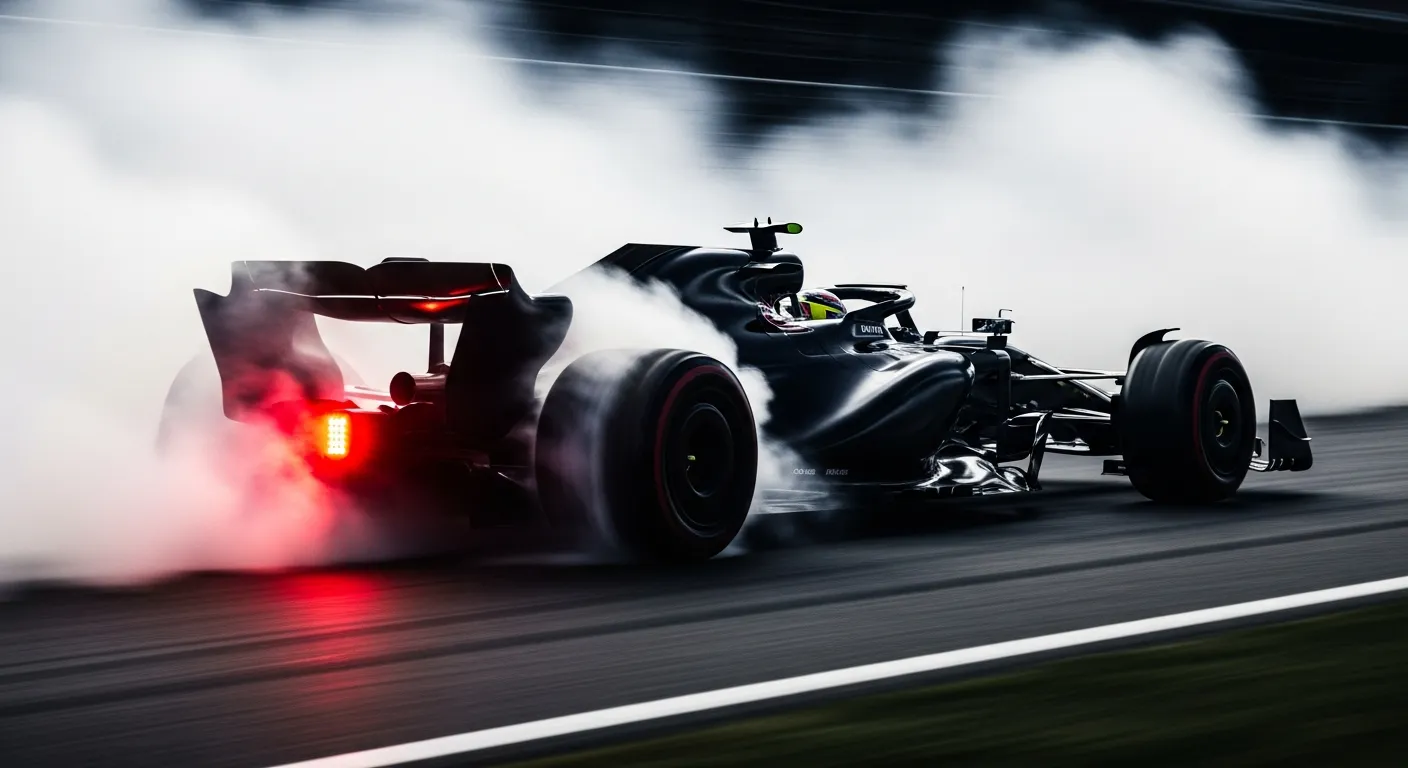
Fernando Alonso concluded his 2017 Formula 1 season at the Abu Dhabi Grand Prix with a determined drive for McLaren, securing two championship points by finishing in ninth position after starting from P11 on the grid. This result, achieved at the Yas Marina Circuit, marked a hard-fought end to a challenging year for the Spanish driver and the British constructor. Alonso navigated the 55-lap race, completing 54 laps and being classified as "+1 Lap" behind race winner Valtteri Bottas. His ability to advance two positions from his starting grid slot underscored his consistent racecraft, a hallmark of his career even when not contending for podiums.
The McLaren MCL32, powered by a Honda engine, presented significant performance hurdles throughout the 2017 season. Despite these limitations, Alonso consistently extracted competitive pace, as evidenced by his fastest lap in Abu Dhabi. On lap 26, he recorded a 1:43.378, which was the fourth quickest lap of the entire race, demonstrating his capacity to push the car when conditions allowed. This average speed of 193.41 kph offered a glimpse of the potential, albeit often unrealized, within the package. His teammate, Stoffel Vandoorne, finished P12, also completing 54 laps, further highlighting Alonso's edge in securing points. For a comprehensive overview of Formula 1's history and technical evolution, resources like [Wikipedia: Formula One](https://en.wikipedia.org/wiki/Formula_One) provide valuable context. The race itself, the twentieth round of the 2017 season, saw Mercedes and Ferrari dominate the top positions, a stark contrast to McLaren's midfield battles. Much like [Nico Hülkenberg at the 2022 Australian Grand Prix](/results/2022-albert-park-nico-hulkenberg) consistently fighting for points in the midfield, Alonso's drive showcased the grit required to score in less competitive machinery.
Alonso's strategic execution and tire management were crucial in maintaining his position and fending off rivals. The two points gained were a testament to a race managed with precision, avoiding incidents and optimizing pit strategy. This performance, while not a victory, was significant for McLaren, contributing to their constructors' championship tally in a season where points were hard-won. The official results and further details on the 2017 season can be found on the [Formula 1 — official site](https://www.formula1.com/en). The consistent effort to maximize every opportunity, even when the car's inherent pace was not at the front, draws parallels with drivers like [Yuki Tsunoda at the 2022 Australian Grand Prix](/results/2022-albert-park-yuki-tsunoda), who similarly worked to extract performance from their package. The data for such events, including detailed lap times and speeds, is meticulously recorded and often made available through platforms referencing the [Jolpica/Ergast — 2026 season data](https://api.jolpi.ca/ergast/f1/2026.json) API for historical analysis. While the front of the field, exemplified by a dominant drive like [Max Verstappen at the 2022 Chinese Grand Prix](/results/2022-shanghai-max-verstappen), operates on a different plane, the fight in the midfield is often just as intense. The meticulous regulations governing such events are overseen by the [FIA — F1 World Championship](https://www.fia.com/events/fia-formula-one-world-championship), ensuring fair competition across the grid.
Verified race record · Ergast
Grid
P11
Finish
P9
Points
2
Laps
54
Constructor
McLaren Racing
Status
+1 Lap
Teammate that weekend
Stoffel Vandoorne
Grid P13 · Finish P12 · 0 pts
Championship · before vs after
Before round 20
P1515 pts
After round 20
P1517 pts