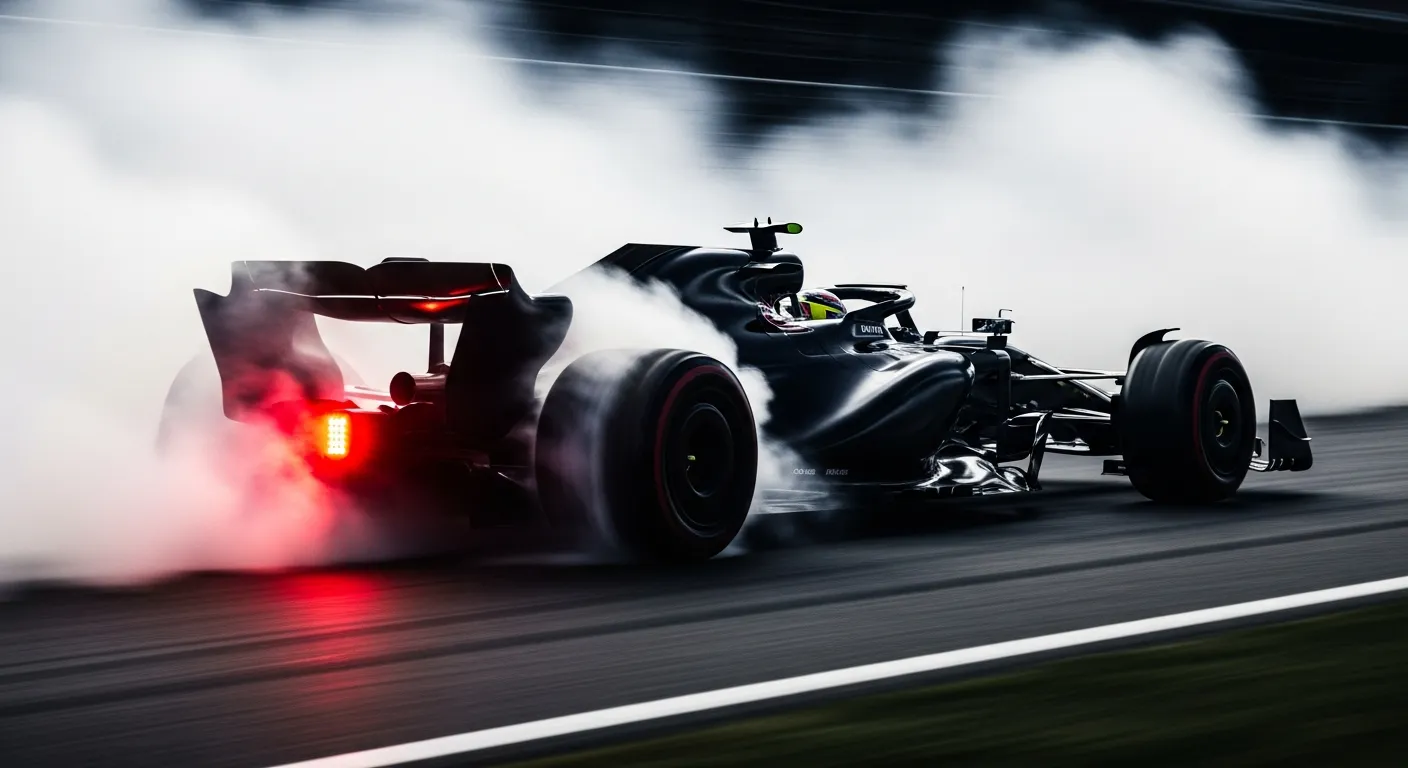
The 2017 Abu Dhabi Grand Prix concluded the turbo-hybrid era's fourth season with Valtteri Bottas securing a dominant victory from pole, marking his third career win and a strong finish to his first year with Mercedes. This final race at the Yas Marina Circuit, known for its challenging overtaking opportunities, served as a testament to strategic execution and consistent pace, rather than dramatic on-track battles for the lead.
Qualifying
Qualifying set the tone for Mercedes' strong weekend, with Valtteri Bottas claiming pole position with a lap time of 1:36.231, narrowly edging out his teammate Lewis Hamilton by just 0.172 seconds. Ferrari's Sebastian Vettel secured third on the grid, over half a second adrift of the Mercedes front row. The session underscored the W08's inherent speed on the Yas Marina layout, particularly through the technical final sector. This performance mirrored the team's strength seen in races like the 2019 Spanish Grand Prix, where qualifying dominance often translated directly into race control due to circuit characteristics.
Race
From the moment the lights went out, Bottas controlled the pace, converting his pole position into a lead he would maintain for the majority of the 55-lap race. Lewis Hamilton, despite his best efforts and setting the fastest lap of the race with a 1:40.650, found the Yas Marina Circuit's layout challenging for sustained overtaking attempts. He remained within striking distance but could not mount a successful challenge for the lead. Sebastian Vettel held onto third, completing the podium as the sole Ferrari representative. The race saw two notable retirements: Daniel Ricciardo's Red Bull suffered a hydraulic issue on lap 20, and Carlos Sainz's Renault was forced out on lap 31 after a wheel was not properly fitted during his pit stop. These incidents, while not impacting the front-runners, highlighted the persistent reliability challenges that can define a season's end, a theme occasionally revisited, as seen in the 2019 Canadian Grand Prix with its own share of technical dramas.
Strategic Story
The strategic narrative of the 2017 Abu Dhabi Grand Prix was largely dictated by the circuit's design and the performance characteristics of the Pirelli tires. The vast majority of the field opted for a one-stop strategy, moving from the ultrasoft compound to the supersoft. Mercedes executed this flawlessly, allowing Bottas to manage his pace and tires effectively. The relatively cool evening temperatures and the smooth track surface contributed to minimal tire degradation, making a single stop the optimal approach for most teams. This contrasted with races where tire wear is a more dynamic factor, pushing teams towards varied strategies, such as those sometimes observed at the 2019 British Grand Prix.
Championship Impact
With both the Drivers' and Constructors' Championships already decided in favor of Lewis Hamilton and Mercedes respectively, the 2017 Abu Dhabi Grand Prix served as a final flourish rather than a championship decider. Hamilton had secured his fourth World Championship at the Mexican Grand Prix, and Mercedes had clinched their fourth consecutive Constructors' title earlier. This race allowed teams to focus on performance validation and gathering data for the upcoming 2018 season, providing a benchmark for winter development. For a comprehensive overview of Formula 1's historical data, resources like the Jolpica/Ergast F1 data API offer detailed insights into past seasons. Further information on the sport's governing body and its regulations can be found on the FIA official website. For general news and analysis from the world of F1, publications like Autosport's Formula 1 section provide continuous coverage. The broader context of the sport's evolution is well-documented on Wikipedia's Formula One page, while the official Formula 1 website remains the primary source for current news and updates.
Full classified results
Every driver's verified grid-to-flag result from the 2017 Abu Dhabi Grand Prix — grid, finish, points, teammate H2H, and championship swing.
- P1Valtteri BottasMercedes25 pts
- P2Lewis HamiltonMercedes18 pts
- P3Sebastian VettelFerrari15 pts
- P4Kimi RäikkönenFerrari12 pts
- P5Max VerstappenRed Bull10 pts
- P6Nico HülkenbergRenault8 pts
- P7Sergio PérezForce India6 pts
- P8Esteban OconForce India4 pts
- P9Fernando AlonsoMcLaren2 pts
- P16Pierre GaslyToro Rosso0 pts
- P18Lance StrollWilliams0 pts
- —Carlos SainzRenaultWheel
- —Daniel RicciardoRed BullHydraulics