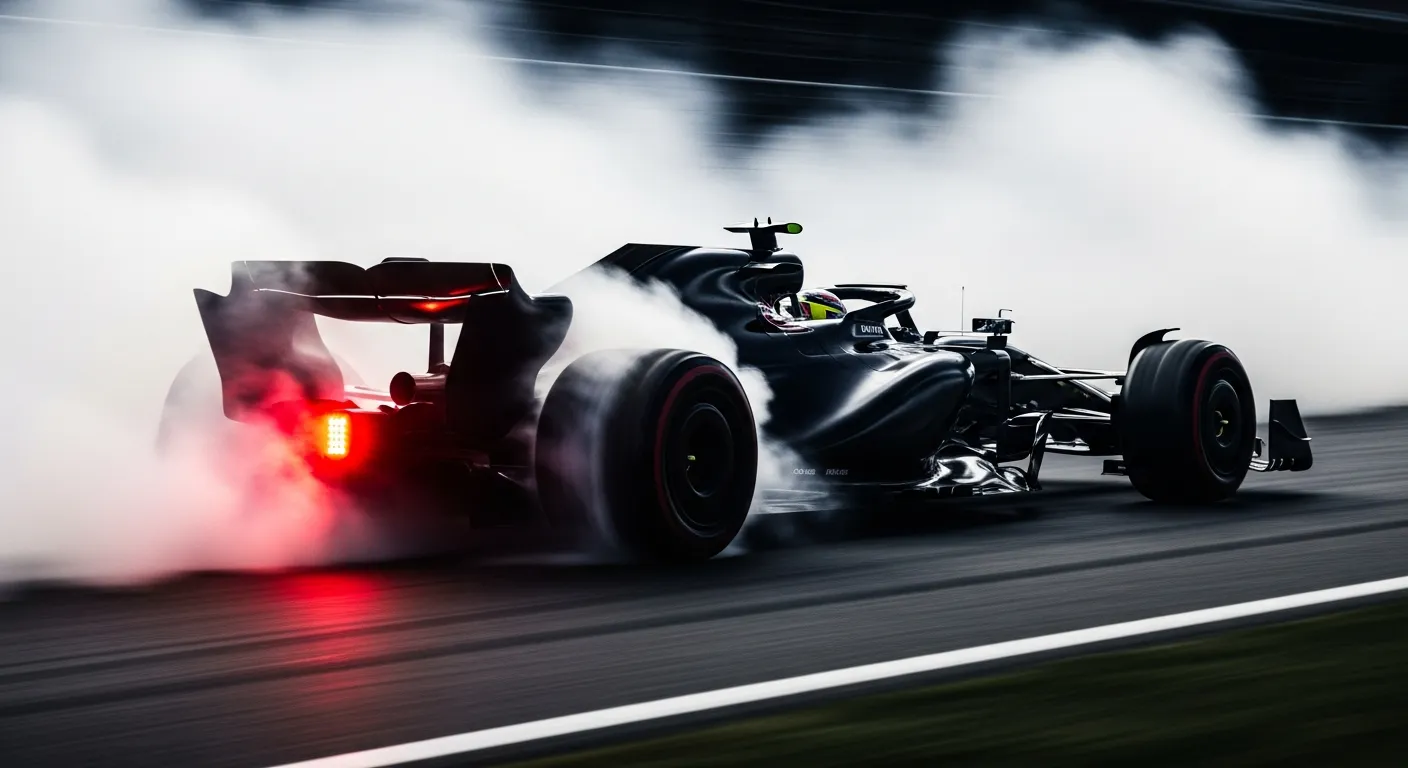
Nico Hülkenberg's performance at the 2017 Abu Dhabi Grand Prix was a testament to consistent execution and strategic race management for Renault, culminating in a valuable sixth-place finish. Starting from the seventh position on the grid at the illuminated Yas Marina Circuit, Hülkenberg navigated the 55-lap race with a disciplined approach, steadily improving his standing by one position. This result delivered eight crucial points to the French constructor, contributing significantly to their season-end tally. The German driver completed the race with a total elapsed time of +1:25.713 behind the winner, Valtteri Bottas. His race pace was notably strong in the latter stages, evidenced by his fastest lap of 1:42.376 on lap 53, which placed him eighth in the overall fastest lap rankings for the event. This late-race surge indicated either optimal tyre management or a clear track to exploit the Renault R.S.17's potential. This consistent execution in the final round of the season was particularly valuable for Renault as they aimed to solidify their position in the Constructors' Championship against close rivals.
The Abu Dhabi Grand Prix often presents a unique challenge with its day-to-night transition, affecting track temperatures and tyre degradation, factors Hülkenberg managed effectively. While he secured a strong points finish, his teammate, [Carlos Sainz](/results/2019-mexico-city-carlos-sainz), who had qualified 12th, faced an early exit from the race. Sainz was forced to retire on lap 31 due to a reported wheel issue, leaving Hülkenberg as the sole points scorer for Renault at this event. This incident underscored the critical importance of reliability in a demanding season finale, particularly when fighting for championship positions. Hülkenberg's ability to convert his qualifying position into a higher finishing spot, despite the mechanical challenges faced by his team, demonstrated his seasoned race craft. For those interested in the broader history and technical regulations of the sport, the [FIA — F1 World Championship](https://www.fia.com/events/fia-formula-one-world-championship) provides official documentation and results. Further insights into driver performances across different circuits can be gained by analyzing comprehensive [Formula 1 data](https://api.jolpi.ca/ergast/f1/2026.json). The official [Formula 1 website](https://www.formula1.com/en) offers detailed breakdowns of each Grand Prix. Looking back at other competitive midfield performances, one might consider [Nico Hülkenberg's](/results/2019-mexico-city-nico-hulkenberg) own subsequent drives or the efforts of drivers like [Esteban Ocon](/results/2019-mexico-city-esteban-ocon) in later seasons, where every point was hard-fought. The strategic elements of such races are often discussed in depth on [Wikipedia: Formula One](https://en.wikipedia.org/wiki/Formula_One) entries, and details about the specific circuit can be found on its [Yas Marina Circuit page](https://en.wikipedia.org/wiki/Yas_Marina_Circuit).
Verified race record · Ergast
Grid
P7
Finish
P6
Points
8
Laps
55
Constructor
Renault Sport Formula One Team
Status
Finished
Teammate that weekend
Carlos Sainz Jr.
Grid P12 · Wheel · 0 pts
Championship · before vs after
Before round 20
P1235 pts
After round 20
P1043 pts